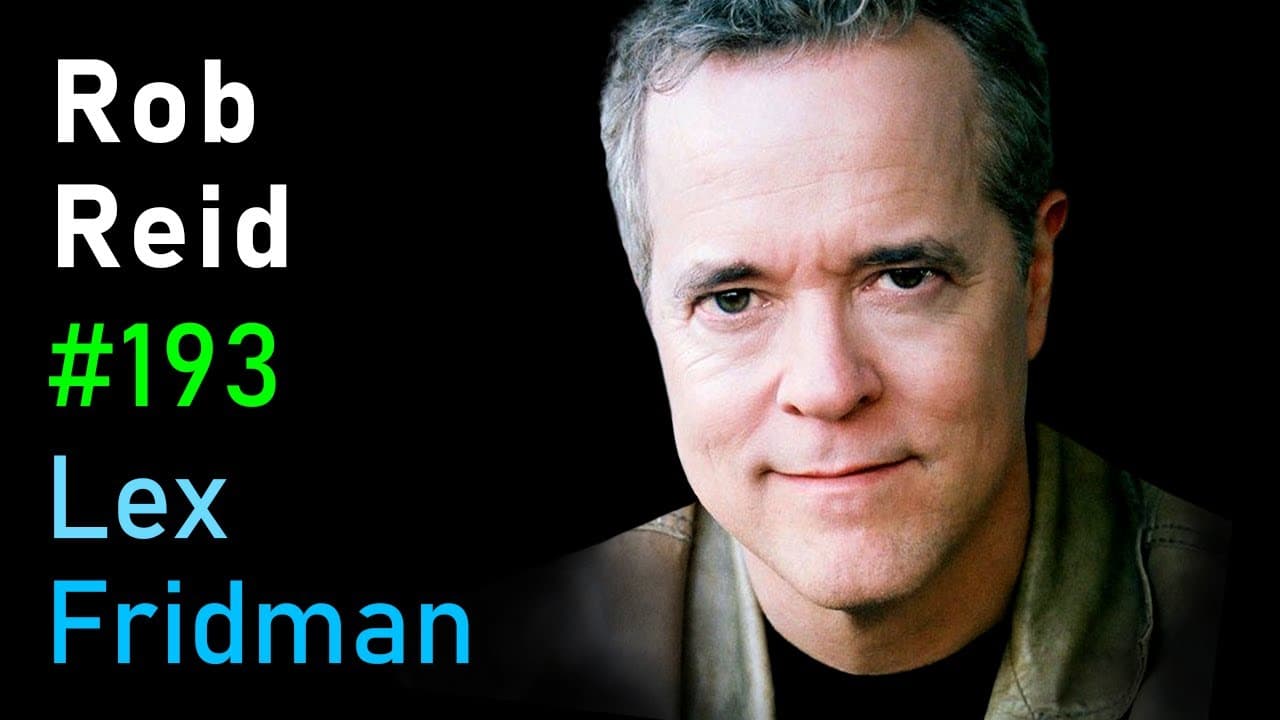
Rob Reid: The Existential Threat of Engineered Viruses and Lab Leaks | Lex Fridman Podcast #193
TL;DR
Gain-of-function research enhances microorganisms, making them potentially more dangerous. The risk of accidental or intentional pathogen release necessitates strict safety regulations and international cooperation to prevent catastrophic outcomes for humanity.
Transcript
the following is a conversation with rob reed entrepreneur author and host of the after on podcast sam harris recommended that i absolutely must talk to rob about his recent work on the future of engineer pandemics i then listened to the four hours special episode of sam's making sense podcast with rob titled engineering the apocalypse and i was fl... Read More
Key Insights
- 🤨 Gain-of-function research involves making microorganisms more dangerous, raising concerns about the accidental or intentional release of dangerous pathogens.
- 🪡 Laboratory leaks pose significant risks, highlighting the need for stringent safety measures and regulations.
- 👨🔬 Transparency and global cooperation are vital in managing the risks associated with gain-of-function research and preventing the potential destruction of human civilization.
- ⚠️ Comprehensive pathogen detection systems and early warning mechanisms can significantly enhance our ability to respond to potential pandemics.
- 🛀 The role of artificial intelligence in computational biology shows promise but necessitates data security measures to mitigate potential risks.
- 🎙️ More videos with Rob Reid:
Install to Summarize YouTube Videos and Get Transcripts
Explore YouTube Video Summarizer or Get YouTube Transcript Extractor
Questions & Answers
Q: What is gain-of-function research, and how does it relate to the future of engineered pandemics?
Gain-of-function research involves making microorganisms, such as viruses, more dangerous by enhancing their transmissibility or lethality. This research raises concerns about the creation and accidental or intentional release of highly dangerous pathogens, which could lead to engineered pandemics.
Q: What are the risks associated with gain-of-function research?
One of the main risks is laboratory leaks, which can result from human error or intentional acts. Even high-level biosafety labs are not impervious to leaks, and the consequences of a leak could be catastrophic in terms of human lives and economic damage.
Q: How can the risks of engineered pandemics be managed?
It is crucial to have comprehensive and transparent global systems for pathogen detection and surveillance. This includes developing affordable and efficient diagnostics, early warning systems based on data analysis, and enhancing international cooperation to prevent and respond to potential pandemics.
Q: What is the role of transparency in addressing the risks of gain-of-function research?
Transparency is essential in managing the risks associated with gain-of-function research. Open communication, honest discussions about potential hazards, and clear guidelines and regulations will help ensure responsible and ethical conduct in the scientific community.
Key Insights:
- Gain-of-function research involves making microorganisms more dangerous, raising concerns about the accidental or intentional release of dangerous pathogens.
- Laboratory leaks pose significant risks, highlighting the need for stringent safety measures and regulations.
- Transparency and global cooperation are vital in managing the risks associated with gain-of-function research and preventing the potential destruction of human civilization.
- Comprehensive pathogen detection systems and early warning mechanisms can significantly enhance our ability to respond to potential pandemics.
- The role of artificial intelligence in computational biology shows promise but necessitates data security measures to mitigate potential risks.
- Clear communication, openness, and ethical decision-making are essential in addressing the risks of engineered pandemics and ensuring the responsible use of scientific advancements.
Summary
In this conversation, Lex Friedman speaks with Rob Reed, entrepreneur, author, and host of the After On podcast, about the future of engineered pandemics. They discuss the lab leak hypothesis, gain of function research, and the risks involved in manipulating viruses. Reed shares his concerns about the potential for synthetic biology to lead to the destruction of human civilization and the importance of taking precautions and managing these risks.
Questions & Answers
Q: What do you think about Elon Musk's hypothesis that the most entertaining outcome is the most likely?
Reed suggests that Musk's statement may be a reference to simulation theory, where an observer watches the arc of civilization unfold in an entertaining way. He discusses the idea of an observer and a producer, and how the concept of entertainment requires plot twists and surprises.
Q: Is it possible for the observer and producer to be emergent?
Friedman suggests that memes and internet trends seem to spread more efficiently if they are entertaining, and wonders if this emergent property of human consciousness relates to the most entertaining outcome being the most likely. Reed acknowledges that we have an incredible ability to create and propagate funny things, but questions whether this translates to the entire ecosystem of conscious systems driving toward higher levels of entertainment.
Q: Do you find it useful to think about human civilization from the perspective of ideas rather than individual human brains?
Reed refers to Richard Dawkins' concept of memes and describes the relationship between humans and ideas as symbiotic, similar to bees and flowers. He explains that our brains are the petri dishes in which memes compete for propagation and mutation, but emphasizes that humans also consciously create and structure ideas.
Q: Can you talk about your writing process and how you write well?
Reed discusses his process for writing fiction, explaining that he leans toward being a plotter rather than a pantser. He usually starts with a clear vision of how the story will begin and end, and creates an outline to guide him through the plot. However, he notes that the outline often evolves and that a significant portion of his time is spent on editing and polishing the work.
Q: How much do you hate your work during the editing process?
Reed states that he spends most of his time in a state of optimism and gratitude for his work, always striving to make it better. However, he acknowledges that it varies from person to person, and some may spend more time in a critical mindset.
Q: What would be the most likely source of human self-destruction in the next hundred years?
Reed suggests that in the next hundred years, synthetic biology, specifically manipulation of viruses, presents the greatest risk of self-destruction. He explains that while synthetic biology offers tremendous promise, it also poses a significant danger if misused in the wrong hands or through accidents. He highlights the need to manage the risks associated with gain of function research and the creation of highly dangerous pathogens.
Q: Can you explain gain of function research and its positives and negatives?
Reed describes gain of function research as the magnification of microorganisms' capabilities to make them more dangerous. He provides an example of gain of function research done on the H5N1 flu virus, which resulted in a transmissible form that could potentially be airborne. He emphasizes that such research raises significant ethical concerns, as the risks involved in handling and study of highly dangerous pathogens can lead to leaks and potentially catastrophic consequences.
Q: Is it important to question the lab leak hypothesis regarding COVID-19 and gain of function research?
Reed highlights the importance of asking the question and considering the possibility that COVID-19 may have leaked from a lab. He suggests that the Chinese Wuhan Institute of Virology, which had a history of concern, and the secrecy surrounding the early days of the outbreak contribute to the plausibility of a lab leak. He believes that level-headed conversations and global consensus on gain of function research are necessary in order to prevent future risks.
Q: Why is the lab leak hypothesis threatening to those in power?
Reed suggests that governments, especially the Chinese government, may be afraid to admit mistakes as this hypothesis challenges their control and reputation. The idea of a lab leak implies oversight and potential negligence, which can result in loss of trust, credibility, and blame. Acknowledging a lab leak also raises questions about the ethics, safety, and regulation of gain of function research.
Q: Is the fear of admitting mistakes hindering progress in the study of gain of function research?
Reed agrees that the fear of admitting mistakes can impede progress, particularly in the case of gain of function research. It requires a high level of transparency and accountability, which can be challenging for governments and institutions. However, he stresses the importance of addressing and managing the risks associated with gain of function research to prevent potential disasters.
Summary & Key Takeaways
-
Gain-of-function research aims to enhance the capabilities of microorganisms, including viruses, making them more dangerous in terms of transmissibility and lethality.
-
The potential for laboratory leaks, whether accidental or intentional, raises significant concerns about the creation and release of highly dangerous pathogens.
-
Transparency and international consensus are crucial to effectively manage the risks associated with gain-of-function research and prevent the potential destruction of human civilization.
Read in Other Languages (beta)
Share This Summary 📚
Summarize YouTube Videos and Get Video Transcripts with 1-Click
Try YouTube Summary with ChatGPT & Claude or YouTube Transcript Generator
Explore More Summaries from Lex Fridman Podcast 📚




Summarize YouTube Videos and Get Video Transcripts with 1-Click
Try YouTube Summary with ChatGPT & Claude or YouTube Transcript Generator