What Is the James Webb Space Telescope Observing Right Now?
TL;DR
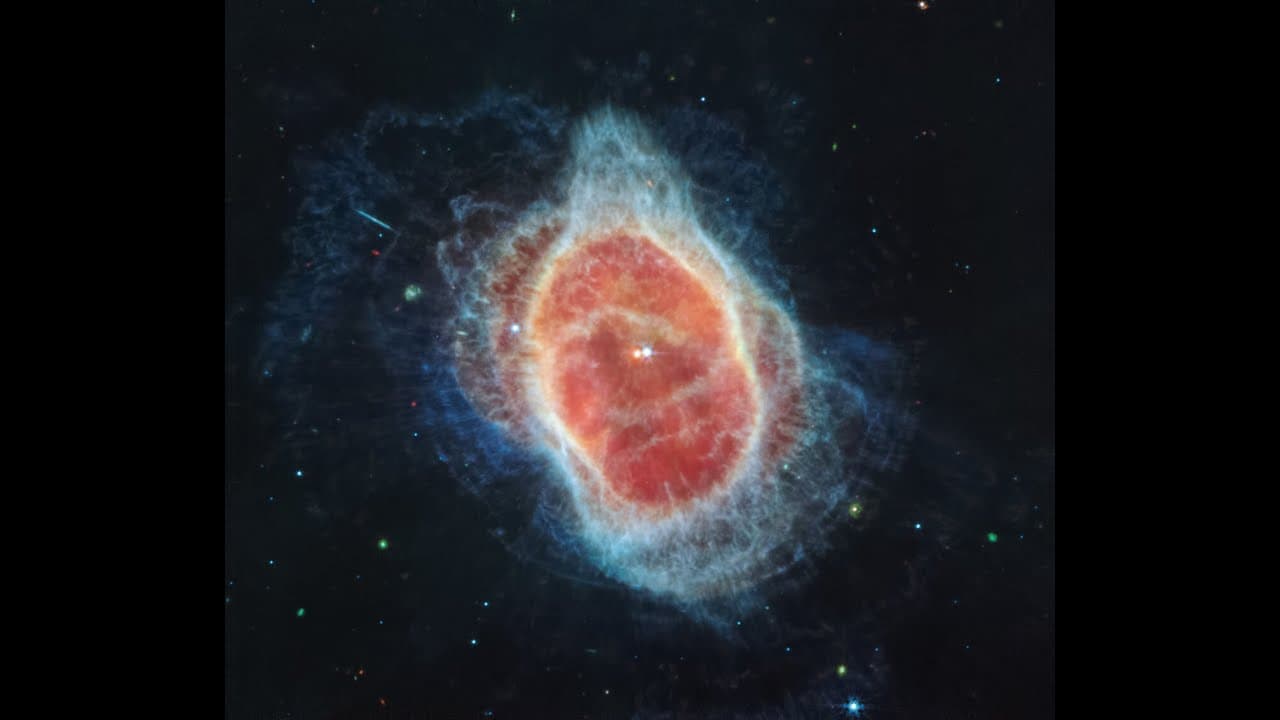
The James Webb Space Telescope is currently observing objects like the Phantom Galaxy and supernova remnants, which provide insights into galaxy structures and star formation. It is also focusing on the Trappist-1 system, containing potentially habitable exoplanets, to study their atmospheres and possibilities for life.
Transcript
Since the unveiling of the first images from the fully deployed and calibrated James Webb Space telescope, it has literally been off and running performing multiple observations per day. In fact, there are so many that some of the images are unprocessed, just posted data waiting for a scientist to come along and interpret, including anoth... Read More
Key Insights
- 🤩 The JWST's images and data provide valuable information on the structure, composition, and behavior of galaxies, supernovae remnants, and star clusters.
- 😵💫 NGC 628, also known as the Phantom Galaxy, offers insights into the spiral structure and evolution of galaxies like our own.
- 🤩 Objects like NGC 3603 and NGC 346 aid in understanding the formation of stars, supernovae, and the chemical evolution of galaxies.
- ❓ Lensed objects like SGAS 1723-IFU enable observations of ancient and distant phenomena, providing a glimpse into the early universe.
- 🌍 The Trappist-1 system, with its potentially habitable exoplanets, presents a unique opportunity to study the atmospheres and potential for life on distant worlds.
- 🥳 Tidal interactions and the absence of a day-night cycle in the Trappist-1 system have implications for the genesis and functioning of life.
- 😲 JWST's observations may shed light on the presence of atmospheric gases and the potential for technologically advanced civilizations in other star systems.
Install to Summarize YouTube Videos and Get Transcripts
Explore YouTube Video Summarizer or Get YouTube Transcript Extractor
Questions & Answers
Q: What is the significance of the Spitzer space telescope image of the Galaxy NGC 628?
The image provides a face-on opportunity to study the spiral structure and evolution of galaxies, particularly grand design spiral galaxies. NGC 628 also allows scientists to investigate supernovae and black holes within its structure.
Q: Why are NGC 3603 and NGC 346 of interest to astronomers?
NGC 3603 and NGC 346 are both associated with star clusters and nebulas, offering insights into high-mass star formation and the distribution of heavier elements within galaxies. They provide clues about the formation of resource-rich planets like Earth.
Q: How do lensed objects, like SGAS 1723-IFU, help astronomers study distant objects?
Gravitational lensing magnifies distant objects, allowing observations of extremely remote and ancient phenomena. SGAS 1723-IFU is a lensed object that offers potential observations of the earliest stars in the universe.
Q: What makes the Trappist-1 system interesting for exoplanet studies?
Trappist-1 consists of seven terrestrial planets, with four in the habitable zone. Scientists aim to determine if these planets have atmospheres, which is crucial for liquid water and, possibly, life. The unique tidal interactions among the planets raise questions about the potential for life and evolutionary processes.
Summary & Key Takeaways
-
The JWST has been performing multiple observations per day, unveiling images of various celestial objects, including the Phantom Galaxy and supernova remnants.
-
Targeted objects like NGC 3603 and SPT 0311 offer insights into star formation, chemical composition, and early universe dynamics.
-
Trappist-1, a system with potentially habitable exoplanets, is a prime target for studying atmospheric compositions and the possibility of extraterrestrial life.
Read in Other Languages (beta)
Share This Summary 📚
Summarize YouTube Videos and Get Video Transcripts with 1-Click
Try YouTube Summary with ChatGPT & Claude or YouTube Transcript Generator
Explore More Summaries from John Michael Godier 📚

Summarize YouTube Videos and Get Video Transcripts with 1-Click
Try YouTube Summary with ChatGPT & Claude or YouTube Transcript Generator