How Might Humanity Colonize the Galaxy?
TL;DR
Humanity could colonize the galaxy through various concepts like advanced scouting with small spacecraft, nuclear propulsion methods, generational ships, and the theoretical Alcubierre warp drive for faster-than-light travel. Other possibilities include self-replicating probes and exploring virtual realities, as well as utilizing cryonics for long-distance travel. Each method presents unique challenges and opportunities for establishing a galactic presence.
Transcript
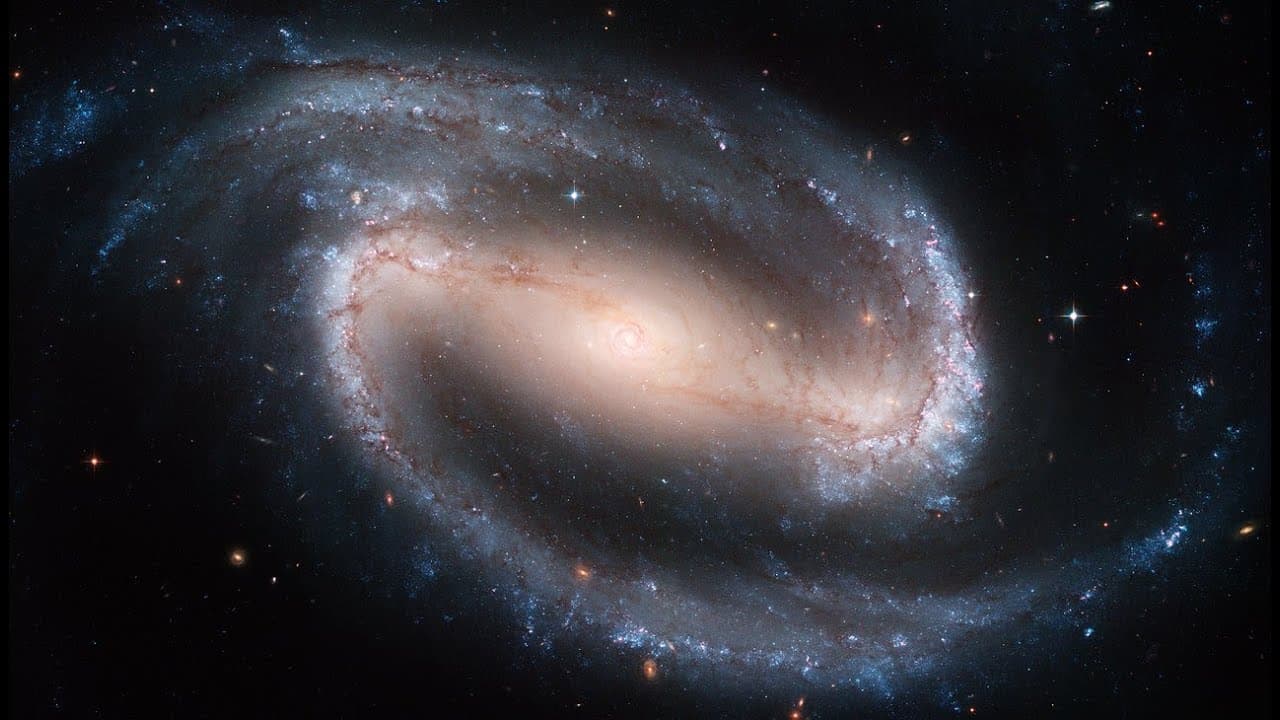
One of the great questions regarding the future of humanity is what are we going to do with the Milky Way. The Fermi Paradox shows us that, so far as we can see, it’s wide open and ripe for the picking … if we can get out there. And while great distances and energy required hinder ideas of colonization right now, time solves that problem to a degre... Read More
Key Insights
- 🛩️ Scouting missions using small spacecraft and light sails offer a practical and efficient way to gather information about star systems.
- 🗺️ Nuclear propulsion, such as Project Daedalus or fusion rockets, and the Alcubierre warp drive present potential methods for interstellar travel.
- 👻 Generational ships, although presenting challenges, allow for colonization over extended periods of time.
- ❓ The concept of virtual realities and exploring internal universes could shift the focus from physical colonization efforts.
- 🙂 Wormholes and other unknown physics could provide avenues for faster-than-light travel, but the feasibility remains uncertain.
- 🗺️ Cryonics and temporary death offer the possibility of traveling long distances without the need for immediate human presence.
Install to Summarize YouTube Videos and Get Transcripts
Explore YouTube Video Summarizer or Get YouTube Transcript Extractor
Questions & Answers
Q: How can small spacecraft, driven by directed laser or light sails, aid in scouting star systems?
Utilizing small spacecraft driven by directed laser or light sails allows for efficient exploration of nearby worlds without the need for large ships. These small probes can gather information to assess the potential for colonization.
Q: What is the concept behind the Alcubierre warp drive, and how could it revolutionize galactic colonization?
The Alcubierre warp drive involves creating a warp field that carries a ship along with it, essentially moving the ship through space without violating the speed of light. If successfully developed, it could enable rapid interstellar travel and the establishment of a galactic empire.
Q: How might generational ships be utilized for galactic colonization, and what challenges do they present?
Generational ships involve multiple generations living and traveling aboard a spaceship until reaching their destination. This method allows for colonization over an extended period, but ethical, social, and logistical challenges arise, such as maintaining self-sufficiency, managing societal dynamics, and potential technological advancements by other civilizations.
Q: Can temporary death through cryonics aid in galactic colonization?
Cryonics involves freezing a human corpse in hopes of reviving them after the underlying cause of death is cured. If perfected, this technology could facilitate long-distance space travel, as individuals could be revived upon reaching their destination to establish colonies.
Summary & Key Takeaways
-
Scouting out star systems using small spacecraft driven by directed laser or light sails would be an efficient way to gather information before sending living beings.
-
Nuclear bomb propulsion, like Project Daedalus, or fusion rockets could be potential methods for interstellar voyages.
-
Generational ships, where multiple generations would live and travel aboard a spaceship, could be used to colonize the galaxy, albeit over a significant period.
-
The Alcubierre warp drive, if successfully developed, could allow for faster-than-light travel and the establishment of a galactic empire.
-
Slow population growth and the need for exponential expansion may delay galactic colonization.
-
The Halo Drive, utilizing the gravity well of black holes, could facilitate efficient travel between suitable systems.
-
Constructing virtual realities or exploring internal universes might replace physical colonization efforts.
-
Unknown physics, such as wormholes, could provide new possibilities for faster-than-light travel.
-
Cryonics and temporary death might enable long-distance space travel, with individuals being revived upon arrival.
-
Self-replicating probes or 3D printing humans could be used to colonize the galaxy without physically leaving Earth.
Read in Other Languages (beta)
Share This Summary 📚
Summarize YouTube Videos and Get Video Transcripts with 1-Click
Try YouTube Summary with ChatGPT & Claude or YouTube Transcript Generator
Explore More Summaries from John Michael Godier 📚


Summarize YouTube Videos and Get Video Transcripts with 1-Click
Try YouTube Summary with ChatGPT & Claude or YouTube Transcript Generator