Why Software Engineering Jobs Became Harder
TL;DR
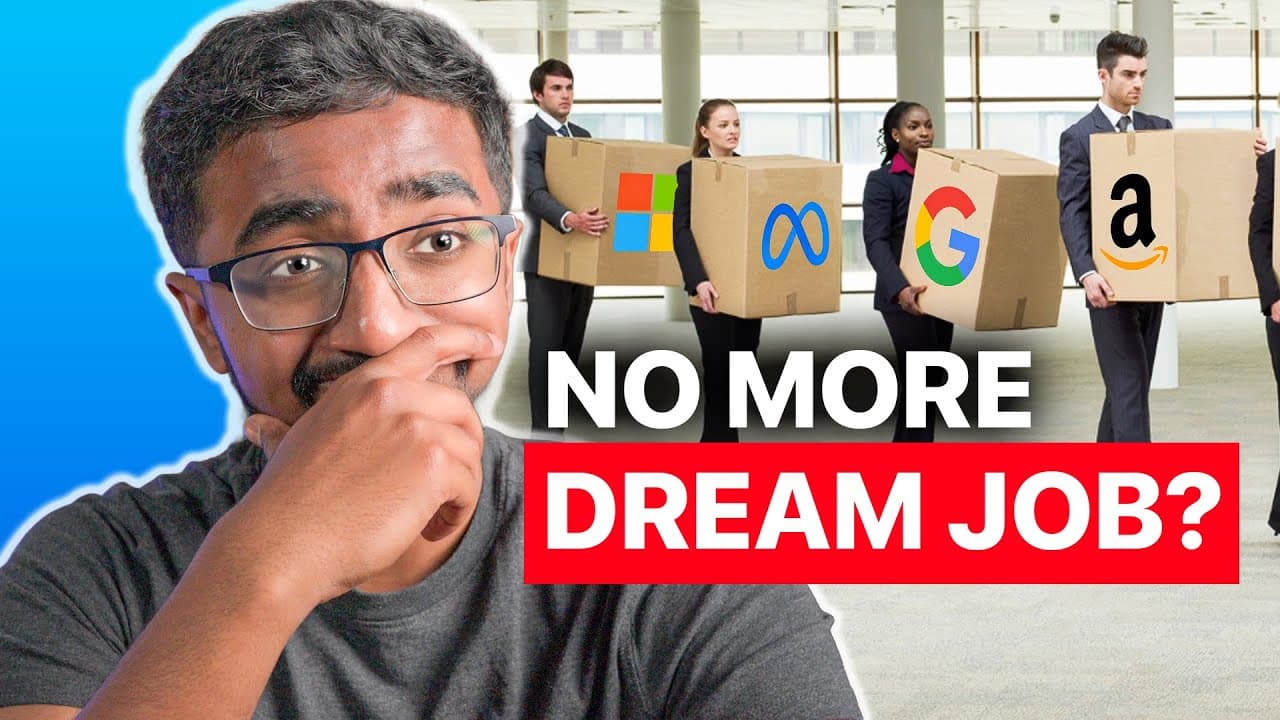
Software engineering became harder to enter after rising interest rates shifted companies from expansion toward profitability, triggering hiring freezes, canceled internships, rescinded offers, and mass layoffs. AI coding tools added further pressure by performing tasks once assigned to junior engineers, while employers increasingly expected smaller teams to maintain the output previously delivered by larger ones.
Transcript
Software engineering is no longer a dream job. And I don't mean to scare you, but for over two decades, software engineering used to be the closest thing to a guaranteed path to prosperity. Computer science graduates guaranteed six figures. Boot campers getting big tech jobs. And companies threw money at anyone who could write basic code. But that ... Read More
Key Insights
- The dotcom boom made basic programming skills highly valuable because internet companies competed aggressively for limited technical talent. Recruiters poached employees, job changes could produce 50% raises, and knowledge of HTML and CSS could lead to a $60,000 offer, described as $120,000 after inflation adjustment.
- The dotcom crash caused a severe employment reversal after tech stocks collapsed in March 2000. More than 200,000 technology workers lost their jobs between 2000 and 2002, office space in Silicon Valley became vacant, and some developers who remained employed accepted salary reductions.
- Web 2.0 restored demand by turning the internet into an interactive platform where users created content. Facebook grew from a Harvard dorm, YouTube was acquired by Google for $1.65 billion after 18 months, and Google encouraged engineers to pursue independent ideas through its 20% time policy.
- The mobile gold rush created exceptional opportunities between 2010 and 2015 as apps became the new websites. Flappy Bird reportedly earned $50,000 per day, Instagram was acquired for $1 billion with only 13 employees, and mobile developers attracted bidding wars from competing employers.
- The software hiring process became substantially harder between 2016 and 2019. LeetCode preparation became expected, interviews expanded to five, six, or seven rounds, and candidates faced phone screens, timed coding tests, and demanding on-site sessions with five consecutive interviews.
- The 2021 hiring surge followed government economic intervention and lower interest rates. Companies aggressively recruited software engineers, signing bonuses could reach $100,000, and remote employees could relocate from expensive cities while retaining high salaries, creating unusually favorable conditions for technology workers.
- The profitability shift beginning in 2022 encouraged companies to reduce team sizes while preserving output expectations. Employers preferred five engineers producing eight features over 10 engineers producing 10 features, yet remaining employees were often expected to deliver all 10, increasing stress and reducing morale.
- AI coding tools increased pressure on entry-level roles during 2024 and 2025 by performing tasks previously handled by junior engineers. The transcript identifies ChatGPT, Claude, GitHub Copilot, Cursor, Warp, and Replit as tools capable of producing code or functional projects rapidly.
Install to Summarize YouTube Videos and Get Transcripts
Explore YouTube Video Summarizer or Get YouTube Transcript Extractor
Questions & Answers
Q: Why did software engineering become harder to enter?
Software engineering became harder to enter because the field attracted more candidates while employers raised their selection standards. Between 2016 and 2019, LeetCode became a common requirement and interviews expanded to as many as five, six, or seven rounds. After 2022, hiring freezes, canceled internships, rescinded new-graduate offers, layoffs, profitability pressures, and AI coding tools further reduced opportunities, especially for junior candidates.
Q: How did the dotcom boom benefit software engineers?
The dotcom boom created intense demand for anyone capable of building internet products. Companies competed for programmers, recruiters camped outside rival offices, and job hoppers could receive raises of 50%. Candidates did not face LeetCode or elaborate whiteboard puzzles, and basic HTML and CSS skills could secure a $60,000 offer, described in the transcript as equivalent to $120,000 after adjusting for inflation.
Q: What happened to technology jobs after the dotcom bubble burst?
The dotcom bubble burst in March 2000, causing technology stocks to fall and companies to dismiss large numbers of employees. Between 2000 and 2002, more than 200,000 technology workers lost their jobs. Entire office floors in Silicon Valley reportedly stood empty, and some developers who retained their positions accepted salary cuts as employers adjusted to the collapse.
Q: How did Web 2.0 revive software engineering careers?
Web 2.0 revived software demand by changing the internet from a place where people mainly consumed information into an interactive platform where they also created it. Facebook grew rapidly, while YouTube was acquired by Google for $1.65 billion after 18 months. Engineers drove product development, and Google supported experimentation through 20% time, which contributed to products such as Gmail and AdSense.
Q: Why was mobile development so valuable from 2010 to 2015?
Mobile development became highly valuable because the popularity of the iPhone turned apps into a new commercial platform. A single successful app could generate substantial income, with Flappy Bird reportedly making $50,000 per day. Instagram had only 13 employees when it was acquired for $1 billion, and companies competed for mobile developers through bidding wars and acquisitions focused primarily on obtaining engineering teams.
Q: When did software engineering interviews become more demanding?
Software engineering interviews became notably more demanding between 2016 and 2019. During that period, LeetCode preparation became expected, companies grew more selective, and hiring processes expanded to five, six, or seven rounds. Candidates commonly encountered phone screens, timed coding assessments, and an on-site stage containing five consecutive interviews, making employment less automatic even while the technology sector remained popular.
Q: Why did technology hiring surge in 2021 and decline in 2022?
Technology hiring surged in 2021 after the government lowered interest rates and injected money into the economy, giving companies greater capacity to invest and recruit. Signing bonuses could reach $100,000, and remote work became standard. Starting in 2022, the Federal Reserve raised interest rates, borrowing became less attractive, investors withdrew money, technology stocks declined, and companies prioritized profitability over innovation.
Q: How are AI coding tools affecting junior software engineers?
AI coding tools are increasing pressure on junior software engineering roles because they can perform tasks that entry-level developers previously handled. The transcript names ChatGPT, Claude, GitHub Copilot, Cursor, Warp, and Replit, noting that some can create functional projects within minutes. Combined with continued interest in computer science, layoffs, and company efforts to operate with smaller teams, these capabilities intensify competition for available positions.
Summary & Key Takeaways
-
Software engineering rose during the dotcom boom, when internet startups competed intensely for programmers and basic web skills could secure well-paid work. The bubble burst in 2000, eliminating over 200,000 tech jobs by 2002, but Web 2.0 soon revived demand through companies and platforms such as Facebook, YouTube, and Google.
-
The mobile gold rush from 2010 to 2015 created another strong hiring cycle. Apps generated remarkable revenue, startups received enormous acquisition prices, and companies sometimes acquired entire businesses primarily for their engineers. Remote work experiments, digital nomad culture, collaboration tools, and coding boot camps also expanded access to software careers during this period.
-
Entry barriers increased from 2016 onward through LeetCode requirements and lengthy interview processes. Pandemic uncertainty initially caused layoffs and canceled internships, followed by aggressive hiring in 2021. Rising interest rates reversed that expansion in 2022, while later layoffs, reduced junior opportunities, and AI coding tools made employment substantially more competitive.
Read in Other Languages (beta)
Share This Summary 📚
Summarize YouTube Videos and Get Video Transcripts with 1-Click
Try YouTube Summary with ChatGPT & Claude or YouTube Transcript Generator
Explore More Summaries from Sajjaad Khader 📚





Summarize YouTube Videos and Get Video Transcripts with 1-Click
Try YouTube Summary with ChatGPT & Claude or YouTube Transcript Generator