Nobel Minds 2022
TL;DR
Ancient DNA shows that modern humans coexisted and interbred with Neanderthals and Denisovans, whose genes remain in people today and can inform research on physiology, disease, and infection. The 2022 laureates also describe research as a continuing creative practice shaped by luck, concise thinking, persistent curiosity, artistic interests, and communication with young people.
Transcript
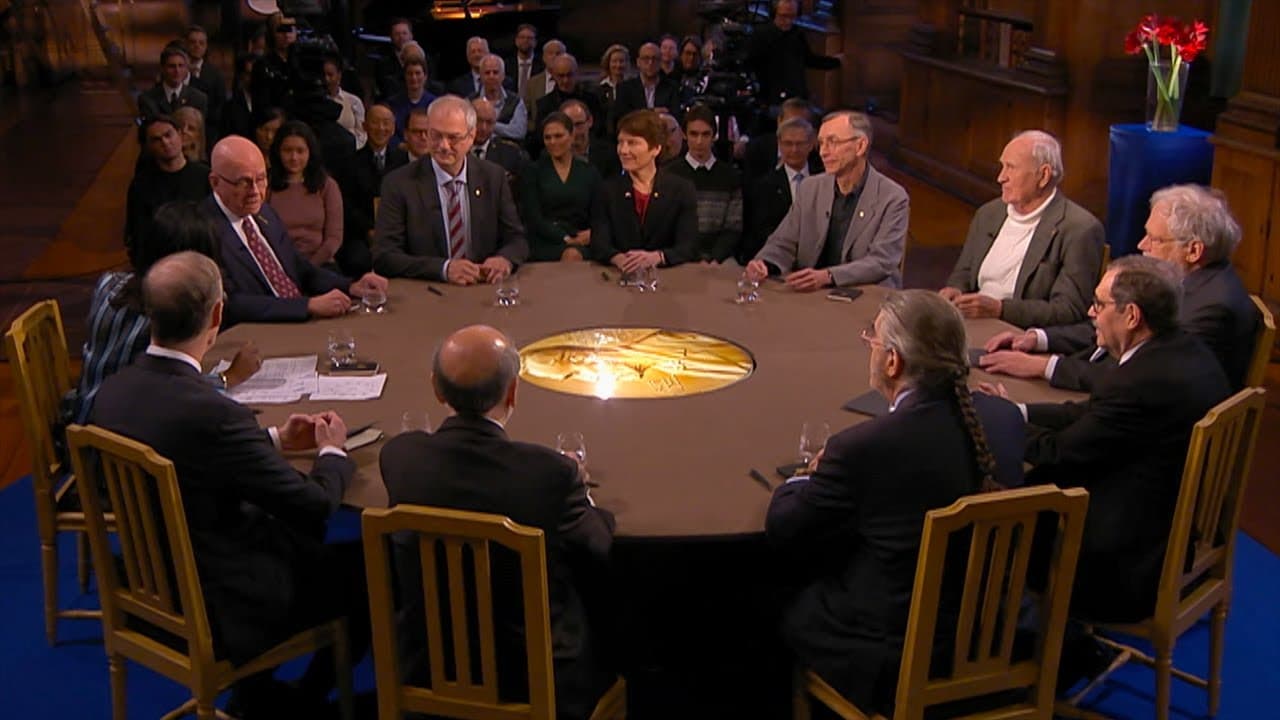
hello I'm zainabadawi welcome to Nobel mines from the library of the Royal Palace in Stockholm this is Nobel laureates are being brought together for the first time in discussion on television we'll be hearing about their groundbreaking contributions we also have an audience and we are delighted to be joined by their Royal highnesses the Crown Prin... Read More
Key Insights
- Ancient DNA is a source of evidence about human origins because genetic material recovered from extinct hominins can be sequenced and compared with present-day humans. This approach enabled investigation of Neanderthals and the identification of another ancient hominin group, the Denisovans.
- Modern humans interbred with Neanderthals and Denisovans, as traces of genetic transfer from both groups remain in people today. The findings demonstrate that Homo sapiens in some regions coexisted with these ancient populations rather than developing in complete isolation from them.
- The reason modern humans survived while Neanderthals and Denisovans did not remains uncertain. Svante Pääbo suggests that larger modern human populations may have absorbed other groups, noting that very early modern humans often appear to have had Neanderthal family members.
- Neanderthals were highly similar to modern humans in several known respects. They had brains as large as those of modern humans, used tools, created art, communicated vocally, and shared a gene associated with articulation, although the nature of their possible language remains unknown.
- Ancient gene flow is relevant to present-day biology because inherited material from Neanderthals and Denisovans can help researchers understand human physiology. The discussion specifically connects this legacy with the development of diseases and infections and with how modern humans respond to them.
- Scientific recognition does not necessarily end active research. Barry Sharpless, introduced as the fifth person to receive a Nobel Prize twice, says he continues because he feels compelled to do research, even though winning does not greatly improve his ability to raise money.
- Clear communication can shape a researcher's working method. The economics laureates recall an adviser who sometimes required doctoral students to summarize a week's work in 30 seconds, an experience that encouraged them to present ideas simply, concisely, and with attention to what matters.
- Art and science are connected through creativity, according to chemistry laureate Morten Meldal. His experience as a rock guitarist and guitar builder supports his view that practicing art can teach creative habits that are useful when pursuing scientific discoveries.
Install to Summarize YouTube Videos and Get Transcripts
Explore YouTube Video Summarizer or Get YouTube Transcript Extractor
Questions & Answers
Q: How did ancient DNA research change our understanding of human origins?
Ancient DNA research made it possible to extract genetic material from extinct hominins, sequence the Neanderthal genome, and identify the Denisovans as another ancient hominin group. Comparisons with living people revealed traces of both groups in present-day genomes. These findings show that some Homo sapiens populations coexisted and interbred with Neanderthals and Denisovans, providing a genetic record of interactions during human evolution.
Q: Why did modern humans survive while Neanderthals disappeared?
The discussion does not provide a definitive explanation for why modern humans survived and became billions of people while Neanderthals and Denisovans did not. Svante Pääbo notes that Neanderthals had brains as large as modern humans, so individual intelligence may not explain the difference. One possibility is that modern humans formed larger populations and gradually absorbed other groups through coexistence and interbreeding.
Q: Did modern humans interbreed with Neanderthals and Denisovans?
Modern humans did interbreed with Neanderthals and Denisovans, according to genetic traces found in present-day people. Svante Pääbo also says that examinations of very early modern humans frequently indicate close Neanderthal family relationships. The evidence establishes that Homo sapiens in some parts of the world coexisted with these groups and exchanged genes rather than remaining entirely separate populations.
Q: Could Neanderthals speak and communicate like modern humans?
Neanderthals clearly had some form of vocal communication, but the discussion says researchers do not know whether they possessed language in the modern sense. They shared with modern humans a gene believed to have some connection with articulation. They also used tools and created art, suggesting considerable behavioral similarity, but the exact structure and complexity of their communication cannot be reconstructed from the evidence described.
Q: How can Neanderthal and Denisovan genes affect people today?
Genes inherited through ancient interbreeding remain in present-day human populations and provide a way to study modern physiology. The discussion connects this ancient gene flow with understanding how diseases and infections develop and how humans tackle them. It does not specify individual genes or particular medical treatments, but it presents inherited hominin DNA as a useful source of biological and medical insight.
Q: How did winning the Nobel Prize affect the laureates?
The laureates describe the award as gratifying but also demanding. Sudden attention brings many journalists and repeated requests for their limited time, making the experience strenuous even when welcome. Some emphasize luck instead of personal brilliance, while others discuss family traditions involving previous laureates. Douglas Diamond also received a humorous button saying no in many ways, reminding him to pace himself and avoid overcommitting.
Q: Why did Barry Sharpless continue researching after winning Nobel Prizes?
Barry Sharpless says he continued because he cannot help doing research and feels that he has to pursue it. Although some winners might move toward a different life after receiving the award, he describes himself as continuing almost as though nothing had happened. He also notes that Nobel recognition does not help as much with raising research money as people might expect.
Q: How do clarity and artistic creativity support scientific research?
Clarity helps researchers identify and communicate the essential point of their work. Two economics laureates recall an adviser who sometimes gave students only 30 seconds to explain a week's progress, encouraging lasting habits of simplicity and concision. Morten Meldal adds that art and science are two sides of the same coin because artistic practice can develop creativity that is useful in scientific discovery.
Summary
This video features Nobel laureates from various fields, including economics, chemistry, medicine, and physics, discussing their groundbreaking contributions and the significance of winning the Nobel Prize. They also touch upon topics such as human evolution, the importance of long-term sustainability in the economy, the role of scientists as entrepreneurs, the origin of ideas, and the impact of their research on society.
Questions & Answers
Q: What advice did Dick Thaler give to Douglas Diamond after he won the Nobel Prize?
After winning the Nobel Prize, Douglas Diamond's colleagues advised him to "pace himself" and not overextend. Specifically, Dick Thaler gave him a button called the Nobel, which, when pressed, says "no" in 500 different ways. This humorous gift serves as a reminder to avoid being overwhelmed and to think carefully before taking on too many commitments or responsibilities.
Q: How did Professor Caroline Bertozzi inform her 91-year-old father about winning the Nobel Prize?
Professor Caroline Bertozzi called her 91-year-old father in the middle of the night to tell him the news. Being a physicist himself, he was still awake and immediately answered the phone. They had a conversation, and her father expressed great pride in his daughter's achievement.
Q: As the son of a Nobel Prize winner, how does Professor Svante Pääbo feel about carrying on the family tradition?
Professor Svante Pääbo tries not to think too much about carrying on the family tradition in front of his children, as he does not want to put pressure on them. However, he admits that it is amazing to think about his father's achievement and the influence it has had on his own work. He also shares a clip of his father's Roundtable discussion from 40 years ago, which adds to the significance of his being a Nobel laureate.
Q: Is Professor Barry Sharpless planning to win a third Nobel Prize?
Professor Barry Sharpless states that he has no plans to win a third Nobel Prize. However, he expresses his passion for research and his inability to stop pursuing new ideas and discoveries. While some laureates may choose to retire or shift their focus after winning a Nobel Prize, he believes that many continue their scientific endeavors with the same enthusiasm as before.
Q: Are all scientists motivated to win the Nobel Prize?
Dr. John Clauser humorously remarks that 90% of scientists want to win the Nobel Prize, while the other 10% are lying. He includes himself in the former category, affirming that he has always aspired to win the Nobel Prize. This lighthearted response highlights the prestigious nature of the award in the scientific community.
Q: How does Professor Ben Bernanke feel about winning the Nobel Prize and being in the spotlight?
Professor Ben Bernanke acknowledges that winning the Nobel Prize and being recognized for one's achievements is gratifying. While he has experience being in the spotlight as the former chairman of the Federal Reserve, he comments that not all circumstances are favorable. However, he remains calm and appreciative of the recognition while continuing his work in economics.
Q: How does Professor Anton Zeilinger feel about being in the limelight as a Nobel Laureate?
Professor Anton Zeilinger admits that being in the limelight can be strenuous, as journalists and others want to talk to him about his research. However, he finds it to be a high-quality problem that comes with the territory of being a Nobel Laureate. Despite the demands, he is happy to engage in conversations and share his knowledge with others.
Q: How does Professor Alain Aspect feel about being considered one of the world's most brilliant scientists?
Professor Alain Aspect humbly responds that he does not consider himself brilliant, as there are many people he believes to be better than him. He attributes his success to luck and feels fortunate to have been recognized with the Nobel Prize. He also expresses a strong desire to promote science and inspire young people given his prestigious position.
Q: How has the simplicity of their advisor's approach influenced the research of Doug Diamond and Morton Meldal?
Both Doug Diamond and Morton Meldal share a common advisor, Steve Ross. Their advisor had a straightforward approach to meetings, giving them a short amount of time to present their progress and ideas. This simplicity has influenced their research, encouraging them to keep things clear and simple while also valuing concise communication. They find that this approach helps inform their work and ensures effective collaboration.
Q: As an accomplished rock guitarist, has Morton Meldal had time to pursue his passion for music after winning the Nobel Prize?
Morton Meldal mentions that he has not had the time to pursue his passion for music, including playing the guitar and building guitars, since receiving the Nobel Prize. However, he expresses a desire to engage in music and highlights the connection between arts and science, believing that one can learn a lot about creativity through artistic endeavors.
Q: How does Svante Pääbo define being human?
Svante Pääbo explains that defining what it means to be human is a challenging task. He mentions various aspects such as walking on two legs, using fire, and creating tools, which have been observed in humans and earlier forms of humans. However, he also emphasizes the importance of cultural changes, technology, and population dynamics in shaping the unique characteristics of modern humans. He suggests that the ability to explore, take risks, and create advanced technologies sets humans apart.
Q: How does Svante Pääbo's research on Neanderthal genomes help in understanding human evolution?
Svante Pääbo's research focuses on extracting genetic material from extinct hominin species, such as Neanderthals and Denisovans, and studying their genomes. Through sequencing and analyzing these genomes, he has found evidence of gene transfer between these ancient hominins and modern humans. This discovery suggests that modern humans coexisted and interbred with Neanderthals and Denisovans, leading to a better understanding of human physiology, behavior, and diseases.
Q: Have Neanderthals and Denisovans shown indications of having language, art, and similar cognitive abilities as modern humans?
Svante Pääbo explains that Neanderthals and Denisovans were likely similar to modern humans in terms of language, art, and cognitive abilities. Studies have revealed shared genes associated with articulation and likely vocal communication. While the specifics of their language or cognitive abilities are still unknown, their similarities to modern humans and evidence of cultural advancements suggest that they possessed these traits. The study of Neanderthals and Denisovans provides valuable insights into human origins and the development of complex cognitive abilities.
Q: How does Svante Pääbo feel about having Neanderthal genes in his own genome?
Svante Pääbo shares that he has not analyzed the percentage of Neanderthal genes he possesses. Instead, he focuses on studying Neanderthal genomes and their contributions to modern humans. He expresses that being part Neanderthal varies from person to person, and the implications of such genetic heritage can be both positive and negative, depending on the specific genes inherited. Overall, he emphasizes the importance of understanding and appreciating the genetic diversity that contributes to the human population.
Q: According to Professor Morton Meldal, is there a significant difference between the process of making a Hubble telescope and a stone ax?
Professor Morton Meldal believes that the process of making a Hubble telescope and a stone ax involves the same genes. He notes that the actions and abilities required for both tasks come from humans' inherent curiosity and their drive to explore and create. While the technologies and complexity may differ, the underlying genetic factors responsible for the ingenuity and problem-solving capabilities of humans remain the same.
Q: How does Professor Svante Pääbo perceive the long-term economic considerations and sustainability?
Professor Svante Pääbo highlights the importance of considering long-term sustainability in the economy. He acknowledges the challenges posed by climate issues and the need for cooperation between governments to address sustainability concerns. He also emphasizes that economic growth and sustainability are not mutually exclusive. By finding innovative ways to improve living standards while reducing reliance on fossil fuels, it is possible to achieve long-term sustainability without sacrificing economic development.
Q: How does Professor Ben Bernanke view the relationship between economic growth and sustainability?
Professor Ben Bernanke believes that economic growth and sustainability are not inherently contradictory. He highlights the importance of finding ways to maintain or improve living standards while reducing the environmental impact and promoting sustainability. By embracing innovative solutions and international cooperation, it is possible to address sustainability concerns without compromising economic growth. He also notes that public understanding and support are essential for implementing sustainable practices and policies.
Q: How does Professor Carolyn Bertozzi apply click chemistry in drug manufacturing and disease targeting?
Professor Carolyn Bertozzi utilizes click chemistry in her research, which involves chemical reactions performed within living systems, including humans. By applying click chemistry, it is possible to direct medicines to specific tissues of interest while keeping them away from other tissues. This targeted drug delivery approach has significant implications for cancer treatment and disease targeting. Click chemistry also finds applications beyond medicine, such as enhancing paint adhesion to surfaces, demonstrating its versatility and broad impact.
Q: Are all the laureates involved in commercializing their research and starting companies?
Not all Nobel laureates are involved in commercializing their research or starting companies. Professor Caroline Bertozzi mentions being interested in translating research into products, but she also acknowledges the importance of supporting basic science and curiosity-driven research. The decision to pursue entrepreneurship and commercialization varies among scientists, and both approaches are recognized as valuable contributions to society.
Q: How do scientists come up with their best ideas?
The laureates discuss the origin of their ideas, highlighting that the process is often unpredictable and difficult to define. They mention factors such as focus, curiosity, collaboration, the ability to think about a topic extensively, and having a supportive and intellectually stimulating environment. The ideas may come suddenly, seemingly out of the blue, or may be a result of continuous thinking and dedication to a specific area of study. The laureates emphasize the importance of open-mindedness and being receptive to ideas, even if they initially seem unconventional or "crazy."
Q: How did Professor Barry Sharpless describe his motivation for pursuing important research?
Professor Barry Sharpless mentions that he has a strong passion for his work and describes it metaphorically as smelling blood. He feels a sense of excitement and urgency when he notices something that has not been explored extensively or that he believes should be known. This drive motivates him to delve into research areas that he considers important. The metaphor emphasizes his deep commitment and enthusiasm for pushing boundaries in his field.
Q: How do the laureates view the role of scientists in influencing policy and driving change?
The laureates express varying perspectives on the role of scientists in influencing policy and driving change. While some have engaged with policymakers and participated in discussions, others prefer to focus on curiosity-driven research and leave the policy-making to others. They emphasize the importance of both types of contributions, with some advocating for the need to bridge scientific research and practical applications to benefit humanity. They note that not all scientists need to be commercially or politically inclined, and diversity in approaches is necessary for progress.
Q: How do the laureates reflect on the representation of women in their respective fields?
The laureates acknowledge the underrepresentation of women in certain scientific fields, such as economics, and express disappointment in the slow progress in achieving gender parity. They highlight the importance of mentoring, support, and creating an inclusive environment to encourage more women to pursue careers in science. They also recognize the positive momentum in fields like chemistry, where the number of women Nobel laureates has increased in recent years. The laureates emphasize the benefits of diversity in perspectives and acknowledge the need for continued efforts to promote gender equality in scientific disciplines.
Q: What insights do the laureates provide on the current economic situation and the possibility of a global recession?
The laureates discuss the possibility of a global recession but acknowledge that their expertise lies in specific areas rather than predicting economic trends. While inflation and a potential economic slowdown are concerns, there are varied opinions among the laureates regarding the severity of the situation. Professor Ben Bernanke highlights the importance of central banks' focus on inflation and the need for a balanced approach to prevent economic crises. However, Professor Phil Dibvig mentions that his concerns are mostly outside his main expertise, indicating the complexity and uncertainties surrounding economic predictions.
Summary & Key Takeaways
-
The 2022 laureates in physics, chemistry, medicine, and economic sciences meet at Stockholm's Royal Palace to discuss their discoveries, achievements, and possible practical applications. Their opening reflections reveal excitement, family connections to earlier laureates, the demands of sudden attention, and differing views about recognition, luck, ambition, and continuing research.
-
Svante Pääbo's work recovered genetic material from extinct hominins, enabled sequencing of the Neanderthal genome, and identified the Denisovans. Traces of genetic transfer in living people show that some Homo sapiens populations coexisted and interbred with both groups. These inherited genes can help researchers investigate physiology, diseases, infections, and human origins.
-
The discussion emphasizes that major research depends on persistence, clarity, creativity, and communication. Barry Sharpless says he continued researching after his earlier Nobel Prize, while Alain Aspect views his recognition as fortunate and hopes to promote science among young people. Morten Meldal connects artistic creativity with the process of making scientific discoveries.
Read in Other Languages (beta)
Share This Summary 📚
Summarize YouTube Videos and Get Video Transcripts with 1-Click
Try YouTube Summary with ChatGPT & Claude or YouTube Transcript Generator
Explore More Summaries from Nobel Prize 📚
Summarize YouTube Videos and Get Video Transcripts with 1-Click
Try YouTube Summary with ChatGPT & Claude or YouTube Transcript Generator