How to Build a Social Media Authority System
TL;DR
Build authority around a few strong ideas, then repurpose each anchor video into multiple formats instead of inventing every post separately. Define what you want to be known for, rotate content among trust, reach, and usefulness, batch monthly production, connect every asset, and measure success through sales enablement, AI search visibility, and direct response rather than views alone.
Transcript
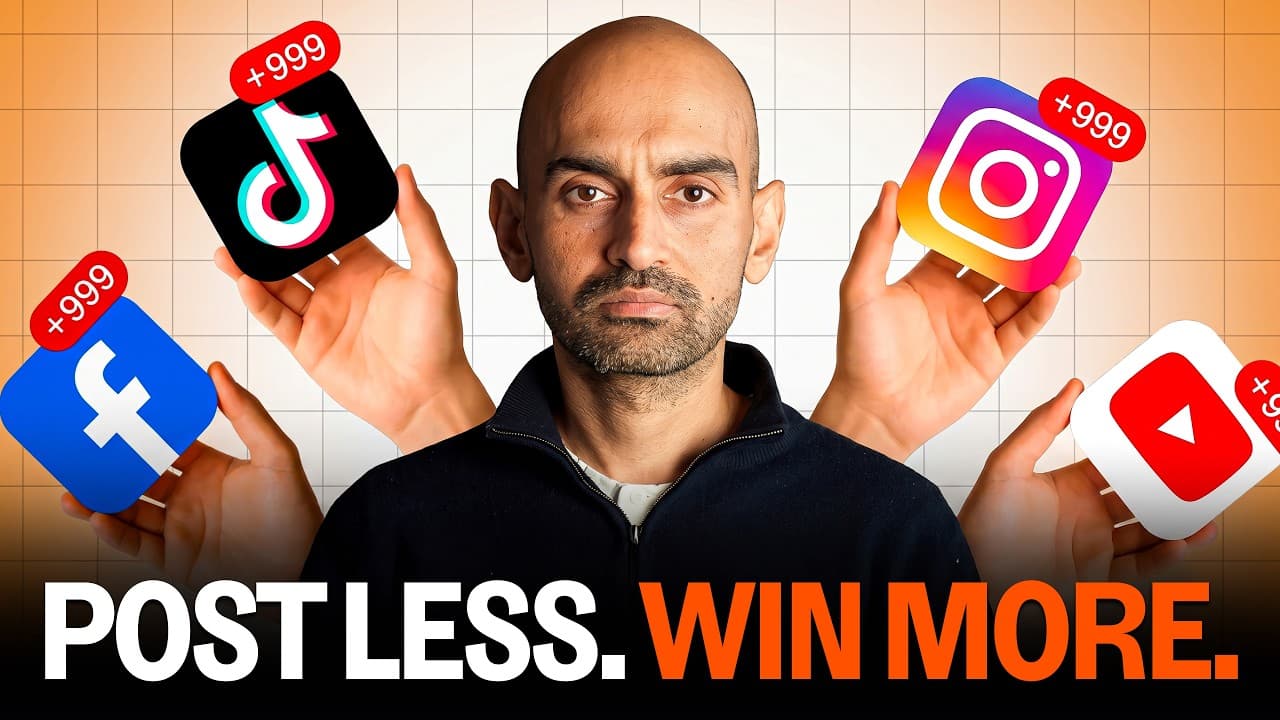
If I had to start over on social media from scratch, I'd do less, not more. I still post 40 to 60 piece of content a month, but I'd only sit down to record two times a month. That sounds backwards, I know, but after 20 years of building audiences online, I've learned that the algorithm in 2026 doesn't reward how hard you work. It rewards how smart ... Read More
Key Insights
- The idea is the fundamental unit of content, while each post is only one format in which that idea appears. This shift replaces the unrealistic task of inventing 40 to 60 separate ideas with developing four strong monthly ideas that can be distributed repeatedly.
- Authority positioning is a one-sentence definition of whom you help, what you help them accomplish, and what distinguishes your point of view. It acts as a filter, ensuring that every published piece reinforces a recognizable area of expertise instead of confusing audiences and algorithms.
- Content pillars are three to five subtopics organized beneath the authority statement. Fewer pillars can leave a creator without enough subjects, while too many can weaken audience recognition, so every piece should fit clearly within a limited and coherent set of thematic buckets.
- Every piece of content has one of three jobs: build trust, extend reach, or provide practical value. Personal stories strengthen relationships, surprising or contrarian claims attract new audiences, and frameworks or instructions deliver usefulness. A complete strategy rotates among all three roles.
- A content flywheel converts one 10 to 20 minute anchor video into roughly 11 to 15 derivative assets, including short clips, graphics, an article, a LinkedIn post, and an X thread. Repeating the process four times can create 40 to 60 monthly pieces.
- Connected assets build trust faster than isolated posts because each format directs audiences toward deeper material. Shorts can point to an anchor video, articles can link to timestamps, LinkedIn posts can lead to a newsletter, and the newsletter can connect the entire body of content.
- Batching makes high-volume publishing manageable by recording four videos in one sitting, then assigning subsequent production stages to editing, graphics, articles, and social posts. The stated workload is 20 to 30 hours monthly for a solo creator using AI, or four to eight hours with support.
- Authority-driven content converts through sales enablement, AI search, and direct response. It can prepare prospects before sales calls, explain a company vision to stakeholders, increase the likelihood of appearing across AI-readable channels, or direct audiences toward one clearly defined action.
- More videos from this channel:
- More from this channel: Neil Patel
Install to Summarize YouTube Videos and Get Transcripts
Explore YouTube Video Summarizer or Get YouTube Transcript Extractor
Questions & Answers
Q: How do you build a social media strategy from zero?
Start by deciding what you want to be known for rather than asking what to post on each platform every day. Write an authority statement that identifies your audience, the result you help them achieve, and your distinct perspective. Next, define three to five supporting content pillars and rotate your content among trust building, reach, and practical usefulness.
Q: Why should ideas replace posts as the unit of content?
An idea can appear in many formats, while treating every post as an independent unit forces creators to invent new material constantly. By developing four strong monthly ideas, a creator can produce anchor videos, clips, graphics, articles, newsletters, text posts, and threads without starting over each time. This makes a 40 to 60 piece monthly output more sustainable.
Q: What should an authority statement include?
An authority statement should contain three elements in one sentence: whom you help, what you help them do, and what makes your perspective different. The statement then becomes a filter for every content decision. If a proposed piece does not reinforce that position, it should be reconsidered because unrelated topics can confuse both the intended audience and recommendation systems.
Q: How many content pillars should a creator use?
A creator should use three to five content pillars under the main authority statement. These pillars are the subtopics into which every content asset should fit. Too few can restrict the available subject matter and make it difficult to publish consistently. Too many can scatter the message, making it harder for audiences and algorithms to recognize the creator's expertise.
Q: How can one video become multiple social media posts?
Begin with one 10 to 20 minute anchor video and extract roughly 10 short, punchy moments for clips. Add three to four graphics based on a chart, framework, screenshot, or quotation. Then create an 800 to 1,200 word article, a 100 to 250 word LinkedIn post, and an X thread containing eight to 12 posts.
Q: How should a monthly content production workflow be batched?
Record all four monthly anchor videos in one sitting using the same lighting and, if preferred, the same outfit. The transcript describes allocating the next two days to editing long videos and extracting clips, day four to graphics, and day five to articles and social posts. This workflow can complete an entire month's content within one production week.
Q: How does authority content help generate business results?
Authority content supports three business paths: sales enablement, AI search visibility, and direct response. A detailed video can help prospects understand a company's thinking before a sales call, or explain a vision to employees and stakeholders. Multichannel publishing supports discoverability, while selected pieces can promote one action such as a download, template, or waitlist.
Q: Why is chasing viral views a poor strategy for business owners?
Viral attention does not necessarily produce the trust required for a purchase. A viewer may remember one surprising moment but forget the creator soon afterward. Founders, executives, and business owners benefit more from demonstrating a consistent, useful point of view that helps prospects understand how they approach problems. The relevant scoreboard is business movement, not views alone.
Summary & Key Takeaways
-
A sustainable strategy starts with authority positioning rather than daily platform decisions. Create one statement identifying whom you help, what outcome you deliver, and why your perspective differs. Organize three to five content pillars beneath it, then rotate each piece among trust building, audience reach, and practical usefulness to maintain clarity and variety.
-
A content flywheel turns each 10 to 20 minute anchor video into short clips, graphics, an 800 to 1,200 word article, a LinkedIn post, and an X thread. Connecting these assets through links and timestamps helps audiences encounter the same idea across formats, reinforces expertise, and expands visibility across multiple channels.
-
Content should advance the business through sales enablement, AI search visibility, or direct response. Prospects and stakeholders can use authoritative videos before meetings, while consistent multichannel publishing can strengthen discoverability. When requesting action, promote one clear next step consistently for at least 90 days rather than frequently changing the offer.
Read in Other Languages (beta)
Share This Summary 📚
Summarize YouTube Videos and Get Video Transcripts with 1-Click
Try YouTube Summary with ChatGPT & Claude or YouTube Transcript Generator
Explore More Summaries from Neil Patel 📚



Summarize YouTube Videos and Get Video Transcripts with 1-Click
Try YouTube Summary with ChatGPT & Claude or YouTube Transcript Generator