Marc Raibert: Boston Dynamics | MIT Artificial Intelligence (AI)
TL;DR
Boston Dynamics designs robots as a single holistic system of hardware, the physical world, and computer control working in harmony, rather than a computer merely commanding hardware. The company's grand mission is to build robots equal to or greater than people and animals, using a rapid 'build it, break it, fix it' loop to learn from real-world failures.
Transcript
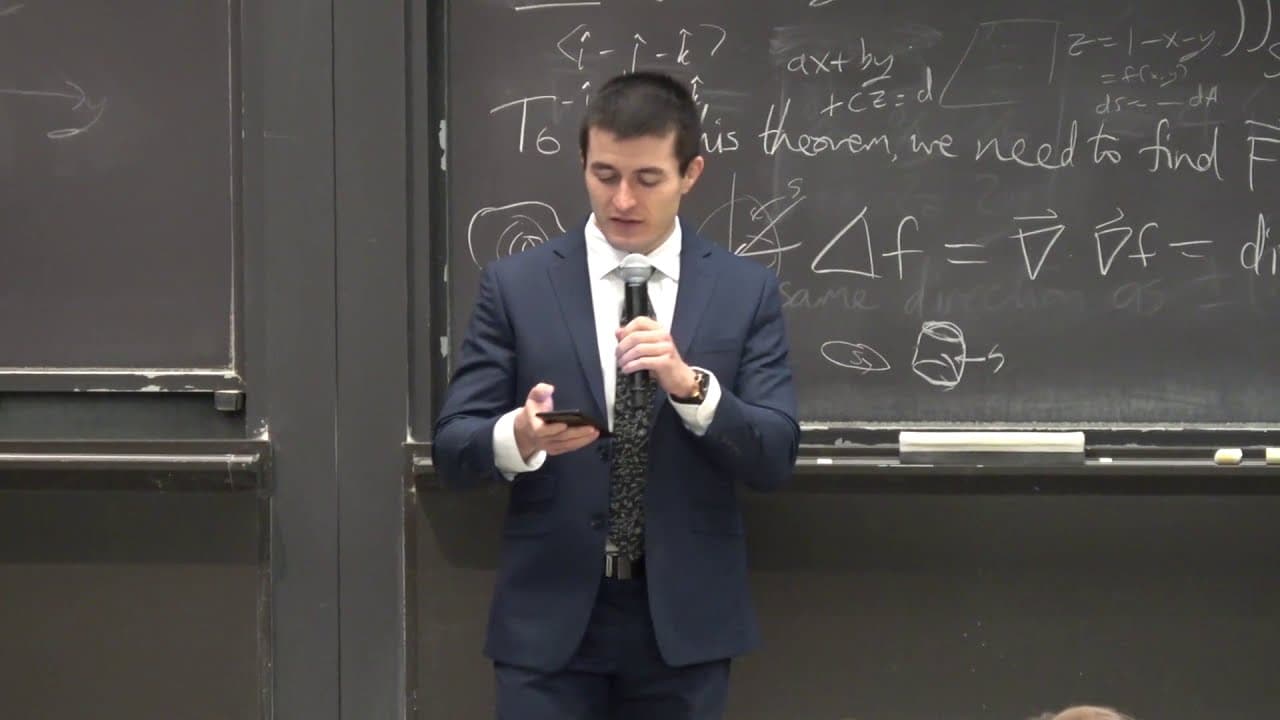
welcome back to six at $0.99 artificial general intelligence today we have mark raybert he is the he really doesn't need an introduction but we'll give him one anyway he's the founder and CEO CEO of Boston Dynamics he founded the CMU like lab in 1980 the MIT leg lab in 1986 Boston Dynamics in 1992 he and his team have developed some of the most ama... Read More
Key Insights
- Boston Dynamics' grand mission is to make robots equal to or greater than people and animals, a daunting goal because human abilities like manipulation, sensing, and stabilized perception seem effortless yet are extremely hard to replicate in machines.
- Dynamic stabilization is central to Boston Dynamics' work, relying on active sensing, onboard control, reflexes, and an understanding of physics so robots can operate in real-world terrain rather than controlled lab conditions.
- Decomposing the control problem into many separate controllers, each operating in a small region of state space, simplified each controller and let multiple programmers work on solutions, boosting Spot's rough-terrain performance.
- Robust low-level control is a key path to autonomy because making implementations resilient to real-world disturbances means the planning layer does not have to handle every detail of the environment.
- Robots and the physical world instruct each other, since energy stored in a robot's springs and motion shapes its future behavior, so Boston Dynamics designs hardware, the physical world, and the computer as one holistic harmonic system.
- The 'build it, break it, fix it' philosophy means every robot is designed to be bashed to bits, with staff repairing them daily so the team can learn from real physical testing and iterate as fast and often as possible.
- Mobile manipulation, adding a robot arm so manipulation happens while the base can move, is considered a powerful approach, demonstrated by fitting an arm to a version of Spot.
- The four robots Raibert highlights, Spot Mini, Spot, Atlas, and Handle, were all developed during Boston Dynamics' four years as part of Google, alongside efforts to begin productizing capable robots.
Install to Summarize YouTube Videos and Get Transcripts
Explore YouTube Video Summarizer or Get YouTube Transcript Extractor
Questions & Answers
Q: What is Boston Dynamics' grand mission for its robots?
Boston Dynamics' grand mission and aspiration is to make robots that are equal to or greater than people and animals. Raibert calls it a daunting mission because humans are so good at things that they seem effortless, from manipulating and picking up objects with sensor-rich hands to perception systems that can look out and see hundreds of people stabilized in space even while moving. Robots are not there yet, but the goal is to keep chipping away to get there.
Q: How did Marc Raibert get his start in robotics?
Raibert got his start in robotics at MIT as a graduate student in what was then the psychology department, later the brain and cognitive sciences department, while taking an AI course. Walking back with his professor Bert Horn to Tech Square, where the AI lab was on the ninth floor, he saw a colleague named Russell with a robot arm taken apart into about a thousand pieces on a table. He says he was a roboticist from that day on, kept Bert Horn as an advisor, and never looked back.
Q: What were Big Dog's capabilities and where was it tested?
Big Dog was a roughly thousand-pound robot that could carry about 400 pounds of payload, with all of its control onboard plus reflexes and sensors for dynamic stabilization. Representing where the company stood after about ten years of work on machines for the real world, it was tested all around the United States, including bushwhacking in Virginia while intermittently following a person it had to keep track of, and marching up a hill through ten inches of snow back in Boston.
Q: How did Boston Dynamics improve Spot's rough-terrain performance?
Boston Dynamics revolutionized the hardware design and control for Spot, decomposing the control problem into many separate controllers that each operated in different regions of state space. This approach both let programmers work on multiple solutions to the problem in parallel and simplified the complexity of each individual controller, since each only had to operate in a small part of the dynamic space. The result was a much higher level of rough-terrain performance compared with the predecessor quadrupeds.
Q: Why does Boston Dynamics emphasize robustness to disturbances for autonomy?
Raibert argues that one of the most important ways to reach autonomy is to make the low-level implementations very robust to disturbances in the real world. Their controllers do not just do one particular thing; they determine where they are in the execution and adjust what they are doing to compensate for disturbances. When the low level handles this robustly, the higher planning steps do not have to take care of all the minutiae and details of the real world, which simplifies achieving autonomy overall.
Q: What is the 'build it, break it, fix it' philosophy?
Build it, break it, fix it is Boston Dynamics' approach of designing every robot to get bashed to bits, with staff on hand to fix robots on a daily basis as they break. Raibert contrasts this with friends who treat their creations as too precious to test, even keeping a gold-plated robot they fear taking into the world. By breaking and repairing robots, the team learns from the actual physical machine working in the world and uses that knowledge to improve behavior, going around the loop as quickly and as many times as possible.
Q: What does Raibert mean by designing robots as a holistic 'harmony'?
Raibert rejects the simple model where a computer just listens to a robot's sensors and issues instructions. He adds that the physical world also instructs the robot, because energy stored in the robot's springs and its motion determines how it behaves going forward. So they design the robot hardware, the physical world, and the computer as one holistic thing. He calls this a harmony, a harmonic system where energy oscillates between potential energy of elevation, elastic deformation, and kinetic energy of motion, as in inverted pendulum dynamics common to legged locomotion.
Q: Which robots did Boston Dynamics develop while part of Google?
During its four years as part of Google, Boston Dynamics developed the four robots Raibert focuses on: Spot Mini, Spot, Atlas the humanoid, and Handle, the latest version at the time. Atlas is the humanoid some may remember from the DARPA Robotics Challenge. On Spot, the team added a robot arm to enable mobile manipulation, and they tested package delivery to employees' houses, reaching between seventy and eighty percent success across the varied stairways and entranceways encountered after collecting data and making improvements.
Summary
Mark Raybert, the founder and CEO of Boston Dynamics, discusses his mission of creating robots that are equal to or greater than humans and animals. He shares the progress they have made in developing advanced robots like Big Dawg, Atlas, Handle, and Spot Mini. He also talks about their approach to robotics, their philosophy, and the challenges they face in terms of cost, safety, and commercialization. Mark emphasizes the importance of both mechanical design and computational capability in building successful robots. He concludes by discussing potential applications of their robots and the need for addressing consumer psychology.
Questions & Answers
Q: What is the mission of Boston Dynamics?
The mission of Boston Dynamics is to make robots that are equal to or greater than people and animals in terms of their capabilities.
Q: Why is the mission of Boston Dynamics considered daunting?
The mission is considered daunting because humans are already highly skilled in various tasks, such as perception, manipulation, and coordination, which robots are not yet capable of achieving effortlessly.
Q: How did Mark Raybert get his start in robotics?
Mark Raybert got his start in robotics as a graduate student at MIT, where he studied in the psychology department. He discovered his passion for robotics through an AI course and the experience of seeing a robot arm being worked on in the lab.
Q: What are some examples of animals displaying impressive movement and capabilities?
Animals can climb rough terrains, run at high speeds, and demonstrate grace and fearlessness in their movements. Mark showcases various videos of animals doing these activities, including climbing, running, and jumping.
Q: What robots has Boston Dynamics developed recently?
Boston Dynamics has developed several robots, including Big Dawg, Atlas, Handle, and Spot Mini. These robots showcase agility, dexterity, and the ability to handle various tasks.
Q: How did Boston Dynamics improve the performance of their robots on rough terrains?
Boston Dynamics revolutionized the hardware design and control mechanisms of their robots, allowing them to navigate rough terrains with higher levels of performance. They decomposed the control problem into multiple controllers and implemented solutions in different regions of the state space, simplifying the complexity of each controller.
Q: What is the concept behind the Spot Mini robot?
The Spot Mini robot is designed as a platform akin to Android for robots. It provides a place to mount hardware, an API for programming, and the ability to augment computing externally. It aims to support third-party developers in creating their applications for the robot.
Q: How does Boston Dynamics approach the hardware, physical world, and computer integration?
Boston Dynamics sees the hardware, physical world, and computer as one holistic system. They consider the interactions of these components and design them to work together in harmony. They believe that understanding the energetic aspects and exploiting them in the design can lead to more robust and efficient robots.
Q: What is the significance of the "build it, break it, fix it" approach for Boston Dynamics?
The "build it, break it, fix it" approach is crucial for Boston Dynamics. They deliberately build robots that can withstand rough handling and require frequent repairs. This approach allows them to learn and continuously improve the robots based on real-world experiments and the feedback they gather from fixing and modifying them.
Q: What are the challenges in creating cost-effective robots?
Cost reduction is a challenge for Boston Dynamics. They have always focused on building functional robots without considering cost constraints initially. However, they now realize the need to make their robots cost-effective for wider adoption and are working on reducing the costs through design improvements.
Takeaways (in one paragraph)
Mark Raybert's talk at Six at $0.99 Artificial General Intelligence highlighted the mission and progress of Boston Dynamics in creating advanced robots. He emphasized the importance of pushing the boundaries of robot capabilities while considering cost, safety, and commercialization. The company's approach integrates hardware, physical world, and computer as a holistic system, with a focus on robustness, optimization, and adaptability. Mark also discussed potential applications of their robots and the need to address consumer psychology. Overall, Boston Dynamics continues to inspire with their groundbreaking work in the field of robotics.
Summary & Key Takeaways
-
Marc Raibert, founder and CEO of Boston Dynamics, founded the CMU leg lab in 1980, the MIT leg lab in 1986, and Boston Dynamics in 1992. He began in robotics as an MIT graduate student in brain and cognitive sciences, hooked after seeing a disassembled robot arm in the AI lab.
-
Big Dog, a thousand-pound robot carrying about 400 pounds of payload, was tested across the United States, bushwhacking in Virginia while following a person and marching up hills through ten inches of Boston snow, demonstrating onboard control, reflexes, and dynamic stabilization on rough terrain.
-
Boston Dynamics uses rapid 'build it, break it, fix it' iteration and holistic 'harmony' design. Package delivery tests to employees' homes reached seventy to eighty percent success on varied stairs and entrances. After 25 years as a long-term research company, it has started productizing capable robots.
Read in Other Languages (beta)
Share This Summary 📚
Summarize YouTube Videos and Get Video Transcripts with 1-Click
Try YouTube Summary with ChatGPT & Claude or YouTube Transcript Generator
Explore More Summaries from Lex Fridman 📚




Summarize YouTube Videos and Get Video Transcripts with 1-Click
Try YouTube Summary with ChatGPT & Claude or YouTube Transcript Generator