How to Start a Solo AI Consulting Business
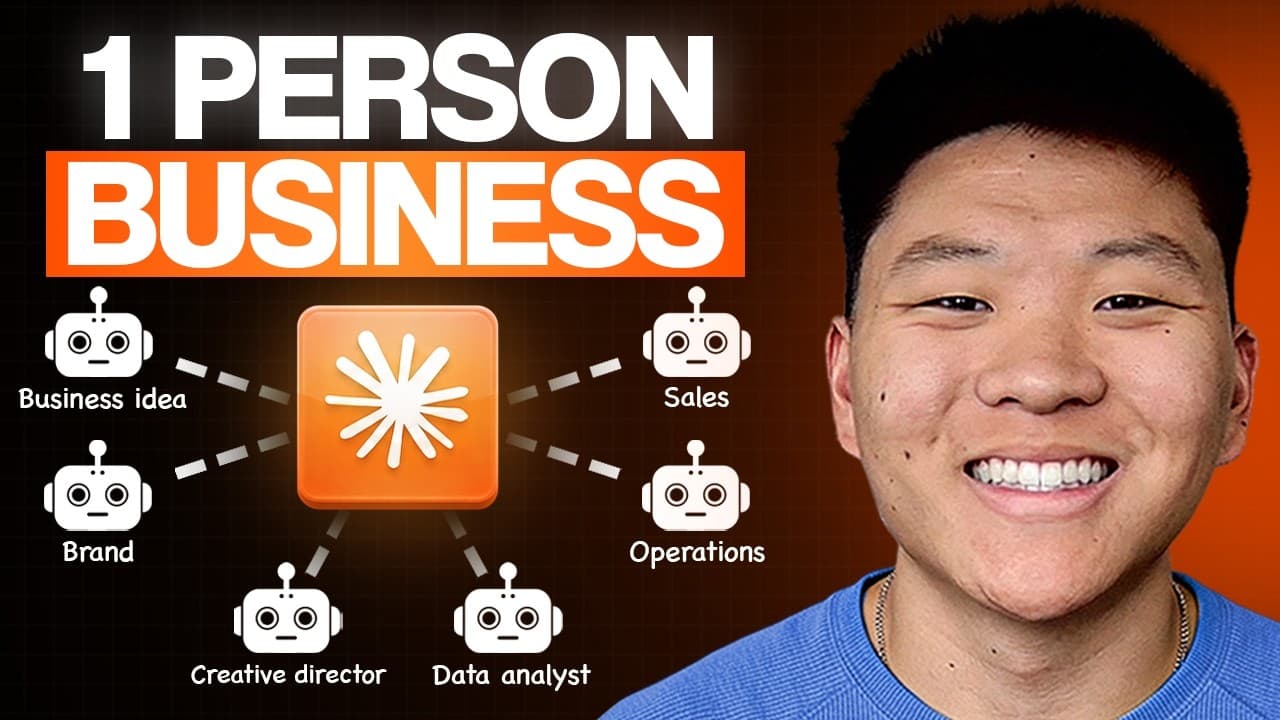
TL;DR
Start by selling a low-risk AI education or setup session, then progress through a paid audit, focused implementation project, and monthly retainer. Position yourself as an AI partner who improves measurable business outcomes, specifically acquiring more customers, increasing customer value, or cutting costs, while using Claude Code to reduce development time and operate without a team.
Transcript
So thanks to AI, it is now possible to build a one-person business, but only if you know how to use Cloud Code the right way. So in this video, we're going to cover what this business actually is and how to build it step-by-step. So before we get into anything, let me just tell you about what this business is because there is a lot of noise out the... Read More
Key Insights
- An AI consultant is a solo partner who helps businesses apply AI within real operations. The recommended identity emphasizes measurable outcomes instead of technical features, allowing the consultant to discuss revenue, customer value, and operational savings in terms that business owners already understand.
- Claude Code uses natural language as the interface for building solutions. The consultant does not need a formal computer science degree or prior coding ability, but must clearly describe the intended result and accurately identify workflows that offer useful automation opportunities.
- AI-assisted development can sharply reduce implementation time. The presenter reports that work previously requiring about two hours can now take roughly 20–30 minutes in Claude Code, which increases the amount of delivery leverage available to one person without an agency or technical team.
- Every valuable AI project should support one of three goals: getting more customers, making each customer worth more, or cutting costs. Connecting a project to one primary goal provides a clear North Star and makes the consultant's contribution easier to measure and defend.
- Customer acquisition projects include lead qualification and automated follow-up systems. Customer-value projects include CRM automation and onboarding flows, while cost-reduction projects include internal knowledge assistants, reporting dashboards, and ticket sorting. Some implementations affect multiple goals, but one should remain the primary measure.
- The service ladder consists of education or consulting, an audit, a project, and a retainer. Each stage increases commitment only after trust has been established, providing a practical route from an initial conversation to recurring monthly revenue without immediately asking a new client for a large engagement.
- A low-cost education or setup session can function as informal discovery. While helping a business use Claude Code, Claude Co-Worker, or an AI operating system, the consultant observes inefficient workflows and learns what the client values, which can reveal opportunities before a formal audit is proposed.
- A paid audit is structured scoping that maps workflows, automation potential, organizational politics, mission-critical processes, and optional features. Its deliverable can be a 10–40 page deck or PDF that identifies waste, recommends AI opportunities, and proposes a first project with expected results.
Install to Summarize YouTube Videos and Get Transcripts
Explore YouTube Video Summarizer or Get YouTube Transcript Extractor
Questions & Answers
Q: How do you start a one-person AI consulting business?
Start by positioning yourself as an AI partner who improves business outcomes, then offer a low-risk education, consulting, or technical setup session. The suggested service ladder begins with a $100–$500 session, continues into a paid operational audit, advances to one focused implementation project, and ends with a monthly retainer after trust and measurable results have been established.
Q: What does an AI consultant do for businesses?
An AI consultant studies how a business operates, identifies useful automation opportunities, and implements systems that improve measurable results. Each engagement should help the client get more customers, make each customer worth more, or reduce costs. Possible solutions include lead qualification, automated follow-up, CRM workflows, onboarding flows, internal knowledge assistants, reporting dashboards, and ticket-sorting systems.
Q: Why should a consultant use the AI partner positioning?
The AI partner positioning directs the conversation toward outcomes instead of technical features. A builder may be perceived as selling a particular system, while a partner connects the work to customer acquisition, customer value, or cost reduction. The presenter argues that businesses pay more for real outcomes, making this identity important when discussing value and proposing engagements.
Q: What business outcomes should an AI project target?
An AI project should target one primary outcome from three categories: getting more customers, making each customer worth more, or cutting costs. Relevant measures include leads, booked appointments, conversions, average order value, lifetime value, retention, repeat-purchase timing, upsell rate, hours per task, error rate, ticket count, and completion time. One primary category provides a clearer North Star.
Q: What is the service ladder for selling AI consulting?
The service ladder is a progression from education or consulting to an audit, a focused project, and a monthly retainer. The first session lowers the client's risk and helps uncover workflow problems. The audit turns discovery into paid scoping, the project proves ROI through one defined implementation, and the retainer converts one-off project income into predictable monthly revenue.
Q: How can a beginner land a first AI consulting client?
A beginner can begin with a one-hour education or setup engagement priced from $100 to $500 instead of immediately pitching a large project or retainer. The session may teach a team to use AI on real work or help configure Claude Code, Claude Co-Worker, or a first project. It also creates trust and exposes operational problems worth solving.
Q: What should an AI operations audit include?
An AI operations audit should map the client's workflows and distinguish automatable tasks, organizational politics, mission-critical processes, and optional features. After one or two hours of focused discovery, the consultant can produce a 10–40 page slide deck or PDF describing waste and AI opportunities. The audit should conclude with a practical proposal for the first project and its expected results.
Q: How does Claude Code support a solo AI consultancy?
Claude Code allows the consultant to describe desired systems through natural language, reducing dependence on formal programming education or prior coding ability. The presenter reports that builds once taking about two hours can now take approximately 20–30 minutes, sometimes less. Faster delivery, lower overhead, and direct client relationships make it more practical for one person to serve businesses without an agency team.
Summary & Key Takeaways
-
A one-person AI business can operate as an AI consultancy that helps companies apply AI to their existing operations. The recommended positioning is AI partner, not merely builder or automation specialist, because the offer focuses on business outcomes. Claude Code makes delivery more accessible by using natural language as the primary interface.
-
Every proposed engagement should support one of three business goals: acquire more customers, increase the value of each customer, or reduce costs. Examples include lead qualification, automated follow-up, CRM workflows, onboarding systems, knowledge assistants, reporting dashboards, and ticket sorting. Selecting one primary goal creates a clear measure of value.
-
The service ladder moves clients from education or setup assistance to a paid audit, a focused project, and eventually a monthly retainer. Beginners can reduce buyer risk with a $100–$500 session, use the interaction to discover workflow problems, document opportunities through an audit, and prove ROI with one carefully scoped implementation.
Read in Other Languages (beta)
Share This Summary 📚
Summarize YouTube Videos and Get Video Transcripts with 1-Click
Try YouTube Summary with ChatGPT & Claude or YouTube Transcript Generator
Explore More Summaries from Nate Herk | AI Automation 📚
Summarize YouTube Videos and Get Video Transcripts with 1-Click
Try YouTube Summary with ChatGPT & Claude or YouTube Transcript Generator