Why Did Google Open Its Largest Store in Japan?
TL;DR
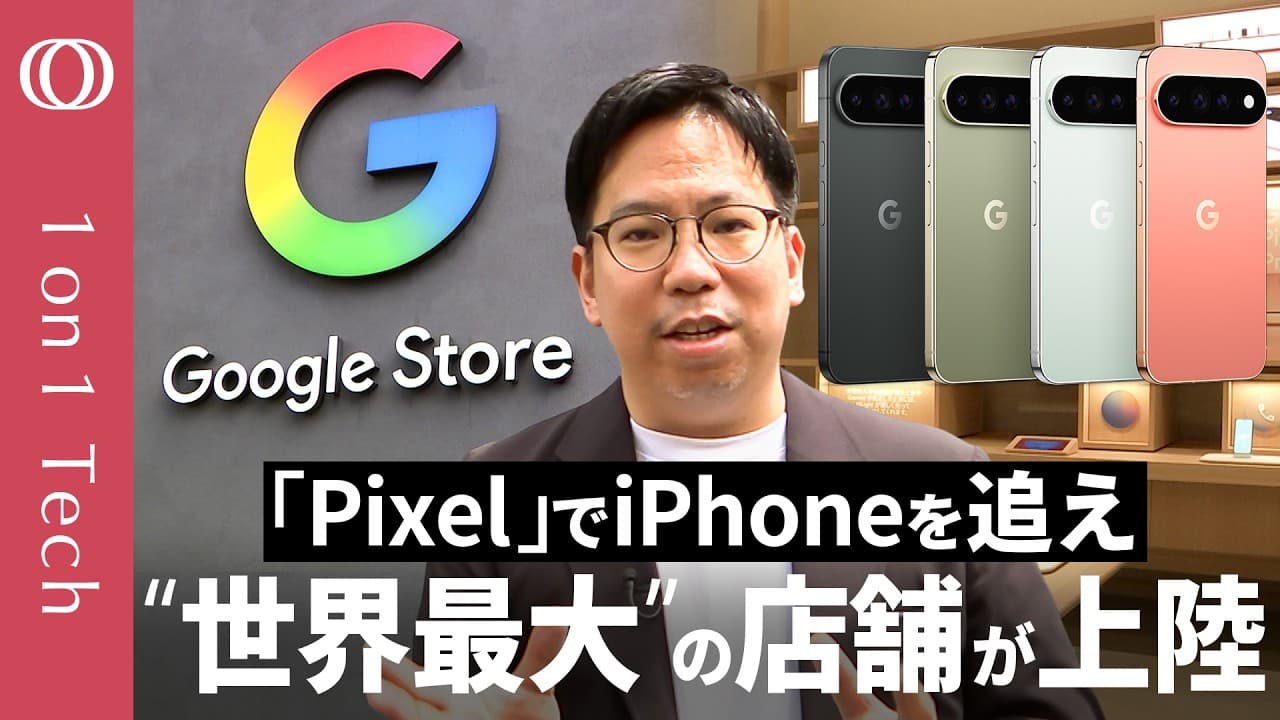
Google chose Japan for its first physical store outside the United States because the country is a longstanding priority market where Pixel has achieved strong user growth. The three-floor Omotesando flagship combines product sales with hands-on AI demonstrations, individual support, repairs, switching assistance, and community programs, aiming to build trust and long-term brand affinity rather than pursue rapid store expansion.
Transcript
Okay. We have Mariah Finley, uh, VP and head of Google store and we have also have the IB Ross, chief design officer. Thank you very much for your time today. You're welcome. Yeah. Google opened its first physical store back uh in New York City back in 2021. Um, so I was wondering why did the company need physical stores to sell its hardware produc... Read More
Key Insights
- Physical retail is Google’s way to make its hardware, software, and AI tangible. Customers can handle devices, see demonstrations, explore AI features, and receive human guidance that is difficult to reproduce through online sales alone.
- Japan is Google’s first international flagship market because it has been important to the company for years and Pixel has experienced strong user growth there. Google also considers Japan’s distinctive physical retail culture and emphasis on hospitality particularly compatible with its service model.
- The Omotesando store is Google’s largest retail location and its most experience-focused site. One upper floor is devoted to immersive Pixel and Gemini activities, while a lower floor provides individual support, creating a broader role than a conventional point-of-sale store.
- Long-term brand affinity is a central measure of the store’s value. Google expects useful demonstrations, personal support, repairs, switching assistance, and onboarding to build trust and awareness, which the company believes can eventually contribute to business growth.
- Google’s competitive advantage is its control of multiple technology layers. The company connects its Tensor chip, Pixel hardware, Android operating system, and Gemini capabilities into demonstrations intended to show how the complete system works in customers’ daily lives.
- Human support is intended to reduce the difficulty of changing devices. Store employees can answer questions, assist with data transfers and onboarding, troubleshoot problems, and arrange repairs, addressing practical concerns that may prevent an iPhone user from considering Pixel or Android.
- Google’s retail expansion strategy is deliberately gradual. Executives said the company prioritizes the quality, craft, service, and market-specific character of each location, while using every store to learn and adapt as technology and customer expectations change rapidly.
- Store design is treated as an extension of product design. The design team iterated through several floor plans and used curves, textures, details, and other elements that connect Google’s hardware aesthetic with Japanese design sensibilities and the existing Omotesando building.
Install to Summarize YouTube Videos and Get Transcripts
Explore YouTube Video Summarizer or Get YouTube Transcript Extractor
Questions & Answers
Q: Why did Google choose Japan for its first international store?
Google chose Japan because it has been a longstanding and exceptionally important market for the company, and Pixel has experienced strong user growth there. Executives also emphasized that Japanese consumers value physical shopping and attentive hospitality. Those conditions made Japan a suitable place to introduce Google’s first flagship store outside the United States and demonstrate its broader hardware, software, and AI portfolio.
Q: What can customers do at the Google Store in Omotesando?
Customers can handle Google devices, receive product demonstrations, explore Pixel and Gemini experiences, and see how AI features might fit into daily life. The store also provides individual assistance with troubleshooting, switching devices, transferring data, onboarding, and repairs. Community programming adds another function, making the location a service and learning environment as well as a place where products can be purchased.
Q: Why does the Google Store dedicate a floor to AI experiences?
Google believes emerging AI features are easier to understand when people can try them directly and receive guidance from another person. The experience floor lets visitors interact with creative tools and immersive Gemini demonstrations without making immediate purchasing the sole objective. Google expects these practical encounters to make its technology more understandable, build trust, increase brand awareness, and support longer-term customer relationships.
Q: How does Google plan to persuade iPhone users to switch to Pixel?
Google plans to let prospective customers see, touch, and test Pixel devices while receiving detailed demonstrations of their AI features. Individual service is another part of the strategy because employees can answer questions about devices, assist with data transfers, and guide users through onboarding. Together, hands-on evaluation and switching support are intended to reduce uncertainty for people considering Pixel or Android.
Q: Why is the Omotesando Google Store the company’s largest?
The store is Google’s largest because the company wanted enough space for a mission extending beyond conventional retail. It includes an upper floor devoted to immersive brand and AI experiences, a primary area where customers can view and buy products, and a lower floor for individual service. The larger footprint allows sales, demonstrations, support, repairs, and community activities to operate together.
Q: How does Google measure the return from an experience-focused store?
Google considers business growth important, but it also evaluates the store as a way to develop long-term brand affinity and trust among Japanese consumers. Executives believe that helpful demonstrations of everyday uses, combined with strong personal service, can increase awareness and deepen customer relationships. The expected return therefore includes both eventual commercial growth and a stronger connection between consumers and the Google brand.
Q: How was the Omotesando Google Store designed?
The design process began by examining the existing building and imagining how Google’s aesthetic could replace the previous tenant’s environment. Business, design, construction, and product-oriented teams collaborated within a budget and a list of functional requirements. They explored three or four floor plans and emphasized curves, textures, details, and visual coherence with Google’s products and Japanese aesthetic sensibilities.
Q: Will Google rapidly expand its physical store network?
Google does not plan to prioritize rapid store openings. Its strategy is to create the right brand experience for each market, with close attention to design craft, in-store activities, and service quality. Executives said gradual expansion makes it easier to learn and iterate while technology is changing quickly. Lessons from Tokyo’s immersive flagship will inform other locations across the retail network.
Summary & Key Takeaways
-
Google opened its first physical store in New York City in 2021, then selected Japan for its first international flagship. Executives cited Japan’s longstanding importance to Google, Pixel’s strong user growth, and Japanese consumers’ appreciation for physical retail, attentive service, and the ability to experience products directly before choosing them.
-
The Omotesando location is Google’s largest store and occupies three floors. Its main retail area is complemented by an upper floor devoted to immersive Pixel and Gemini experiences and a lower floor focused on individual service. Google expects demonstrations and support to strengthen awareness, trust, brand affinity, and eventual business growth.
-
Google is expanding physical retail deliberately instead of opening many stores quickly. Each location is designed to express the same aesthetic principles as Google’s hardware while responding to its market and building. The company plans to learn from Tokyo’s immersive format and apply those lessons as its retail network expands.
Read in Other Languages (beta)
Share This Summary 📚
Summarize YouTube Videos and Get Video Transcripts with 1-Click
Try YouTube Summary with ChatGPT & Claude or YouTube Transcript Generator
Explore More Summaries from TBS CROSS DIG with Bloomberg 📚






Summarize YouTube Videos and Get Video Transcripts with 1-Click
Try YouTube Summary with ChatGPT & Claude or YouTube Transcript Generator