How to Automate Daily Tasks with Claude Code
TL;DR
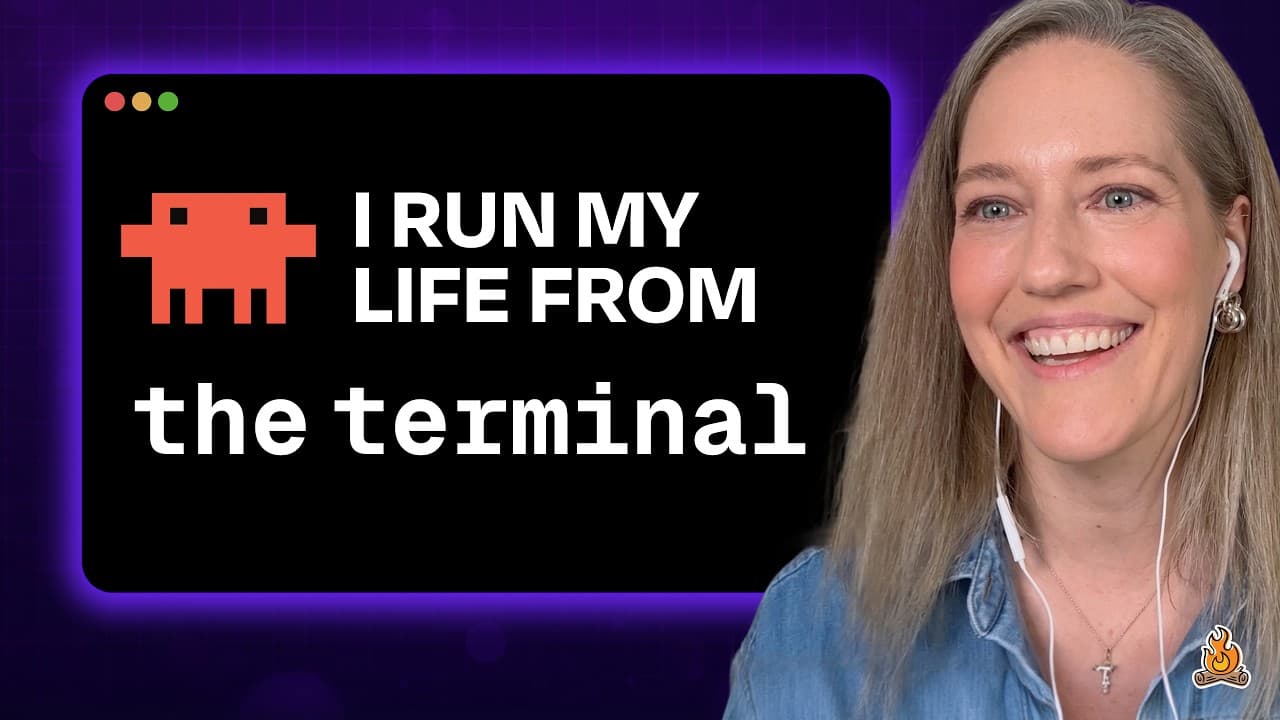
Hilary Gridley shares her approach to automating personal and professional tasks using Claude Code. By leveraging simple tools like iPhone shortcuts and Claude's observation capabilities, she reduces time spent on life admin and focuses on high-impact activities. Her 'anti-system system' philosophy emphasizes simplicity and adaptability, allowing AI to learn and adjust preferences over time.
Transcript
The opportunity cost of my time has never been higher. Also, as a new mom, it's never been harder. It has never felt harder to get out of my time what I want to because my attention is super fractured. How do you decide what to automate? >> For any possible task, if I were 10 times better at it, would it have 10 times the impact? If the answer to t... Read More
Key Insights
- Hilary Gridley uses Claude Code to manage her daily tasks and personal productivity.
- The 'anti-system system' approach prioritizes simplicity and allows AI to learn preferences through observation.
- Claude Code integrates with reminders and calendar to organize tasks without complex setup.
- The '10x impact framework' helps decide which tasks to automate and where to focus human effort.
- The 'yappers API' involves talking about tasks while working, eliminating the need for complex integrations.
- Claude Code can break down overwhelming tasks into manageable steps to ensure completion.
- Creating Claude Skills involves describing problems to AI rather than writing code.
- A 'recording mode' skill allows for demoing workflows without exposing personal information.
Install to Summarize YouTube Videos and Get Transcripts
Explore YouTube Video Summarizer or Get YouTube Transcript Extractor
Questions & Answers
Q: How can Claude Code help in daily task management?
Claude Code assists in daily task management by integrating with reminders and calendars to organize tasks efficiently. It learns preferences over time, adjusts schedules, and breaks down overwhelming tasks into smaller steps. By using simple tools like iPhone shortcuts, users can capture tasks instantly, allowing Claude to manage them without complex setups.
Q: What is the 'anti-system system' approach?
The 'anti-system system' approach emphasizes simplicity and adaptability in using AI for task management. Instead of complex initial setups, it allows AI to learn preferences through observation, adjusting over time to better fit the user's needs. This method reduces the cognitive load and time spent on maintaining productivity systems.
Q: How does the '10x impact framework' guide task automation?
The '10x impact framework' helps decide which tasks to automate by evaluating their potential impact if performed significantly better. Tasks unlikely to have 10 times the impact when improved are automated, while those with high potential impact are prioritized for human effort. This ensures focus on activities that truly enhance productivity and value.
Q: What is the 'yappers API' method?
The 'yappers API' method involves verbally discussing tasks with Claude Code while working, allowing the AI to log and manage tasks without complex integrations. This approach simplifies task tracking and reduces the need for intricate setups by using natural language interactions to update and organize tasks in real-time.
Q: How does Claude Code handle overwhelming tasks?
Claude Code manages overwhelming tasks by breaking them down into smaller, manageable steps. This approach ensures tasks are completed by fitting them into available time slots, reducing procrastination and making it easier to tackle large projects incrementally. It enhances productivity by focusing on actionable steps rather than the entire task at once.
Q: How are Claude Skills created?
Claude Skills are created by describing problems to the AI, which then generates solutions without the need for coding or following tutorials. This process involves identifying the task or issue, discussing it with Claude, and allowing the AI to develop a skill that automates or assists with the task, streamlining workflows efficiently.
Q: What is the purpose of the 'recording mode' skill?
The 'recording mode' skill is designed to anonymize personal information during demos, allowing users to showcase workflows without exposing sensitive data. This skill modifies identifying details in real-time, ensuring privacy while demonstrating AI capabilities and maintaining the integrity of the original data sources.
Q: How can one start using Claude Code for non-coding tasks?
To start using Claude Code for non-coding tasks, begin by identifying simple, repetitive tasks that can be automated. Use natural language to describe these tasks to Claude, allowing it to generate solutions. Start with basic integrations like reminders and calendars, and gradually expand as you become more comfortable with the system's capabilities.
Summary & Key Takeaways
-
Hilary Gridley automates her life using Claude Code, focusing on simplicity and adaptability. By setting up basic tools like iPhone shortcuts, she captures tasks instantly and allows Claude to organize them. Her approach reduces the time spent on life admin, enabling her to focus on tasks with high impact, guided by the '10x impact framework'.
-
Claude Code learns Hilary's preferences over time, adjusting her daily schedule to optimize productivity. The 'yappers API' method involves discussing tasks with Claude in real-time, avoiding complex setups. This approach helps in breaking down large tasks into smaller, manageable steps, ensuring they get done.
-
Hilary's system includes creating custom Claude Skills by describing problems, which Claude then solves. A 'recording mode' skill anonymizes data during demos, protecting personal information. This method demonstrates how AI can streamline workflows and enhance productivity without intricate configurations.
Read in Other Languages (beta)
Share This Summary 📚
Summarize YouTube Videos and Get Video Transcripts with 1-Click
Try YouTube Summary with ChatGPT & Claude or YouTube Transcript Generator
Explore More Summaries from How I AI 📚
Summarize YouTube Videos and Get Video Transcripts with 1-Click
Try YouTube Summary with ChatGPT & Claude or YouTube Transcript Generator