How Does Tissue Damage Trigger Inflammation?
TL;DR
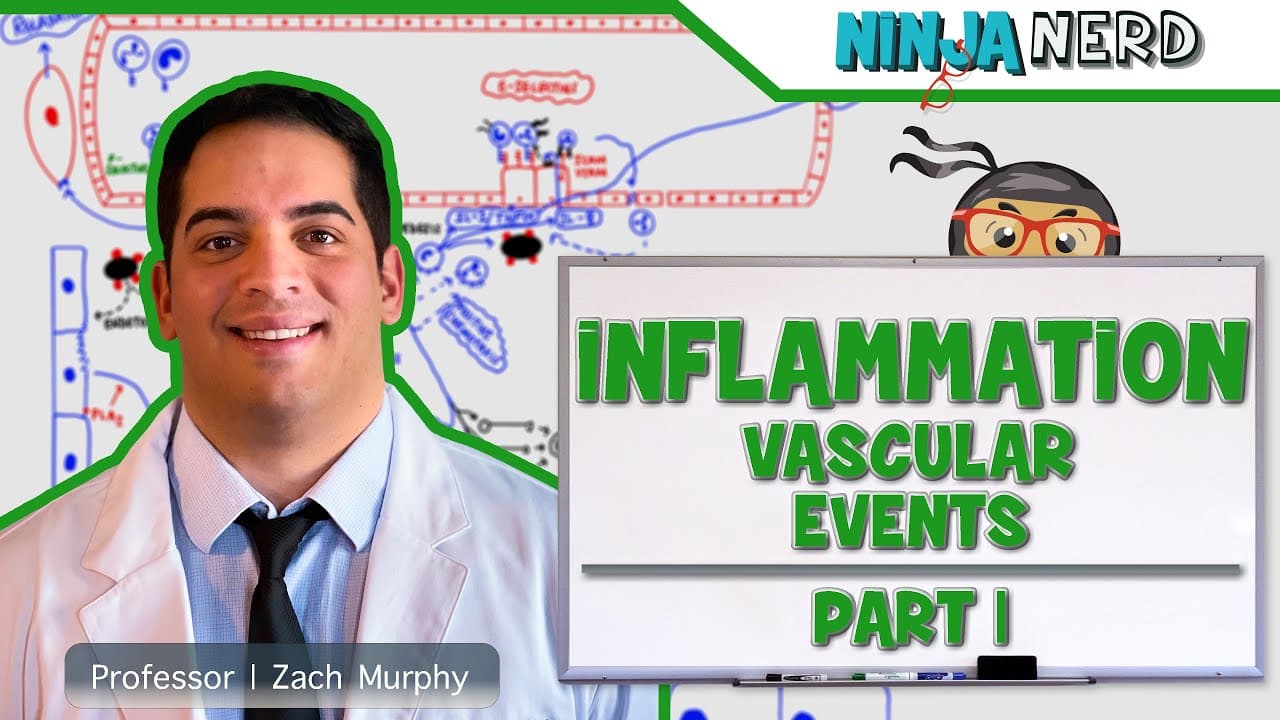
Inflammation begins when tissue damage triggers vascular, cellular, and molecular events that remove cellular debris or infectious organisms and initiate repair. In the example presented, endotoxins from gram-negative bacteria damage tissue cells and can damage mast cells or activate their membrane receptors, initiating signals associated with an inflammatory response.
Transcript
Hi, Ninja Nerds! In this video we are gonna talk about the inflammatory response, but before we... do that, let's define what is inflammation. Inflammation, is some type of tissue damage. Right? So it's damage to the tissue that initiates... a set of vascular and cellular events... that are designed to be able to clean up... any type of cellular de... Read More
Key Insights
- Inflammation is tissue damage that initiates vascular, cellular, and molecular events designed to clear cellular debris or infectious organisms and begin repair.
- Inflammation can be caused by physical trauma, chemical trauma, infectious microorganisms, sunlight, or burns, showing that both infectious and noninfectious tissue injuries can initiate the response.
- Gram-negative bacteria have an outer lipopolysaccharide layer, and its lipid A component can act as an endotoxin that contributes to tissue-cell damage in the presented scenario.
- Antigens are described as sugar molecules, proteins, or glycoproteins that must be both immunogenic and reactive to qualify as complete antigens.
- Immunogenicity is the ability of an antigen to activate immune-system cells and cause those cells to proliferate in response to the antigen.
- Reactivity is the property that allows immune-system cells, specifically plasma cells, to produce antibodies against a particular antigen.
- A hapten is an incomplete antigen that can become complete after binding to a host protein, as illustrated by urushiol from poison ivy or poison oak binding to skin proteins.
- Mast cells can participate in inflammation when bacterial endotoxins damage them or activate receptors on their cell membranes, causing signals to be sent toward the nucleus.
Install to Summarize YouTube Videos and Get Transcripts
Explore YouTube Video Summarizer or Get YouTube Transcript Extractor
Questions & Answers
Q: What is inflammation and what is its purpose?
Inflammation is tissue damage or tissue injury that initiates a collection of vascular, cellular, and molecular events. These events are designed to clean up cellular debris and infectious organisms, then initiate repair. The response therefore connects the initial tissue injury with processes intended to remove damaged material or pathogens and begin restoring the affected tissue.
Q: What can cause an inflammatory response?
An inflammatory response can begin after several forms of tissue damage. The causes identified include physical trauma, chemical trauma, infectious microorganisms, sunlight, and burns. Although these causes differ, each can inflict tissue damage that initiates the vascular, cellular, and molecular events responsible for clearing debris or infectious organisms and starting the repair process.
Q: How can gram-negative bacteria initiate inflammation?
Gram-negative bacteria have a lipopolysaccharide layer on their outer lining, including lipid A, which can act as an endotoxin. In the scenario presented, the bacteria release endotoxins that damage surrounding tissue cells. These endotoxins can also damage nearby mast cells or activate receptors on mast-cell membranes, helping initiate signals associated with the inflammatory response.
Q: What is a complete antigen?
A complete antigen is a sugar molecule, protein, or glycoprotein that is both immunogenic and reactive. Immunogenic means it can activate immune-system cells and stimulate their proliferation. Reactive means immune-system cells, specifically plasma cells, can produce antibodies against it. Both properties are required for the substance to be described as a complete antigen.
Q: What does it mean for an antigen to be immunogenic?
An immunogenic antigen can activate particular immune-system cells and cause those cells to begin proliferating in response to it. Immunogenicity is one of the two properties required for a complete antigen in the lecture. The other property is reactivity, which concerns the production of antibodies against the antigen by immune-system cells, specifically plasma cells.
Q: What does antigen reactivity mean?
Antigen reactivity means that immune-system cells, specifically plasma cells, can produce antibodies against the antigen. Reactivity is distinct from immunogenicity, which refers to activating immune cells and initiating their proliferation. A substance must possess both properties to be treated as a complete antigen in the explanation of the inflammatory response.
Q: What is a hapten and how can it become a complete antigen?
A hapten is an incomplete antigen that does not independently meet the stated requirements of a complete antigen. Urushiol oil from poison ivy or poison oak is given as an example. After entering the skin, it binds with skin proteins and becomes a complete antigen, allowing it to contribute to the rash associated with poison ivy exposure.
Q: How do mast cells respond to bacterial endotoxins?
Mast cells are located around the affected tissue and have specific receptors on their cell membranes. Bacterial endotoxins can either damage a mast cell or activate these membrane receptors. When damage or receptor activation occurs, signals are sent toward the mast-cell nucleus, initiating a specific type of inflammatory response in the tissue surrounding the bacteria.
Summary & Key Takeaways
-
Inflammation is defined as tissue damage that initiates coordinated vascular, cellular, and molecular events. These events are designed to clean up cellular debris and infectious organisms before initiating tissue repair. Possible causes include physical trauma, chemical trauma, infectious microorganisms, sunlight, and burns, so inflammation can begin through several different forms of injury.
-
The lecture follows inflammation caused by a gram-negative bacterium. Its outer lining contains a lipopolysaccharide layer with lipid A, which can act as an endotoxin. Released endotoxins damage surrounding tissue cells and may also damage nearby mast cells or activate receptors on their membranes, initiating signals involved in the inflammatory response.
-
Bacterial surface antigens can include sugars, proteins, or glycoproteins. A complete antigen is described as both immunogenic and reactive: it activates immune cells to proliferate and permits plasma cells to produce antibodies against it. A hapten is incomplete alone but can become a complete antigen after binding to a host protein.
Read in Other Languages (beta)
Share This Summary 📚
Summarize YouTube Videos and Get Video Transcripts with 1-Click
Try YouTube Summary with ChatGPT & Claude or YouTube Transcript Generator
Explore More Summaries from Ninja Nerd 📚






Summarize YouTube Videos and Get Video Transcripts with 1-Click
Try YouTube Summary with ChatGPT & Claude or YouTube Transcript Generator