What Books Explore Modern Life and Society?
TL;DR
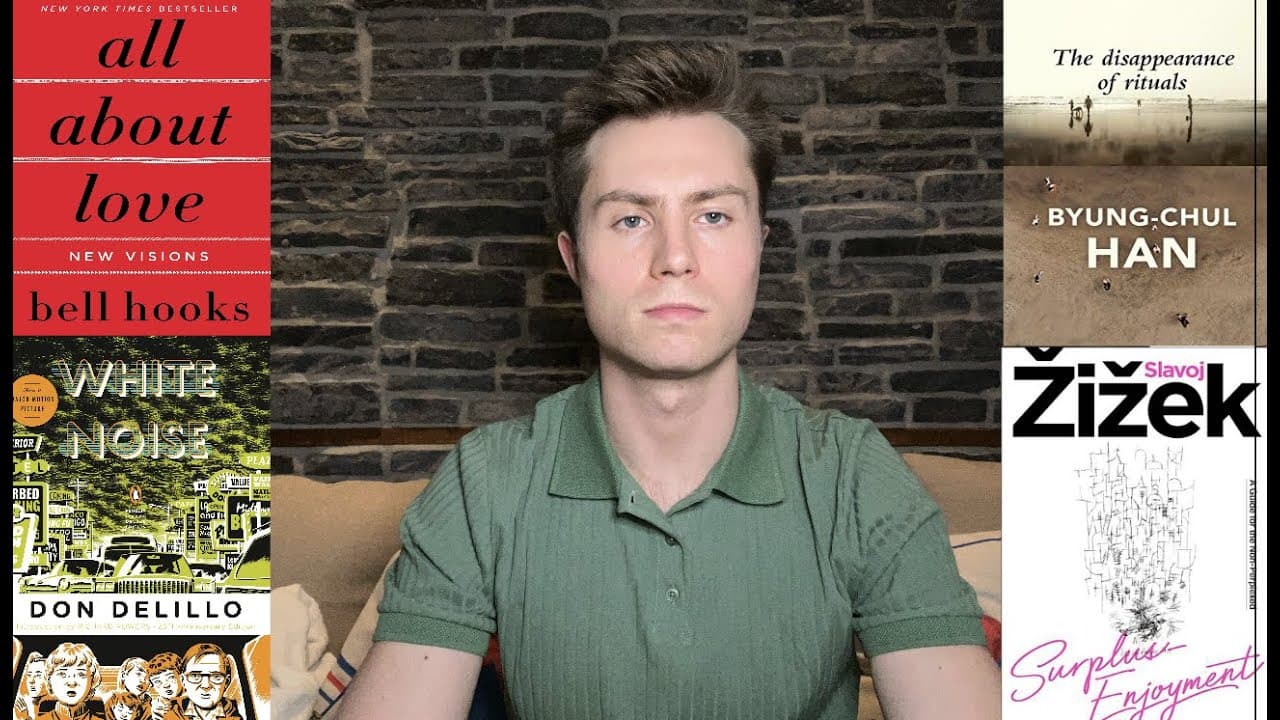
Bruno Latour, Slavoj Žižek, Don DeLillo, bell hooks, Lucy Delap, and Byung-Chul Han offer distinct ways to examine interdependence, consumerism, death, love, feminism, information, and communal life. The strongest recommendations pair philosophical arguments with cultural analysis, while the reading process itself supports research, fills gaps in knowledge, and generates new ideas.
Transcript
hey everybody um I'm going to go over a few of the books that I've been reading this is like a super common uh question that I get asked like whenever I do a q a or anything it's uh do you have any book recommendations what books are you reading right now what would you consider your top you know books um and I just thought I would preserve like a ... Read More
Key Insights
- Bruno Latour’s After Lockdown presents lockdown as a metamorphosis that made human interdependence harder to ignore. Its political argument challenges personal autonomy and rigid individualism by portraying people as terrestrials whose lives remain connected to other beings and shared conditions.
- Slavoj Žižek’s Surplus Enjoyment links capitalism and consumerism to the pursuit of more enjoyment than people can actually experience. The book develops this thesis through Lacanian psychoanalysis, political observations, films, provocative digressions, and proposals involving collective action and subjective destitution.
- Don DeLillo’s White Noise centers on an Airborne Toxic Event that suddenly forces a town’s residents to confront mortality. Its consumer activities, chatter, unusual characters, and playful dialogue illustrate how ordinary behavior can function as a denial of unavoidable death.
- Bell hooks offers concrete and compassionate guidance for exploring romantic love from a feminist standpoint. The work resists defeatism and skepticism about romance within progressive and feminist movements, presenting love as a subject that can be examined without abandoning feminist commitments.
- Lucy Delap’s Feminisms: A Global History treats feminism as a diverse field of definitions, movements, and historical conflicts. It also highlights a recurring contradiction, movements opposing women’s subordination have sometimes excluded other groups and identities or produced damaging consequences.
- Byung-Chul Han’s Infocracy argues that the parasitic spread of information and data has weakened discursive communication and democratic integrity. Its discussion connects echo chambers, online spaces, and government surveillance with changes in both public discourse and real-world behavior.
- Byung-Chul Han’s The Disappearance of Rituals argues that repetitive symbolic practices help form communal bonds. Modern concerts and similar experiences operate more like consumable events than rituals, limiting the lingering that Han considers important for relationships, attention, and shared life.
- Reading and rereading books supports both research and the generation of new ideas. Short, condensed works can efficiently introduce arguments, while historical surveys can fill gaps in knowledge and difficult literary or philosophical texts can open less direct paths toward understanding contemporary life.
Install to Summarize YouTube Videos and Get Transcripts
Explore YouTube Video Summarizer or Get YouTube Transcript Extractor
Questions & Answers
Q: What books are recommended for understanding modern society?
The recommendations include Bruno Latour’s After Lockdown, Slavoj Žižek’s Surplus Enjoyment, Don DeLillo’s White Noise, Lucy Delap’s Feminisms: A Global History, Byung-Chul Han’s Infocracy, and Han’s The Disappearance of Rituals. A work by bell hooks is also revisited for its treatment of romantic love from a feminist standpoint. Together, these readings address interdependence, capitalism, mortality, feminism, information, surveillance, rituals, and community.
Q: What is Bruno Latour’s After Lockdown about?
After Lockdown compares the experience of lockdown to the transformation in Kafka’s Metamorphosis. Latour suggests that people have changed into terrestrials who are newly conscious of their interdependence. He questions rigid ideas of personal identity, agency, and autonomy, criticizes individualism, and treats attempts to escape into Mars, the metaverse, or virtual reality with deep suspicion.
Q: How does Surplus Enjoyment connect capitalism with desire?
Surplus Enjoyment argues that capitalism and consumerism reflect a desire for more pleasure or enjoyment than a person can actually experience. Žižek develops the idea through Lacanian psychoanalysis, political topics, films, and unexpected digressions. The book also discusses subjective destitution and broad forms of collective political action, making it appear more activist and prescriptive than criticisms of Žižek might suggest.
Q: Why might some readers find Žižek’s writing difficult?
Žižek’s writing moves unpredictably between philosophical claims, movies, genitalia, political controversies, and other references. A reader can lose track of the original point because the discussion frequently wanders before arriving elsewhere. That style can be entertaining for people who enjoy difficult, highly referential texts, but it may frustrate anyone seeking a concrete thesis developed through a clear and orderly structure.
Q: What themes does Don DeLillo’s White Noise explore?
White Noise explores mortality through a fictional Airborne Toxic Event caused when a vehicle carrying toxic chemicals crashes. The disaster imposes an immediate awareness of death on a town’s residents. Consumer behavior, casual chatter, and other distractions show how people avoid acknowledging that they will die. Its unusual writing, characters, and dialogue make the treatment of that theme deliberately strange.
Q: How does bell hooks approach romantic love?
Bell hooks approaches romantic love through concrete, thoughtful guidance grounded in a feminist standpoint. The work is presented as useful for people who want to understand what romantic love means rather than simply accept cynicism about it. It challenges the defeatism or skepticism that can appear in progressive and feminist movements while preserving a serious feminist examination of relationships and romance.
Q: Why is the book called Feminisms: A Global History?
The plural word “Feminisms” emphasizes that feminism is not a single, monolithic body of thought. Lucy Delap surveys many definitions, movements, and historical forms rather than advancing one narrow philosophical argument. The history also examines a persistent contradiction: efforts to challenge women’s subordination have repeatedly excluded other groups or identities, and some exclusions have caused harm despite the movements’ stated aims.
Q: What does Byung-Chul Han argue about information and rituals?
In Infocracy, Byung-Chul Han argues that the rapid spread of information and data comes at the expense of meaningful discourse, communication, and democratic integrity. He connects echo chambers, online spaces, and government surveillance to public and real-world behavior. In The Disappearance of Rituals, he argues that repeated symbolic practices create community and allow people to linger instead of constantly consuming information and experiences.
Summary & Key Takeaways
-
The reading list begins with Bruno Latour’s After Lockdown and Slavoj Žižek’s Surplus Enjoyment. Latour interprets lockdown as a transformation that revealed human interdependence and challenged rigid individualism. Žižek uses Lacanian psychoanalysis to connect excessive enjoyment with capitalism and consumerism, although his whimsical, highly referential style may frustrate readers seeking linear arguments.
-
Don DeLillo’s White Noise examines an Airborne Toxic Event and the ways people use consumer activity, conversation, and distraction to avoid confronting death. A reread of bell hooks offers concrete reflections on romantic love from a feminist standpoint, countering skepticism about romance within progressive and feminist thought while treating love as worthy of serious exploration.
-
Lucy Delap’s Feminisms: A Global History presents feminism as a diverse collection of movements rather than a single ideology, including its recurring exclusions and contradictions. Byung-Chul Han’s Infocracy links information overload, echo chambers, and surveillance to weakened democratic discourse, while The Disappearance of Rituals argues that repeated symbolic practices create communal bonds and encourage lingering.
Read in Other Languages (beta)
Share This Summary 📚
Summarize YouTube Videos and Get Video Transcripts with 1-Click
Try YouTube Summary with ChatGPT & Claude or YouTube Transcript Generator
Explore More Summaries from Sisyphus 55 📚




Summarize YouTube Videos and Get Video Transcripts with 1-Click
Try YouTube Summary with ChatGPT & Claude or YouTube Transcript Generator