How to Lead With Clarity, Autonomy, and Enjoyment
TL;DR
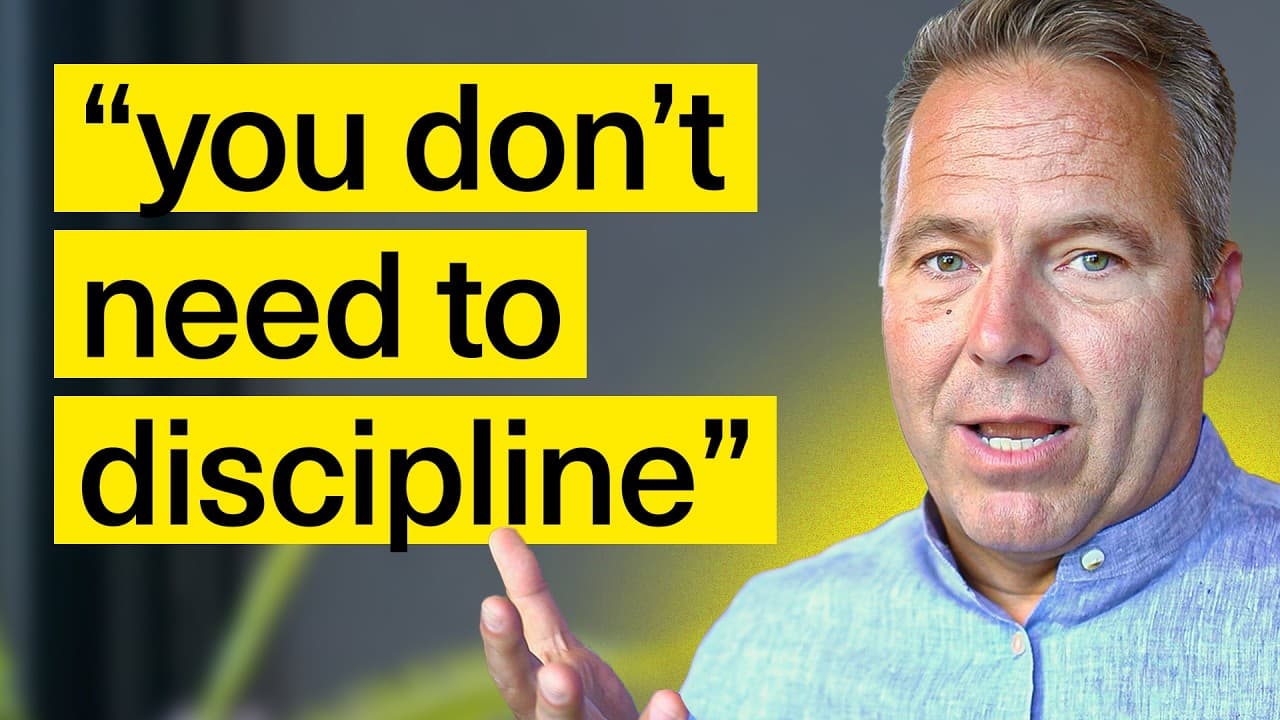
Empowerment grows when leaders clearly state what they want, give capable people autonomy over execution, and stop treating others as dependent on support. Enjoyment is presented as a practical measure of energy efficiency because it can improve creativity, care, and productivity, while reciprocal exchange helps employees and children develop responsibility without being controlled.
Transcript
enjoyment is incredibly important because it's the best metric of efficiency when I used to think about empowering people what happened was I was the one empowering them which means that they by their nature were not empowered most people they want to do great work it's just about me being clear everybody thinks about time management I think about ... Read More
Key Insights
- Empowerment is weakened when a leader assumes responsibility for giving people their power. That stance implicitly defines employees as dependent, while clearly expressing desired outcomes and allowing them to choose the method recognizes that they are already capable of acting autonomously.
- Clear expectations create safety because people understand what success requires. Hudson says his employees became more empowered when he communicated his wants directly, then trusted them to determine how to deliver, rather than intervening continuously or trying to manage their personal well-being.
- Most people naturally want to do great work when they are doing work they genuinely want to perform. Hudson therefore avoids hiring someone for responsibilities that person does not want, then relies on clarity and autonomy instead of assuming poor motivation.
- Reciprocal exchange supports agency because each person contributes physical or mental energy rather than receiving one-way assistance. Hudson contrasts this with giving that can teach dependence, arguing that an opportunity to contribute helps recipients feel they have earned what they receive.
- Enjoyment is a metric of efficiency because efficiency concerns the energy required for work, not merely the speed of completion. Hudson prioritizes energy management over time management and treats enjoyment as evidence that someone is using available energy more effectively.
- Enjoyment can improve the quality of work by increasing care, creativity, attention, and involvement. The conversation also presents enjoyment as socially reinforcing, since a founder’s experience can influence the people nearby, whose engagement can then support the founder’s experience.
- Enjoyment depends partly on how an activity is performed, not only on which activity is selected. Hudson asks whether a person can enjoy the present task slightly more, shifting the problem from finding exclusively pleasant work to changing the manner of engagement.
- Support is different from taking responsibility for another person’s happiness or health. Hudson tells employees that family comes first and makes himself available, but expects them to identify and communicate what they need instead of waiting for him to diagnose or impose a solution.
- Related book: Building a Second Brain
- Related book: The PARA Method
- Export your Kindle highlights to Glasp: How to Download Highlights and Notes from Kindle
Install to Summarize YouTube Videos and Get Transcripts
Explore YouTube Video Summarizer or Get YouTube Transcript Extractor
Questions & Answers
Q: How can leaders empower employees without controlling them?
Leaders can support empowerment by clearly stating the outcome they want and giving employees substantial autonomy over how to produce it. Hudson argues that trying to empower someone can accidentally cast the leader as the source of that person’s power. Clear expectations provide safety and direction, while freedom over execution recognizes that employees are already smart, capable, and generally motivated to do good work.
Q: Why does clarity help employees feel more autonomous?
Clarity helps because employees know what their leader wants and can judge their own work against an understandable outcome. Hudson observed that people felt safer and more empowered after he became direct about his wants. Once the destination was explicit, he could leave the method to them. This combination reduces uncertainty without replacing the employee’s judgment, creativity, or responsibility with constant managerial intervention.
Q: What is energetic exchange in leadership and giving?
Energetic exchange means that both sides contribute physical or mental effort instead of one person only giving and the other only receiving. Hudson uses charitable giving as an example, suggesting that recipients could contribute through useful work such as conserving turtles. In employment, the same principle combines genuine care and support with an expectation that each person communicate needs, contribute effort, and retain responsibility for personal well-being.
Q: Why is enjoyment considered a measure of efficiency?
Enjoyment is considered a measure of efficiency because Hudson defines efficiency by the energy required to perform, not simply by speed. He contrasts a faster but energy-intensive car with a more energy-efficient one, then applies that distinction to work. When people enjoy what they are doing, he expects stronger care, creativity, and engagement, making enjoyment a practical indicator of how effectively their energy is being used.
Q: How can enjoyment improve productivity at work?
Enjoyment can improve productivity by changing a person’s relationship to the task, increasing involvement while reducing energy spent forcing an unwanted process. Hudson describes an employee who spent six unenjoyable hours on an assignment. He asked her to stop after roughly twenty minutes on similar work and focus on finding an enjoyable way to proceed rather than obsessing over correctness. He reports that her productivity then increased sharply.
Q: Does working enjoyably mean avoiding every difficult task?
Working enjoyably does not require selecting only pleasant activities or refusing all difficulty. Hudson says the mind often treats enjoyment as a property of what someone is doing, but enjoyment also depends on how the person does it. His exercise is to continue the same activity while enjoying the present moment slightly more. The focus therefore shifts from avoidance to developing a more enjoyable mode of engagement.
Q: How should a founder balance personal enjoyment with responsibility?
A founder’s enjoyment is presented as operationally relevant, not merely a private indulgence. Hudson argues that an investor should care about the founder’s enjoyment because it affects the founder’s energy, creativity, and work quality. Enjoyment can also influence the surrounding team, creating a reciprocal pattern of stronger engagement. The founder still communicates expectations and participates in exchange, rather than treating enjoyment as freedom from responsibility.
Q: How do autonomy and responsibility apply to both employees and children?
The discussion applies a shared principle to organizations and parenting: people need room to act as capable individuals rather than being controlled or defined by authority figures. The description emphasizes fostering autonomy, trusting the natural drive to do good work, and allowing children to define themselves without harsh discipline. Support and clarity remain important, but authority should not take ownership of another person’s identity, happiness, or health.
Summary & Key Takeaways
-
Joe Hudson argues that leaders undermine empowerment when they position themselves as the source of another person’s power. His alternative is to communicate desired outcomes clearly, hire people who want the work, and grant substantial freedom over execution. Clear expectations create safety, while autonomy lets people use their existing capability and motivation.
-
Enjoyment is framed as a measure of energy efficiency rather than an indulgence. Hudson distinguishes efficiency from speed and favors energy management over conventional time management. He says enjoyable work tends to produce more care and creativity, and describes productivity rising after an employee focused on enjoying a task instead of getting it right.
-
The discussion connects business leadership with parenting through autonomy, responsibility, and reduced control. Support should remain available, but leaders and parents should not assume responsibility for making others happy or healthy. Reciprocal exchange, clear wants, and room for self-direction are presented as ways to avoid dependency, rebellion, and imposed identities.
Read in Other Languages (beta)
Share This Summary 📚
Summarize YouTube Videos and Get Video Transcripts with 1-Click
Try YouTube Summary with ChatGPT & Claude or YouTube Transcript Generator
Explore More Summaries from Tiago Forte 📚




Summarize YouTube Videos and Get Video Transcripts with 1-Click
Try YouTube Summary with ChatGPT & Claude or YouTube Transcript Generator