How to Cultivate Presence in Everyday Life
TL;DR
Presence grows when you recognize thoughts as mental activity instead of automatically believing or obeying them. Use quiet moments to notice your being and awareness, limit absorption in reactive online culture, and put devices away after completing a task. Repeatedly returning to presence strengthens your ability to use the mind as a tool rather than live at its mercy.
Transcript
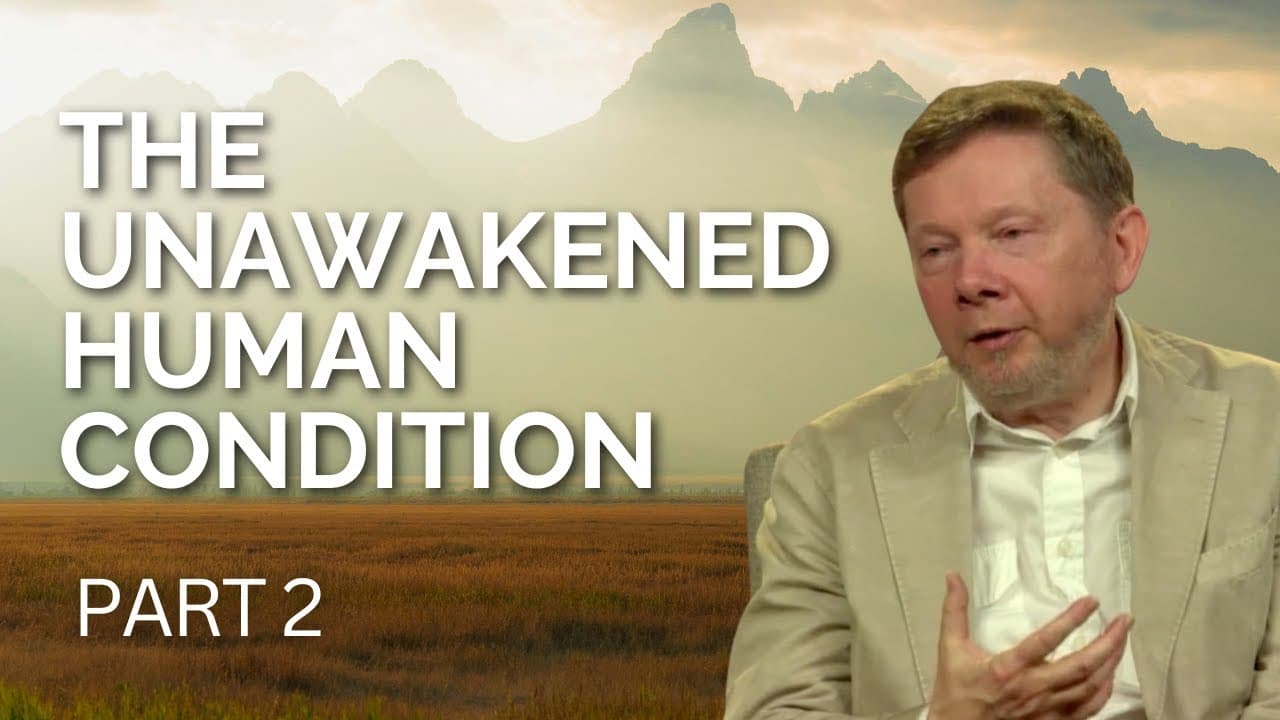
The human condition then is uh you could be defined as lost in thought. That is the human condition. The unenlightened the unawwakened human condition is lost in thought. It's a dreadful state and that doesn't mean that thought is bad in itself. In the same way that a hammer and the saw are not bad in themselves and even the phone the Samsung or iP... Read More
Key Insights
- The unawakened human condition is a state of being lost in thought, where mental activity dominates attention and obscures awareness of being. The problem is not thought itself, but automatic identification with every thought and reaction produced by the mind.
- The mind is an enormously useful tool when it is used consciously, but it becomes dysfunctional when a person lives at its mercy. Healthy mental activity involves applying thought when needed and returning to presence instead of continuously obeying internal commentary.
- Political and social problems arise from a collective state of consciousness, according to the teaching. Governments and public structures externalize the predominant consciousness of a nation, so lasting change depends on enough individuals awakening from egoic patterns rather than reproducing them.
- Social media and internet culture can amplify collective unconsciousness by rewarding outrage, demonization, and reactivity. Their gravitational pull encourages users to become absorbed in the emotional patterns of the group rather than remaining aware, discerning, and internally grounded.
- A sane contribution to public discussion is nonreactive and does not demonize other people. Recognizing online dysfunction can itself become an opportunity for awakening, especially when a person responds from presence instead of adding more hostility to collective exchanges.
- Everyday presence is cultivated by using moments when action is unnecessary to become aware of being. Airports, cafes, parks, bicycle rides, and other ordinary settings can provide opportunities to rest in awareness rather than filling every available interval with unnecessary activity.
- Digital tools can be used without becoming objects of absorption. A person can check something important, spend a few minutes dealing with it, send a message if necessary, then put the device away instead of drifting through an endless sequence of additional content.
- The power of presence grows through repeated periods of thoughtless awareness, even when little appears to be happening externally. Thoughts claiming there is no time for presence should be recognized as thoughts, because believing every mental statement leads attention back into old patterns.
Install to Summarize YouTube Videos and Get Transcripts
Explore YouTube Video Summarizer or Get YouTube Transcript Extractor
Questions & Answers
Q: What is the unawakened human condition?
The unawakened human condition is described as being lost in thought. In this state, a person is not simply using thought for a practical purpose but is controlled by continuous mental activity, reactivity, and old patterns. Thought is not inherently bad. The dysfunction comes from serving the mind, believing its claims automatically, and losing contact with the deeper awareness described as presence or the sense of "I am."
Q: How can the mind be used without being controlled by it?
The mind can be used as a practical tool by engaging it when a task requires thinking, then releasing unnecessary mental activity when the task is complete. The central distinction is between consciously using thought and automatically following every thought that appears. A person becomes less controlled by the mind by noticing its stories, reactions, and invitations to unhappiness without assuming that each one is true or deserves attention.
Q: How does individual presence contribute to social change?
Individual presence contributes to social change because political and social structures are presented as external expressions of collective consciousness. When individuals remain trapped in egoic reactivity, they reinforce the same patterns in the wider culture. If enough people awaken from those patterns, the collective state changes and different structures can emerge. The teaching therefore places the foundation of meaningful change within individual consciousness rather than only in external conflict.
Q: Why can social media weaken everyday presence?
Social media can weaken presence by amplifying outrage, reactivity, demonization, and the unconscious patterns of a collective hive mind. Each encounter with this culture can exert a gravitational pull, encouraging the user to become emotionally absorbed and react like the group. The recommended response is not necessarily complete avoidance, but awareness of this pull, limited engagement, and a deliberate return to presence after necessary information or communication has been handled.
Q: How can someone respond sanely to online outrage?
A sane response to online outrage begins with recognizing the dysfunction without being pulled into its reactivity. If a contribution feels necessary, it can be made without demonizing other people or reproducing hostility. Such a statement comes from a connection to deeper awareness rather than the collective emotional current. The goal is to introduce sanity into the exchange while remaining alert to the internet culture's tendency to demand immediate, unconscious reactions.
Q: How can presence be practiced during an ordinary day?
Presence can be practiced during the many ordinary moments when doing is not required. Instead of filling every pause with unnecessary activity, a person can become aware of being, awareness, and the simple sense of "I am." Sitting in a park or cafe, waiting at an airport, or riding a bicycle can become an opportunity to be present. Repeatedly welcoming these pauses allows the power of presence to grow over time.
Q: How should phones and online information be handled mindfully?
Mindful use does not require refusing to look at a phone or online information. A person can check something important for two or three minutes, deal with it, or send a necessary message. The crucial step is to stop once the purpose has been fulfilled. Putting the device away prevents a useful action from leaking into an absorbing chain of additional checking and makes it possible to return attention to present awareness.
Q: Why should thoughts about having no time for presence be questioned?
Thoughts claiming there is no time for presence should be questioned because they are mental statements, not unquestionable facts. The mind may insist that other matters are more important or that the day is too demanding for awareness. Automatically believing such claims strengthens identification with thought. Recognizing them simply as thoughts is a major step, because it allows a person to stop following every mental message and return to presence.
Summary & Key Takeaways
-
The unawakened human condition is described as being lost in thought. Thought itself is not bad, because the mind can be an enormously useful tool. Dysfunction begins when people become servants of their minds, automatically following thoughts, emotional reactions, unhappiness, and established mental patterns instead of using thought consciously when needed.
-
Collective political and social dysfunction arises from a predominant collective state of consciousness. Internet culture and social media can amplify unconsciousness, outrage, demonization, and reactivity. Individual awakening is therefore presented as the foundation of meaningful social change, while calm, nonreactive contributions can introduce some sanity into collective discussions.
-
Presence can be cultivated during ordinary periods when no action is required. A person may briefly check information or send a message, then put the device away and return to awareness of being. Repeated practice strengthens presence, while recognizing thoughts such as having no time as mental claims prevents automatic submission to them.
Read in Other Languages (beta)
Share This Summary 📚
Summarize YouTube Videos and Get Video Transcripts with 1-Click
Try YouTube Summary with ChatGPT & Claude or YouTube Transcript Generator
Explore More Summaries from Eckhart Tolle 📚



Summarize YouTube Videos and Get Video Transcripts with 1-Click
Try YouTube Summary with ChatGPT & Claude or YouTube Transcript Generator