How to Win at Anything in Life Using Game Theory
TL;DR
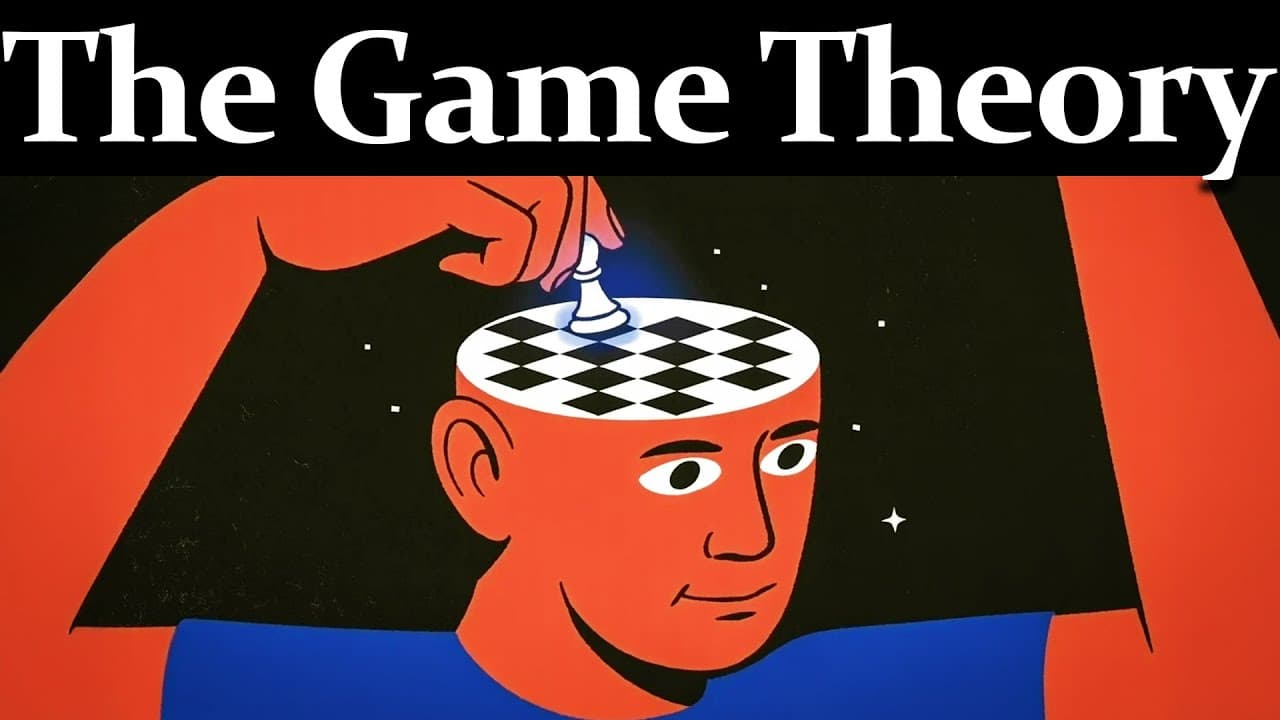
The “How to Win at Anything” transcript says you win by recognizing the game being played and consciously choosing how to play it. Identify whether an interaction is zero-sum, positive-sum, repeated, or one-off, then compete, cooperate, or protect your interests accordingly. Read on to understand the rules, incentives, and strategies behind everyday negotiations, relationships, and career decisions.
Transcript
Every day, millions of people wake up, face the world, and without realising it, enter complex strategic games, silent negotiations, disguised power struggles, social dynamics with invisible rules. They do what they have learned is right. They work hard, try to be good, avoid conflicts, and collaborate whenever possible. But, mysteriously, they con... Read More
Key Insights
- Game theory is a framework for recognizing the incentives, patterns, strategies, and possible responses hidden within ordinary human interactions. It applies to choices ranging from lunch plans to salary negotiations, workplace conflicts, family agreements, friendships, romantic relationships, and career development.
- Strategic ignorance is the failure to recognize that an interaction has rules, incentives, and competing choices. A person can be intelligent, hardworking, and well intentioned yet repeatedly lose when others understand the situation's structure and can anticipate that person's responses.
- A Nash equilibrium is a point in a strategic interaction where no participant can improve their situation by changing strategy alone. The concept illustrates why outcomes depend not only on personal effort, but also on the choices and expected responses of everyone involved.
- Zero-sum games are situations where one participant's gain corresponds to another participant's loss, such as a negotiation over limited resources. Excessive flexibility in such settings can produce poor outcomes because protecting one's interests may require clear demands, firmness, and a willingness to face conflict.
- Positive-sum games are interactions where participants can benefit together through strategic cooperation. Long-term relationships and team projects can fit this structure, so unnecessary aggression, distrust, pride, or attempts to make another person lose can destroy trust and eliminate gains available to everyone.
- Repeated games are interactions in which today's behavior influences how another person may act tomorrow. Relationships with partners, relatives, friends, and co-workers therefore reward strategies that encourage cooperation while also showing that betrayal will receive a clear and proportionate response.
- Predictability is a major source of vulnerability when others know someone will always yield, avoid confrontation, or refuse to retaliate. Escaping exploitation requires adjusting behavior to the situation instead of automatically responding with kindness, aggression, submission, or distrust every time.
- Tit for tat is a repeated-game strategy that cooperates first and then mirrors the other participant's previous behavior. It rewards cooperation, retaliates after betrayal, and returns to cooperation after the other person does, creating reciprocity without permanent resentment or unconditional submission.
Install to Summarize YouTube Videos and Get Transcripts
Explore YouTube Video Summarizer or Get YouTube Transcript Extractor
Questions & Answers
Q: According to the “How to Win at Anything” transcript, how do you win using game theory?
You win by recognizing the game being played and consciously choosing how to play it. Identify its rules, patterns, incentives, and strategic structure, then use an approach suited to that type of interaction instead of reacting instinctively.
Q: What is strategic ignorance?
Strategic ignorance is failing to recognize that social and psychological interactions have rules, patterns, incentives, and strategies. It can leave hardworking and well-intentioned people vulnerable to manipulation because they do not realize they are participating in a game.
Q: Which types of games appear in everyday life?
Everyday interactions can be zero-sum, positive-sum, repeated, or one-off games. A limited-resource negotiation is zero-sum, a team project can be positive-sum, relationships with co-workers repeat, and buying a car from a stranger can be a one-time game.
Q: When should you compete rather than cooperate?
Competition is appropriate when one person’s gain is another person’s loss, as in a negotiation over limited resources. Yielding merely to avoid conflict can leave you with less than you deserve, so these situations may require protecting your interests and standing firm.
Q: When should you cooperate rather than compete?
Cooperation is appropriate when everyone can benefit together, especially in long-lasting relationships or team projects. Treating a marriage or deep friendship as a zero-sum contest destroys trust and undermines the relationship.
Q: Why does using the same strategy in every situation cause problems?
Different games require distinct strategic approaches. Constant kindness can invite exploitation in competitive situations, while constant distrust and aggression can sabotage relationships that depend on mutual cooperation.
Q: What does Nash equilibrium mean in a strategic interaction?
A Nash equilibrium is a point where none of the participants can improve their situation by changing their strategy alone. It shows that an outcome depends on the strategies and responses of everyone involved, not solely on one person’s effort.
Q: How can game theory help with negotiations, relationships, and career decisions?
Game theory reveals the hidden logic behind choices such as salary negotiations, family conflicts, workplace disputes, romantic relationships, and career building. By identifying whether interests conflict or overlap and whether the interaction will repeat, you can choose when to cooperate, compete, advance, retreat, or stand firm.
Summary & Key Takeaways
-
Game theory treats negotiations, relationships, workplace disputes, and ordinary social choices as strategic interactions shaped by incentives and recurring patterns. People often lose despite working hard because they do not recognize the game, understand its rules, or adjust their behavior to whether cooperation or competition is appropriate.
-
Different situations require different strategies. Zero-sum games involve competing interests, while positive-sum games can reward mutual cooperation. Repeated interactions allow present behavior to shape future treatment, whereas one-time encounters may lack that continuing influence. Applying one fixed mindset across these structures creates predictable mistakes and opportunities for exploitation.
-
Robert Axelrod's iterated prisoner's dilemma tournament is presented as evidence for tit for tat, a simple strategy for repeated interactions. It begins by cooperating, then mirrors the other participant's previous behavior. Cooperation receives cooperation, betrayal receives retaliation, and renewed cooperation receives forgiveness, combining goodwill, boundaries, responsiveness, and the possibility of repairing trust.
Read in Other Languages (beta)
Share This Summary 📚
Summarize YouTube Videos and Get Video Transcripts with 1-Click
Try YouTube Summary with ChatGPT & Claude or YouTube Transcript Generator
Explore More Summaries from Psyphoria 📚




Summarize YouTube Videos and Get Video Transcripts with 1-Click
Try YouTube Summary with ChatGPT & Claude or YouTube Transcript Generator