Building a coil winder [Part 3] - Proof of concept
TL;DR
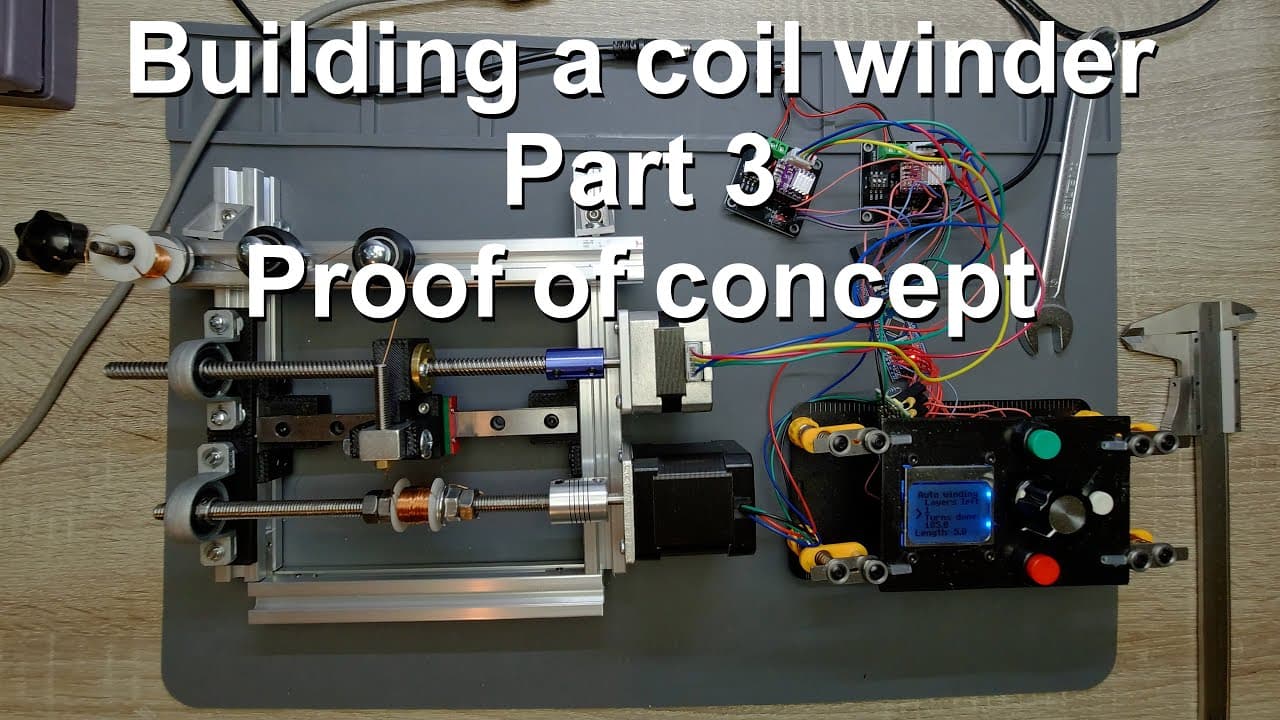
Demonstration of coil winder functionality and areas for improvement.
Transcript
welcome everyone this is the third video of my coil window video series in this video i'm going to show you how this thing works and what is left to improve or finish so in my previous two videos related to this project i showed you the mechanism and i also showed you how i assembled the electronics however that is a slightly uh changed thing in th... Read More
Key Insights
- ✋ Understanding the mechanical interactions in a coil winder is critical for producing high-quality coils.
- 📽️ The programming of the microcontroller directly influences the effectiveness of the winding process, highlighting the importance of software in hardware projects.
- 🥺 The coil winder's tensioning mechanism currently requires refinement, as insufficient tension can lead to winding imperfections.
- ❓ The careful alignment of components and precise measurements are essential for successful coil production.
- 🎨 Demonstrating the product helps identify technical challenges that can be addressed in future iterations of the design.
- 📽️ Effective troubleshooting during project demonstrations reveals valuable insights into operational weaknesses.
- 🧑🦼 Utilization of advanced components, such as stepper motor drivers, enhances the coil winder's functionality and control.
Install to Summarize YouTube Videos and Get Transcripts
Explore YouTube Video Summarizer or Get YouTube Transcript Extractor
Questions & Answers
Q: What type of stepper motors are used in the coil winder?
The coil winder employs NEMA 17 stepper motors, which provide different torque levels crucial for driving the main and feeder shafts. These motors rotate the main shaft continuously while the feeder shaft moves back and forth to precisely position the wire on the coil, ensuring an even winding process.
Q: How does the electronic control panel work in the project?
The control panel features an STM32 Bluepill microcontroller and an LCD for user input. Users can adjust settings such as winding speed and wire diameter. Button controls let users start or stop the winding process, while a rotary encoder provides feedback on the system's operations, allowing for real-time adjustment and monitoring.
Q: What were the issues encountered during the coil demonstration?
During the demonstration, the coil winding process encountered complications, particularly with maintaining tension on the wire. After achieving initial alignment, the mechanism failed, causing layers to become loose and messy. This highlighted the need for further improvements in the mechanical design to avoid similar issues in future demonstrations.
Q: What future improvements are planned for the coil winder?
Future improvements will focus on enhancing the wire tensioning system to ensure consistent and reliable performance. The presenter is sourcing better components to replace the existing setup. Additionally, ongoing software development will enhance calculations for spacing (pitch) between layers of winding, aiming to increase the reliability of the final coil product.
Summary & Key Takeaways
-
The video showcases the coil winder's mechanism, including stepper motors, a microcontroller, and the wire-feeding system, with an emphasis on how it performs coil winding.
-
The presenter explains the programming involved in controlling the motors, outlining the challenge of achieving precise tension and positioning during the winding process.
-
Although there were technical difficulties during the demonstration, the software functioned well, suggesting that future improvements will focus on the mechanical aspects of the device.
Read in Other Languages (beta)
Share This Summary 📚
Summarize YouTube Videos and Get Video Transcripts with 1-Click
Try YouTube Summary with ChatGPT & Claude or YouTube Transcript Generator
Explore More Summaries from Curious Scientist 📚
![Building a coil winder [Part 6] - A few improvements thumbnail](/_next/image?url=https%3A%2F%2Fi.ytimg.com%2Fvi%2F3eyxG_g2iUA%2Fhqdefault.jpg&w=750&q=75)
Summarize YouTube Videos and Get Video Transcripts with 1-Click
Try YouTube Summary with ChatGPT & Claude or YouTube Transcript Generator