How Does Microsoft's Orca Improve Open Source AI Models?
TL;DR
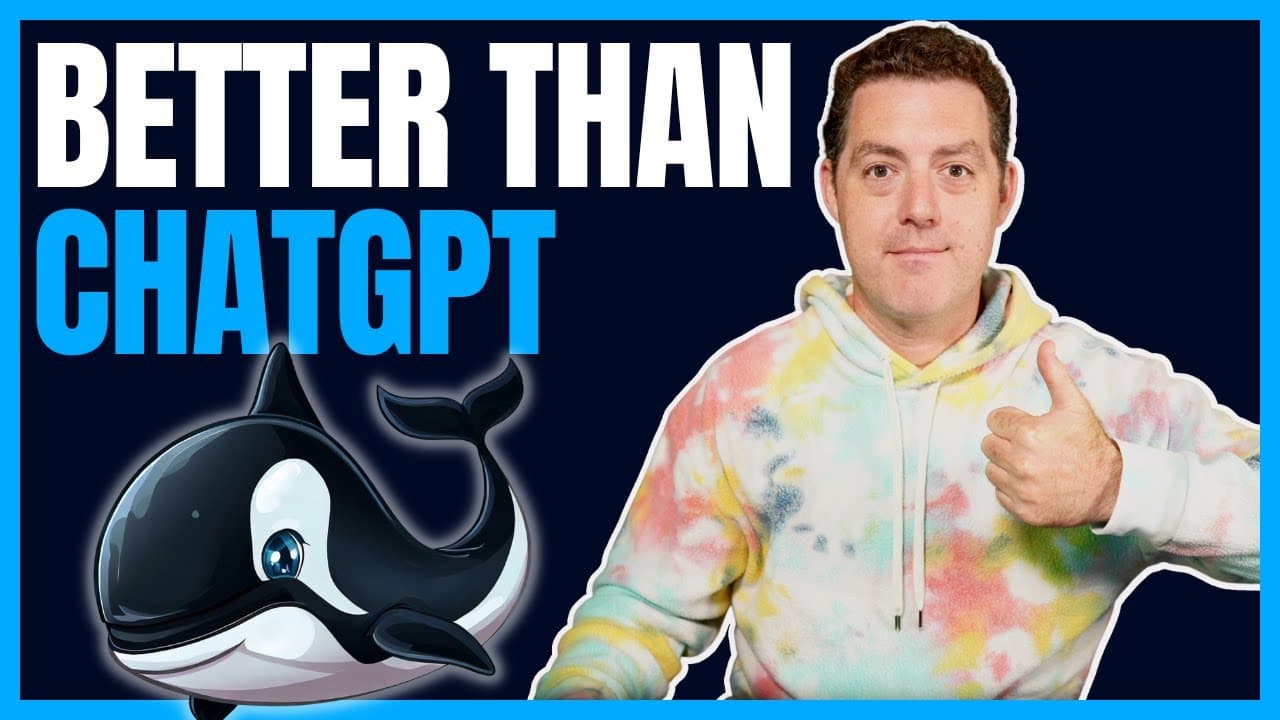
Microsoft's Orca enhances open-source models by using a technique called explanation tuning, which enables these models to learn step-by-step reasoning from large foundational models like GPT-4. This approach allows Orca to close the performance gap with larger models, demonstrating that open-source models can improve their understanding and capabilities beyond mere imitation.
Transcript
there's a battle being waged right now in the world of artificial intelligence between large foundational models and smaller open source models and just this week a new research paper was dropped that promises to append the conversation completely now if you remember a few weeks ago I made a video about the letter called we have no mode which was a... Read More
Key Insights
- 🤗 Open source models pose a threat to larger foundational models due to their rapid progress and innovation.
- 🤗 The value of open source models is challenged by their inability to truly understand the reasoning process behind predictions.
- 😚 Orca, introduced by Microsoft Research, utilizes explanation tuning to train open source models and close the performance gap.
- 🤗 Large foundational models still have a significant advantage over open source models, but the gap is gradually decreasing.
- 🏮 The Orca paper demonstrates the potential of learning from step-by-step explanations to improve model capabilities.
- 🤗 Explanation tuning allows open source models to go beyond pattern matching and imitate true understanding of prompts.
- 🤗 Microsoft's investment in open source models indicates their belief in the future and potential of this technology.
Install to Summarize YouTube Videos and Get Transcripts
Explore YouTube Video Summarizer or Get YouTube Transcript Extractor
Questions & Answers
Q: What is the main point of the leaked internal memo from Google called "We Have No Mode"?
The memo emphasizes that the rapid progress and innovation in the open source community pose a threat to larger foundational models, as smaller models are iterating and improving quickly.
Q: How does the research paper from UC Berkeley challenge the value of open source models?
The paper argues that open source models only imitate the outputs of larger models without truly understanding the reasoning process, limiting their ability to handle variations in prompts and make accurate predictions.
Q: What is the key technique introduced in the Orca paper?
Orca utilizes explanation tuning, where open source models learn step-by-step reasoning and logic from large foundational models, allowing them to go beyond pattern matching and imitate true intelligence.
Q: How does Orca compare to other open source models and large foundational models?
Orca outperforms other open source models and even surpasses ChatGPT in several benchmarks. While it still lags behind gpt4, the performance gap continues to close.
Summary & Key Takeaways
-
A leaked internal memo from Google, called "We Have No Mode," highlighted the rapid progress and innovation happening in the open source community of smaller models, posing a threat to larger foundational models.
-
A research paper from UC Berkeley challenged the value of open source models, stating that they only imitate the outputs of larger models without truly understanding the reasoning process.
-
Microsoft Research's Orca paper introduces a technique called explanation tuning, which allows open source models to learn the step-by-step reasoning and logic from large foundational models, closing the performance gap.
Read in Other Languages (beta)
Share This Summary 📚
Summarize YouTube Videos and Get Video Transcripts with 1-Click
Try YouTube Summary with ChatGPT & Claude or YouTube Transcript Generator
Explore More Summaries from Matthew Berman 📚





Summarize YouTube Videos and Get Video Transcripts with 1-Click
Try YouTube Summary with ChatGPT & Claude or YouTube Transcript Generator