What Triggers Solar Flares This Week and Next?
TL;DR
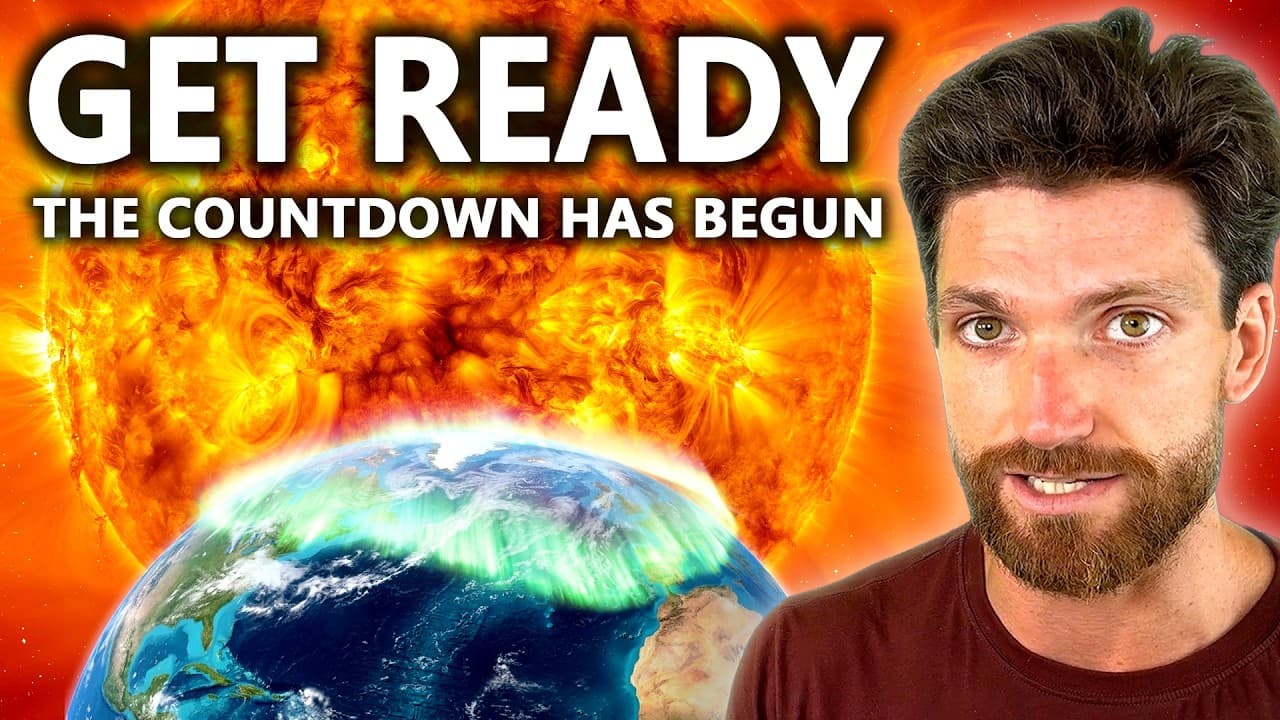
Solar activity is increasing as sunspot 4493 grows and approaches Earth, likely driving more M-class and X-class flares. This raises ionospheric plasma, boosts geomagnetic volatility around July 22, and may influence regional weather patterns and earthquakes. Stronger flares could energize the plasmasphere and affect ionospheric conditions in the near term.
Transcript
Hey everyone, geoysicist Stefan Burns here. A new surge of plasma on the sun and here on Earth has begun. I've been forecasting there'd be increased solar activity and also energetic volatility here on Earth going into the end of July, beginning of August for a variety of reasons. And well, we are now seeing the first signs of that. We have this ne... Read More
Key Insights
- 4493 is a sunspot group showing hyperactivity and rapid growth.
- The proximity of a coronal hole to sunspot 4493 increases magnetic field connectivity and instability.
- Expect higher likelihood of M-class and X-class solar flares in the coming days.
- Solar flares speed up ionospheric charging and plasmasphere dynamics, affecting Earth’s upper atmosphere.
- Flare activity can connect with Earth and influence geomagnetic storms around July 22.
- Earthquake-related research suggests ionospheric anomalies can occur around solar events, though mechanisms are complex.
- Planetary geometry and alignments are described as active during this period, possibly modifying space weather.
- Historic solar activity is described as a backdrop to the current event and its potential effects on Earth.
Install to Summarize YouTube Videos and Get Transcripts
Explore YouTube Video Summarizer or Get YouTube Transcript Extractor
Questions & Answers
Q: What causes the rising solar activity described in the video?
The rising solar activity is linked to the rapid growth of sunspot group 4493, which shows signs of hyperactivity and is positioned near a coronal hole. This configuration increases magnetic field interactions and the likelihood of higher energy solar flares, including M-class and potentially X-class flares, as the sunspot evolves over the next few days.
Q: How might sunspot 4493 affect Earth around July 22?
Sunspot 4493 could connect with Earth through magnetic field lines that extend from the coronal hole, potentially triggering a geo effective event around July 22. This would manifest as a minor to moderate geomagnetic storm, increasing plasma in Earths plasmasphere and ionosphere and possibly influencing atmospheric and space weather conditions.
Q: What is the role of the coronal hole in this scenario?
The coronal hole provides an open magnetic field configuration that interacts with active sunspots like 4493. Its magnetic field lines extend into interplanetary space, connecting to Earth and increasing the chances that eruptions from the sunspot will channel energy toward Earth, heightening solar flare probability and geomagnetic effects.
Q: What kinds of solar flares are expected and why are they important?
Higher M-class flares and potentially X-class flares are expected as the sunspot activity increases. These flares are important because they deliver significant bursts of solar radiation that ionize the ionosphere, energize the plasmasphere, and can drive geomagnetic storms, impacting communication, navigation systems, and power grids.
Q: Could solar activity influence weather or other Earth systems?
Yes, the video discusses connections between solar flare activity, ionospheric charging, and atmospheric responses. Charged particles and enhanced plasma can influence severe weather patterns indirectly by altering upper atmosphere conditions, and there is mention of potential links to cyclonic activity and regional weather dynamics in the days ahead.
Q: What is the significance of the number 4493 in the video?
4493 refers to the sunspot group that is currently erupting and growing rapidly. Its activity is used to gauge the potential for increased solar flares and the likelihood of Solar Energetic Particle events, which in turn relate to geomagnetic activity and possible impacts on Earth’s space environment.
Q: What other solar and planetary conditions are discussed as part of this event?
The video notes a notable planetary geometry and mentions a Jupiter Kazini, a full moon, and a Jupiter Pluto opposition occurring around late July. While the exact effects are not quantified, the speaker suggests that planetary alignments coincide with a period of heightened solar activity and geomagnetic sensitivity on Earth.
Q: What potential impacts on Earth did the speaker emphasize beyond space weather?
Beyond space weather, the speaker mentions possible Earthquake-related implications, such as ionospheric anomalies and strong tiller currents that could influence fault activity. The discussion implies a relationship between solar events and terrestrial seismic considerations, though it acknowledges the mechanisms are complex and not fully determined by the models used.
Summary & Key Takeaways
-
Sunspot 4493 is rapidly growing and is linked to higher flare activity in the coming days.
-
Coronal hole proximity increases magnetic instability, potentially enhancing Earth-directed solar eruptions.
-
Increases in solar flares may raise ionospheric plasma and influence geomagnetic conditions and weather patterns near Earth.
Read in Other Languages (beta)
Share This Summary 📚
Summarize YouTube Videos and Get Video Transcripts with 1-Click
Try YouTube Summary with ChatGPT & Claude or YouTube Transcript Generator
Explore More Summaries from Stefan Burns 📚

Summarize YouTube Videos and Get Video Transcripts with 1-Click
Try YouTube Summary with ChatGPT & Claude or YouTube Transcript Generator