What Is Simulation Theory and Are We in a Matrix?
TL;DR
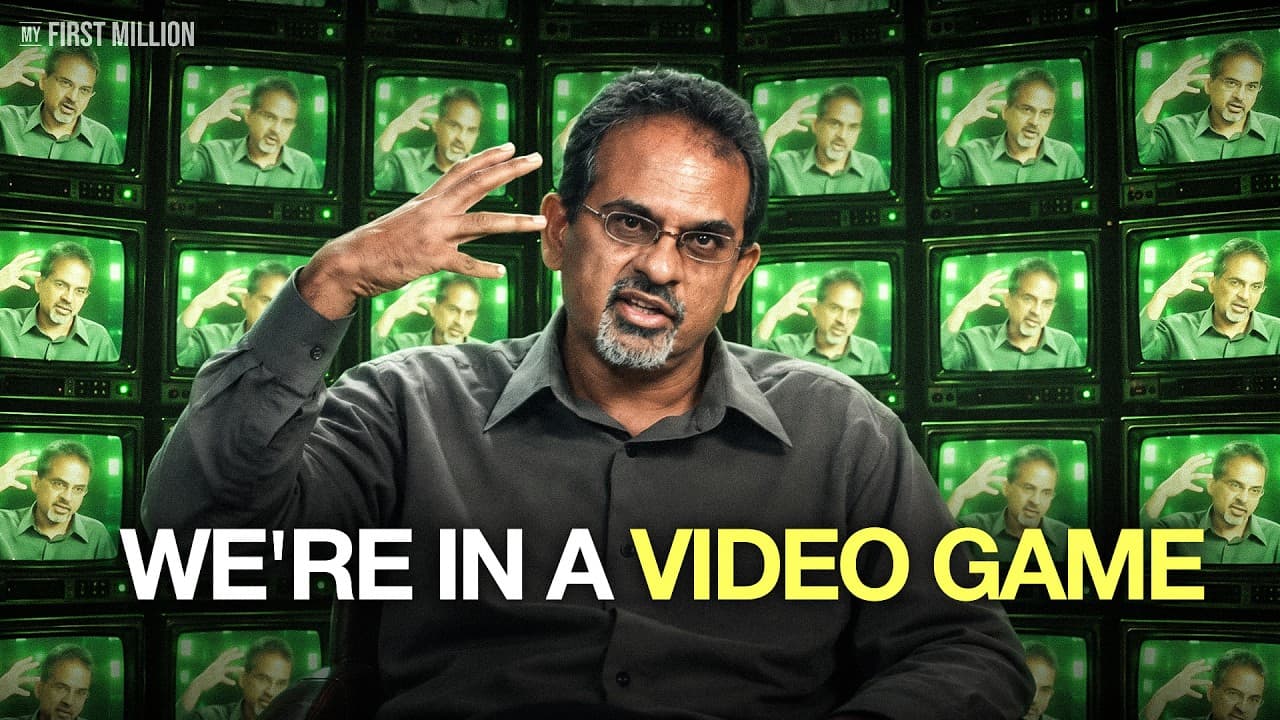
Simulation theory suggests our world could be a computer program or massively multiplayer game. The discussion traces origins from The Matrix and philosophers like Nick Bostrom, contrasts NPC and RPG versions, and notes modern signs from AI to quantum ideas that fuel the hypothesis. It also links ancient mysticism to the idea that reality may be an illusion.
Transcript
All right, Sam is away today and uh you know when the cat's away, the mice will play. So, I get to indulge in some of my favorite rabbit holes I go down. Our guest today is both an entrepreneur. You've built and sold multiple companies in the in the video gaming space, which kind of led you down the the the pathway of trying to think through are we... Read More
Key Insights
- Simulation theory proposes that our world could be a computer simulation or virtual reality.
- The origin of the idea blends films like The Matrix with earlier philosophical arguments and science fiction.
- There are two main versions of simulation theory, NPC where characters lack outside control, and RPG where a player exists outside the simulation.
- Proponents note that advanced civilizations might run many simulations to test outcomes.
- Recent technological signs, such as AI and realistic media, blur the line between real and simulated.
- Some religious and mystical traditions describe the world as maya or illusion, which some map onto simulation ideas.
- The likelihood of being in a base reality is debated, especially if many simulations exist.
- The conversation emphasizes critical thinking about how simulation theory could change life choices and ethics.
Install to Summarize YouTube Videos and Get Transcripts
Explore YouTube Video Summarizer or Get YouTube Transcript Extractor
Questions & Answers
Q: What is the basic idea of simulation theory
Simulation theory posits that the physical world is not truly physical but rather a virtual reality or computer program. It compares our experience to living inside a massively multiplayer video game, where the apparent world is generated by software rather than existing as a standalone material reality.
Q: Where did the idea originate historically
The concept gained prominence after The Matrix and was informed by earlier writers like Philip K. Dick and Nick Bostrom. Philosophers began discussing it in the early 2000s, linking popular culture with academic arguments about the possibility and implications of living inside a simulated environment.
Q: What are NPC and RPG versions
NPC version sees all beings as AI characters inside a simulation without external players. RPG version includes a sentient player outside the game who may order or influence the virtual world. Both rely on computation, but the RPG adds an external agent to explain the simulation’s existence.
Q: Why do some people believe simulations are possible
Believers point to rapid technological progress, such as sophisticated AI and realistic media, making it plausible to create convincing simulations. They also argue that if a civilization could run many simulations, statistical likelihood favors us living in a simulated reality rather than base reality.
Q: How do ancient texts relate to the idea
Some ancient religious and mystical traditions describe the world as maya or illusion. Proponents map these ideas onto simulation theory by suggesting that these traditions spoke in metaphors about reality being constructed or manipulated, paralleling modern computational explanations in a way that resonates with both science and spirituality.
Q: What role does modern AI play in the discussion
AI and realistic media blur the line between genuine and artificial experiences, fueling skepticism about what is real. The rapid development of AI agents and realistic imagery raises questions about our ability to discern truth, which aligns with the intuition behind simulation theory.
Q: What ethical or life implications arise
If reality could be a simulation, it might influence decisions about risk, meaning, and responsibility. People could rethink long term plans, prioritize achievable goals, and consider how learning and experimentation fit within a potentially simulated framework.
Q: How might researchers test the hypothesis
Direct testing is challenging, but researchers explore philosophical arguments, probabilistic reasoning, and potential empirical signs or anomalies that could indicate a simulated environment. The dialogue emphasizes evaluating evidence, logical coherence, and the impact of the hypothesis on scientific inquiry and daily life.
Summary & Key Takeaways
-
A broad overview of simulation theory and why it captivates thinkers who study technology and philosophy. The video traces cultural and scientific roots, from films to philosophers, and sets up a framework for evaluating whether reality might be simulated. It emphasizes the scale of the hypothesis and its implications for belief and action.
-
The conversation contrasts two versions of simulation theory, explains why some people believe simulations are possible or likely, and highlights practical and existential questions raised by the idea. It also touches on how AI and deepfake technology impact our perception of reality.
-
The discussion connects ancient religious ideas about maya to modern computational hypotheses, suggesting a unifying thread across disciplines. It leaves viewers with a perspective on how embracing or challenging the simulation idea could influence daily life and future research.
Read in Other Languages (beta)
Share This Summary 📚
Summarize YouTube Videos and Get Video Transcripts with 1-Click
Try YouTube Summary with ChatGPT & Claude or YouTube Transcript Generator
Explore More Summaries from My First Million 📚



Summarize YouTube Videos and Get Video Transcripts with 1-Click
Try YouTube Summary with ChatGPT & Claude or YouTube Transcript Generator