What Are the Key Challenges Facing Global Health Today?
TL;DR
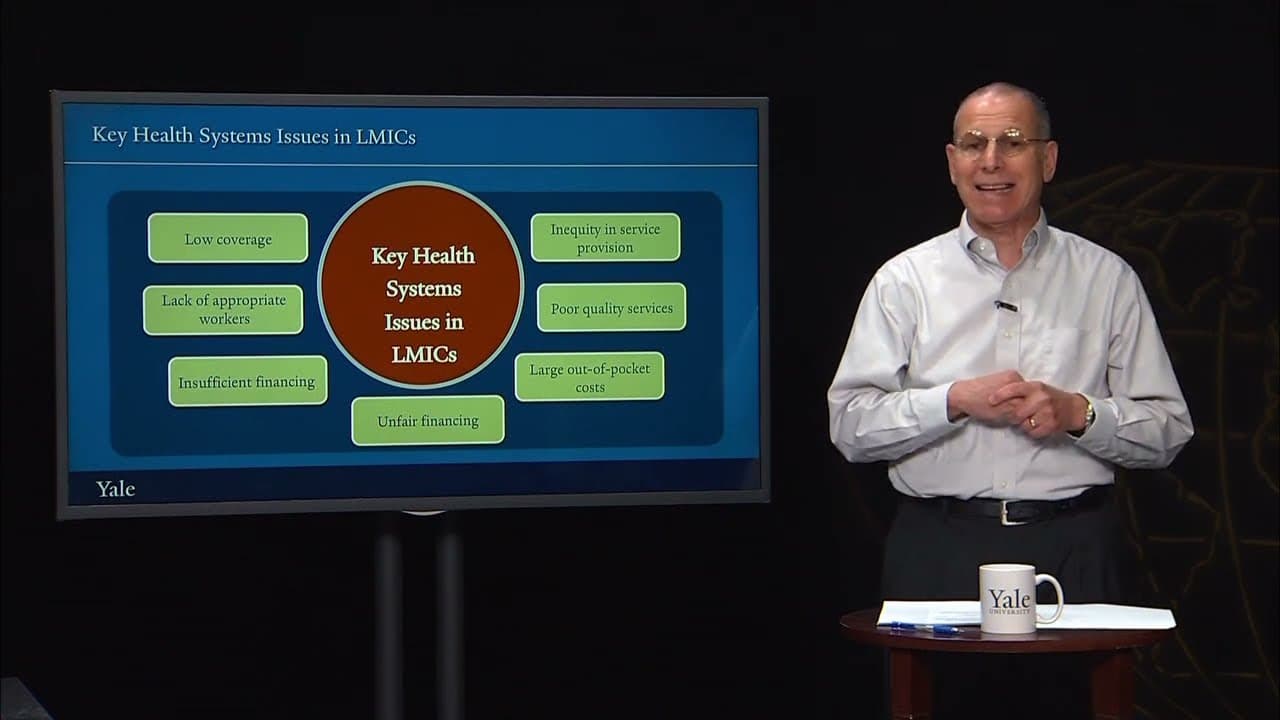
The key challenges in global health include addressing child and maternal mortality, tackling non-communicable diseases, enhancing the efficiency of health systems, and responding to emerging infectious diseases and antimicrobial resistance. Prioritizing the development of essential drugs, diagnostics, and vaccines is crucial for effective solutions.
Transcript
welcome this will be the last session of the course in this session I'd like to bring to a close the overview of global Health with which the course has provided you I'll do this by focusing on some of the key challenges we're likely to face in global Health in the next decade or so by the time you finish this session I hope you'll be able to speak... Read More
Key Insights
- 👶 The unfinished global health agenda includes challenges related to child and maternal mortality, undernutrition, and communicable diseases.
- 😘 Non-communicable diseases are increasing in low and middle-income countries, necessitating the focus on addressing underlying risk factors.
- 🧑⚕️ Strengthening health systems to improve coverage, financing, and quality is crucial, especially for the benefit of the poor.
- 🌐 The prevention and response to emerging infectious diseases and antimicrobial resistance require improved surveillance, reporting, and global cooperation.
Install to Summarize YouTube Videos and Get Transcripts
Explore YouTube Video Summarizer or Get YouTube Transcript Extractor
Questions & Answers
Q: How many children die each year globally, and what are the main reasons for their deaths?
More than six million children die each year worldwide. The main reasons include undernutrition, stunting, wasting, and diseases such as tuberculosis, HIV, and malaria.
Q: What are the key steps to address nutrition and child health issues?
It is crucial to ensure healthy and well-nourished mothers, skilled birth attendants, immediate and exclusive breastfeeding for six months, immunization, oral rehydration therapy for diarrheal disease, and the use of bed nets in malaria-endemic areas.
Q: What are the critical issues to consider for maternal health?
Maternal health requires a life course perspective. Measures include adequate nutrition during pregnancy, prenatal care, skilled attendance during delivery, addressing delays in accessing healthcare, and providing high-quality services for pregnancy-related complications.
Q: How can non-communicable diseases be addressed effectively?
Non-communicable diseases can be tackled by addressing underlying risk factors such as tobacco consumption, excess alcohol use, poor diet, lack of physical activity, and obesity. Implementing taxation, smoke-free zones, restrictions on sales, and offering cessation therapy are important steps.
Q: What challenges arise in weak health systems, particularly in low-income countries?
Weak health systems often result in low coverage, insufficient financing, poor quality services, and inequitable service delivery. Strengthening health systems requires a stepwise approach, focusing on priority activities to achieve effective and efficient coverage and move towards universal health coverage.
Q: How can emerging infectious diseases and antimicrobial resistance be addressed?
To tackle these challenges, countries need to improve their ability to respond to such events, enhance surveillance and reporting, and meet international health regulations. Global cooperation, technical and financial support, and better public-private partnerships are crucial in responding to emergencies and managing antimicrobial resistance.
Summary & Key Takeaways
-
The video highlights the unfinished agenda in global health, including child and maternal mortality, undernutrition, and communicable diseases.
-
It addresses the growing burden of non-communicable diseases in low and middle-income countries.
-
The video emphasizes the need to make health systems more efficient and better for the poor, and to prevent and respond to emerging infectious diseases and antimicrobial resistance.
-
It also emphasizes the importance of enabling the development of drugs, diagnostics, and vaccines to address these challenges effectively.
Read in Other Languages (beta)
Share This Summary 📚
Summarize YouTube Videos and Get Video Transcripts with 1-Click
Try YouTube Summary with ChatGPT & Claude or YouTube Transcript Generator
Explore More Summaries from YaleCourses 📚


Summarize YouTube Videos and Get Video Transcripts with 1-Click
Try YouTube Summary with ChatGPT & Claude or YouTube Transcript Generator