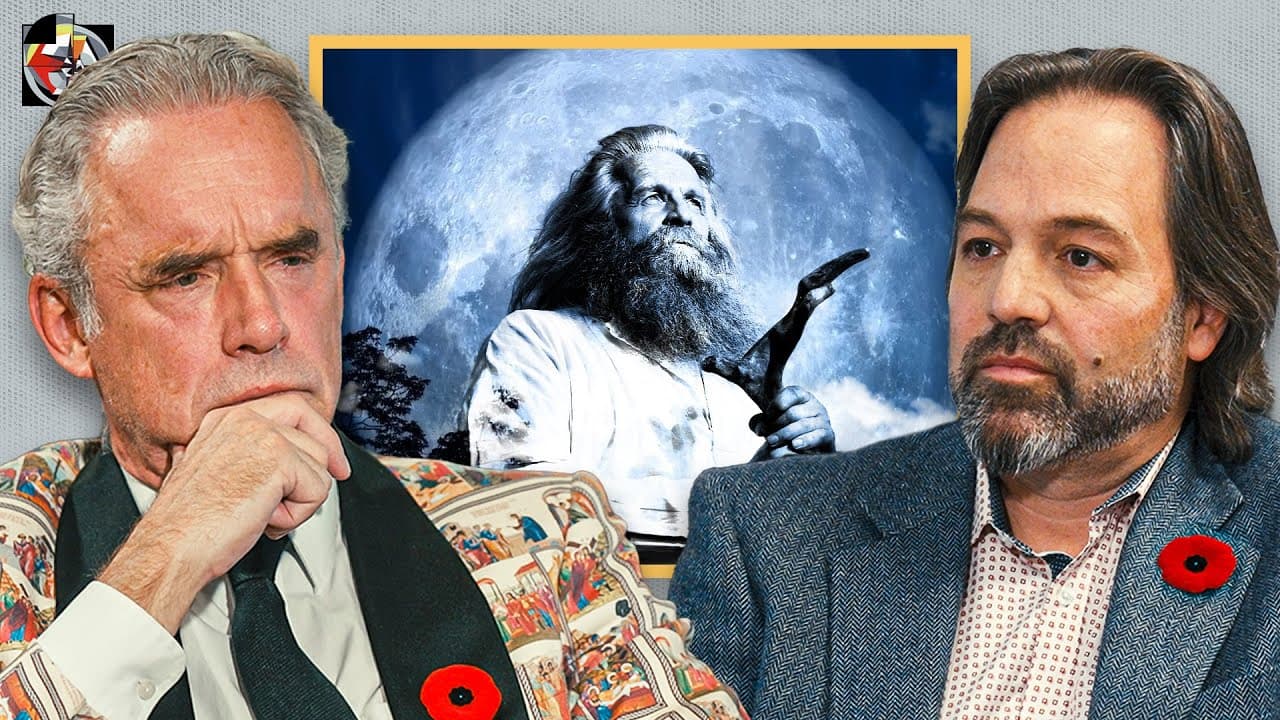
Why do humans reach for the moon and what does it mean?
TL;DR
The drive to reach the moon combines scientific capability with a search for meaning embedded in our social order. It connects exploration with identity, sacred symbols, and the belief that there is a higher purpose to human endeavors. The discussion frames exploration as part of a larger narrative about civilization, values, and the transcendent.
Transcript
and sorry to bring back the Dawkins conversation it just happened because I it's still fresh in my mind you know Dawkins at some point said something like I don't care about these stories I care about the kind of Science and the kind of prediction that can help us land uh you know a spaceship on the moon and I like I missed an opport I care more ab... Read More
Key Insights
- Space achievement is inseparable from a society’s ethos and identity, not just technology.
- A social contract and Judeo-Christian landscape underpin the resources that allow moon exploration.
- Symbolic acts like planting flags or crosses signify new centers of identity during exploration.
- Aims require sacrifice: shedding unhelpful goals and committing to a higher purpose.
- Forms and categories provide reasons for existence, moving toward a higher, intelligible purpose.
- The notion of forms is linked to purposes and reasons rather than abstract metaphysical facts.
- Sacrifice has two parts: removing what does not fit the aim and offering the best efforts toward a higher meaning.
- Joy and peace arise when actions align with a higher good and the divine or transcendent.”]},
- Q_and_A:[{
- question1
- answer1.
Install to Summarize YouTube Videos and Get Transcripts
Explore YouTube Video Summarizer or Get YouTube Transcript Extractor
Questions & Answers
Q: What is the central motivation behind reaching the moon according to the speakers?
The central motivation goes beyond proving science or technology; it is about aligning human action with a higher purpose that gives meaning to exploration. The conversation links lunar travel to ancient narratives of venturing into the unknown, the creation of identity through discovery, and the social contract that enables such grand projects. This framing suggests that the moon mission embodies a collective aspiration toward something greater than mere achievement.
Q: How do the speakers connect exploration with social contracts and education systems?
They argue that the social contract and the educational structures it yields create the conditions for breakthroughs like moon travel. A society must cultivate trust, shared values, and a coherent commitment to truth to sustain long-term scientific and technological projects. In this view, education systems and cultural ethos act as the prime resources enabling advanced technology rather than only the engineering itself.
Q: What role do symbols play in exploration, according to the discussion?
Symbols such as flags or crosses mark new centers of identity and serve as public declarations of belonging and intention. They connect exploration with personal and collective identity, turning physical acts of travel into meaningful gestures that signify a broader commitment to a higher order or order of meaning beyond immediate utility.
Q: What does the conversation say about form and purpose?
The speakers propose that forms are tied to purposes rather than existing as abstract facts. Recognizing a form is essentially seeing a reason for its existence, which relates to the human drive to organize experience toward a coherent, higher aim. This view reframes categories as tools for achieving meaningful ends rather than as detached classifications.
Q: How are sacrifices framed in pursuing a dream or aim?
Sacrifices are twofold: rejecting elements that do not fit the aim and offering up one’s best efforts toward the higher purpose. This dual process mirrors spiritual traditions where atonement involves removing the unnecessary while dedicating essential energy to a noble goal, thereby purifying effort and intensifying commitment.
Q: What is the connection between Jacob's ladder imagery and striving toward a higher good?
Jacob's ladder is used as a metaphor for ascending toward the divine through an infinite upward movement. It frames life as a process of translating lower, material realities into higher, purposeful aims, with the divine as the pinnacle. The imagery reinforces the idea that life’s progress is a stair-step toward meaning and unity with a transcendent order.
Q: How does pursuing a higher aim affect daily joy and peace, according to the speakers?
When actions are integrated into a higher purpose, daily tasks glow with added significance, producing a sense of joy and peace. This stems from participating in something larger than oneself and the divine or ultimate good that gives life coherence, reducing existential tension and creating a more harmonious sense of striving.
Q: Why do the speakers discuss forms in relation to purpose rather than abstract metaphysics?
The discussion emphasizes practical grounding: forms acquire meaning through their purposes and rationales. This makes philosophical ideas accessible and relevant to everyday life, showing that recognizing a form is really about identifying a coherent reason for its existence and how it guides actions toward meaningful ends. The emphasis is on lived significance rather than abstract speculation.
Summary & Key Takeaways
-
The video argues that landing on the moon is not just a technical achievement but a reflection of a society’s ethos and identity, rooted in deeper narratives and religious or philosophical symbolism.
-
The speakers connect the space program to stories of ancient exploration and to the idea that productive social contracts enable extraordinary science, suggesting that cultural foundations shape what a society can accomplish.
-
The discussion culminates in the notion that aims require sacrifices and that pursuing a higher purpose or dream imbues smaller actions with meaning and joy, aligning personal effort with a broader, transcendent goal.
Read in Other Languages (beta)
Share This Summary 📚
Summarize YouTube Videos and Get Video Transcripts with 1-Click
Try YouTube Summary with ChatGPT & Claude or YouTube Transcript Generator
Explore More Summaries from Jordan B Peterson 📚




Summarize YouTube Videos and Get Video Transcripts with 1-Click
Try YouTube Summary with ChatGPT & Claude or YouTube Transcript Generator