What Is Digital Audio Compression?
TL;DR
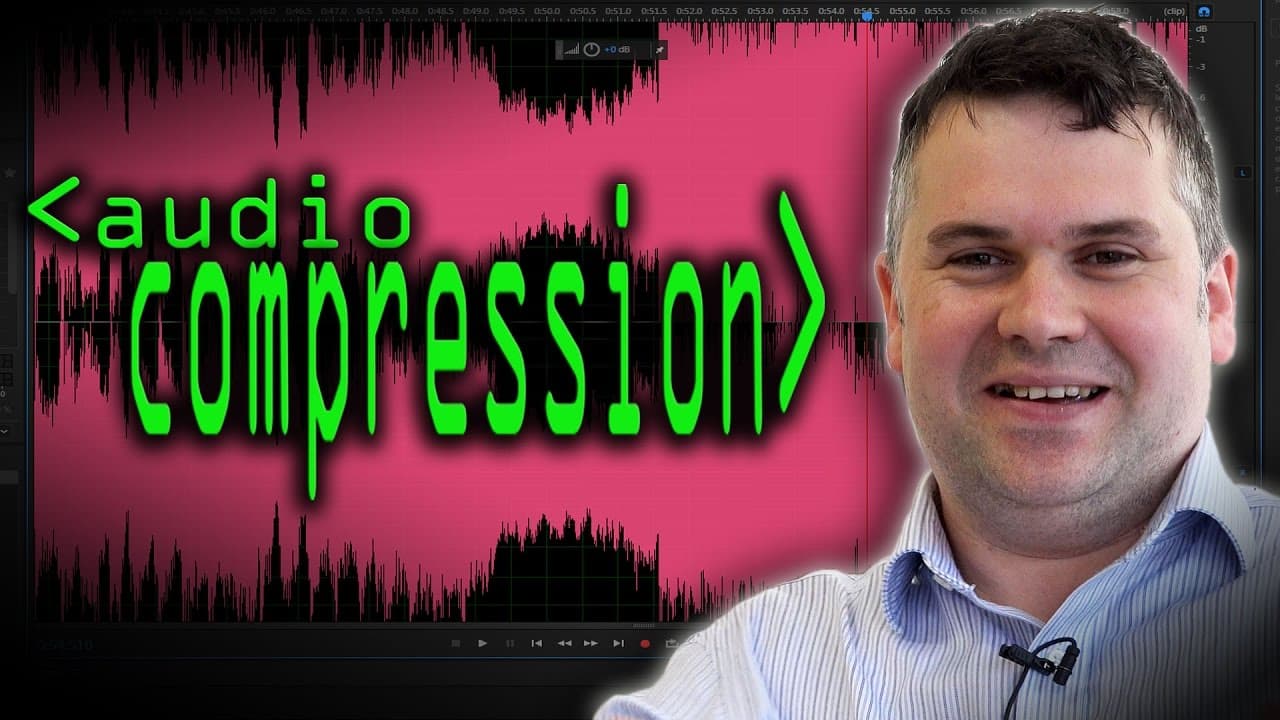
Digital audio compression reduces file sizes while preserving sound quality by leveraging psychoacoustic principles. By selectively filtering frequencies and sampling at varied rates according to human hearing limits, audio files can be efficiently stored and transmitted, enabling easier access to music over the internet.
Transcript
If you imagine quite far back you started off [with] midi files. [It] was one of the ways of transmitting music initially over the internet, then you added things called mod files, these were midi files with a very small amount of audio -- normally 8-bit audio added to it. You're talking about 1980s video games [of] the territory so [it] was slight... Read More
Key Insights
- ☠️ Audio compression started with MIDI files and evolved to include various compression techniques with different compression rates.
- 🦻 Psychoacoustic effects help optimize audio compression by taking advantage of our hearing system's limitations.
- 🤕 Digital audio can be filtered into frequency bands and sampled at different rates to reduce the overall amount of data needed.
- ❓ Other tricks like stereo channel comparison are used to further compress audio.
- 🥰 The core principles of audio compression have remained the same, while advancements in understanding how we hear and encoding techniques have improved the process.
- 😌 Bandwidth constraints have been reduced, relieving some pressures on audio compression.
- 🖐️ Audio compression has played a significant role in the availability and accessibility of internet music.
Install to Summarize YouTube Videos and Get Transcripts
Explore YouTube Video Summarizer or Get YouTube Transcript Extractor
Questions & Answers
Q: How did audio compression start and evolve?
Audio compression started with MIDI files in the 1980s and evolved to include compression techniques with different compression rates. Understanding how we hear led to the development of psychoacoustic effects in audio compression.
Q: What is the role of psychoacoustics in audio compression?
Psychoacoustic effects in audio compression take advantage of the way our hearing system evolved. They reduce the amount of data needed to describe sound while making small, perceptible differences to the overall sound.
Q: How does digital audio compression reduce file size?
Digital audio can be filtered into frequency bands and sampled at different rates. By doing this, the overall amount of data needed to represent the sound is reduced, effectively lowering the file size.
Q: Are there any other tricks used in audio compression?
Yes, besides psychoacoustic effects and frequency band sampling, there are other tricks like stereo channel comparison or removing unnecessary information. These additional techniques contribute to further reducing file size.
Summary & Key Takeaways
-
Audio compression started with MIDI files in the 1980s, which were then compressed using techniques like 10-to-1 or 20-to-1 compression rates.
-
Understanding how we hear and perceive sound led to the development of psychoacoustic effects, where loud sounds obscure quieter frequencies.
-
Digital audio can be filtered into frequency bands and sampled at different rates to reduce the overall amount of data needed to represent the sound.
Read in Other Languages (beta)
Share This Summary 📚
Summarize YouTube Videos and Get Video Transcripts with 1-Click
Try YouTube Summary with ChatGPT & Claude or YouTube Transcript Generator
Explore More Summaries from Computerphile 📚





Summarize YouTube Videos and Get Video Transcripts with 1-Click
Try YouTube Summary with ChatGPT & Claude or YouTube Transcript Generator