Why Does Gen Z Distrust Workplace Loyalty?
TL;DR
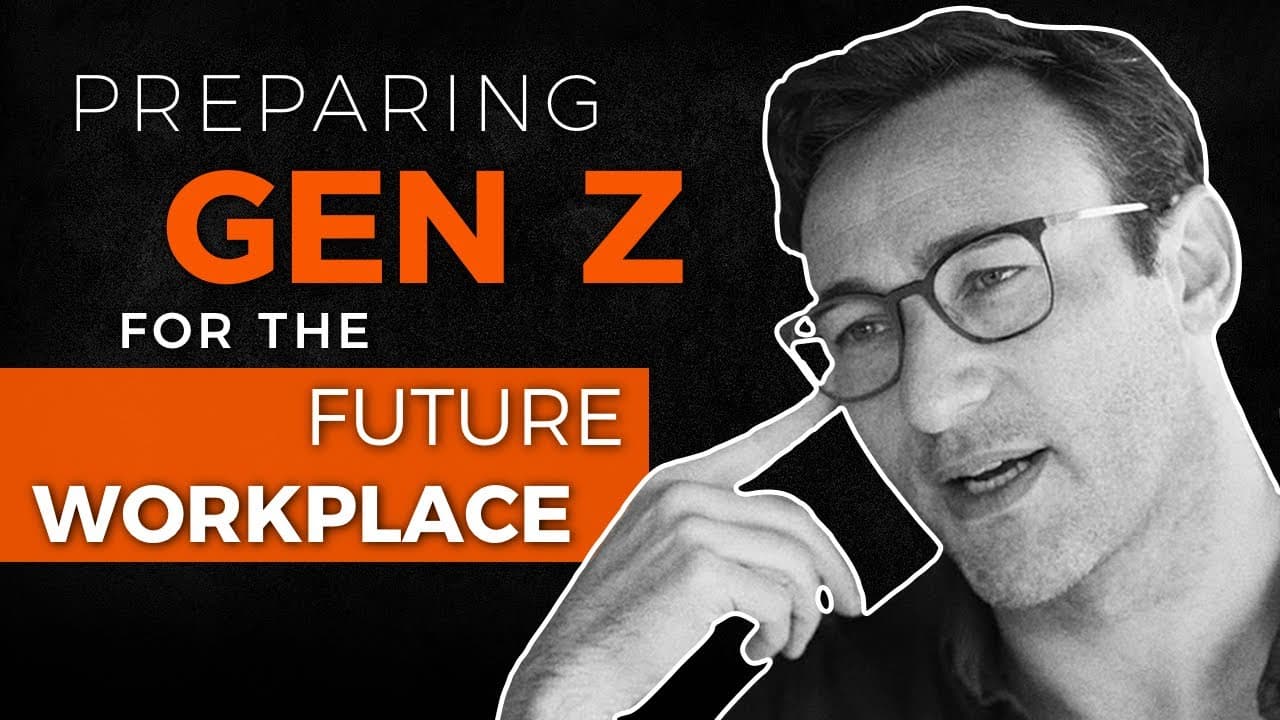
Gen Z’s limited loyalty to employers reflects decades in which companies normalized layoffs and prioritized shareholder value over commitments to employees and customers. Rebuilding trust requires leaders and future workers to develop human skills such as empathy, listening, feedback, and difficult conversations, alongside the technical skills needed to perform their jobs.
Transcript
there was a great disservice that was done to capitalism um over the course of the 80s 90s and 2000s um and that disservice was perpetuated by leaders like Jack Welch um and basically what they did is they made business in America more about value to a shareholder an external constituent over a customer or an employee and remember good oldfashioned... Read More
Key Insights
- Shareholder-first capitalism is presented as a departure from a model that valued competition, better products, customers, and employees. When financial projections dominate business decisions, leaders may protect short-term market reactions while weakening company culture and the relationships that sustain long-term performance.
- Mass layoffs can occur even when a company is profitable because it failed to meet an arbitrary financial projection. Such decisions teach workers that performance and loyalty do not necessarily protect employment, particularly when job losses are unrelated to an individual employee’s merit.
- Gen Z’s skepticism toward corporate loyalty is a response to the workplace conditions it observed while growing up. Young people watched parents and other adults lose jobs through no fault of their own, so many entered employment without believing companies would reliably protect them.
- The traditional employer-employee deal depended on reciprocal loyalty. Companies were expected to care for their people, while employees returned that care through years of commitment. Once employers repeatedly broke that understanding, expecting younger employees to honor it without rebuilding trust became unrealistic.
- Human skills are distinct from the technical skills required to perform a job. Listening, empathy, feedback, and difficult conversations help people become better colleagues and leaders, and they work alongside knowledge such as reading balance sheets and understanding profit-and-loss statements.
- Workplace culture and trust depend on leaders having practical interpersonal abilities. Technical business education cannot compensate for an inability to listen, show empathy, exchange feedback, or address uncomfortable subjects, especially when teams need guidance during difficult or emotionally charged circumstances.
- Difficult conversations can begin with an honest acknowledgment of uncertainty and fear. A leader can admit that mistakes are possible, ask the team for help, and explain that addressing the issue matters more than remaining silent because the conversation feels uncomfortable.
- Universities and companies have a responsibility to teach human skills because these abilities are learnable and practicable. Equipping young people with them can prepare future entrepreneurs and organizational leaders to improve workplace culture, restore trust, and repair the effects of transactional business practices.
Install to Summarize YouTube Videos and Get Transcripts
Explore YouTube Video Summarizer or Get YouTube Transcript Extractor
Questions & Answers
Q: Why does Gen Z show less loyalty to employers?
Gen Z has grown up watching companies normalize mass layoffs, including situations in which profitable organizations dismissed workers after missing financial projections. Many young people saw parents or their parents’ friends lose jobs through no fault of their own. These experiences weakened the expectation that an employer would protect loyal workers, making a transactional response from younger employees understandable.
Q: How did shareholder-first thinking damage workplace culture?
Shareholder-first thinking shifted business attention toward an external constituent and away from customers and employees. Leaders could announce layoffs to satisfy financial projections and see the stock price rise, even while damaging workplace culture over the long term. This approach weakened the reciprocal relationship in which companies cared for employees and employees responded with years of loyalty.
Q: What agreement between companies and employees was broken?
The earlier agreement was based on reciprocal care. A company would work to look after its people, and employees would give back through loyalty and commitment. Repeated layoffs and short-term financial decisions broke that understanding by showing workers that the company might not protect them, even when it remained profitable and their individual performance was not the problem.
Q: What are human skills in the workplace?
Human skills are abilities that help someone become a better human being and work effectively with others. They include listening, empathy, giving and receiving feedback, and conducting difficult conversations. These skills complement the technical abilities needed for a job, such as understanding a balance sheet or a profit-and-loss statement, and are essential for leadership, trust, and culture.
Q: Why are human skills important for business leaders?
Human skills allow leaders to build trust, strengthen culture, exchange useful feedback, and guide teams through difficult periods. A leader may understand financial statements and other technical aspects of business but still struggle to manage people without listening, empathy, or conversational courage. Both technical and human abilities are needed to become an effective entrepreneur or business leader.
Q: How should a leader start a difficult workplace conversation?
A leader can begin by stating that the discussion will be difficult and honestly acknowledging fear of saying the wrong thing or upsetting someone. The leader can ask the team for help, admit that the conversation may involve mistakes, and explain that addressing the subject is more important than avoiding it because of personal discomfort or uncertainty.
Q: Why did some leaders avoid discussing race after George Floyd’s murder?
Some leaders did nothing because they feared saying the wrong thing, triggering someone, or accidentally making the situation worse. Their silence was not necessarily evidence that they were bad people. It reflected a missing skill set: knowing how to approach a difficult conversation with honesty, humility, and a willingness to acknowledge uncertainty while asking others for help.
Q: How can universities better prepare young people for work?
Universities can teach human skills alongside technical business knowledge. Students need opportunities to practice listening, empathy, feedback, and difficult conversations before becoming employees, entrepreneurs, or leaders. Companies are currently described as doing a poor job of providing this preparation, so stronger university education could help future leaders build trust, improve culture, and repair transactional business practices.
Summary & Key Takeaways
-
The traditional relationship between companies and employees was damaged as business became more focused on short-term shareholder value. Profitable companies could announce layoffs simply because results missed financial projections. Young people consequently witnessed workers losing jobs through no fault of their own, weakening their expectation that employers would reward loyalty with security.
-
Companies should not be surprised when younger workers offer little loyalty after employers have demonstrated little loyalty for decades. Treating business as a transactional exercise also pushed the human element aside. Repairing workplace culture therefore requires more than criticizing Gen Z. It requires organizations to rebuild trust through consistent care and responsible leadership.
-
Technical competence alone cannot create trustworthy leadership or healthy workplace cultures. Listening, empathy, giving and receiving feedback, and handling difficult conversations are teachable human skills. Universities and companies should develop these abilities so future leaders can navigate sensitive issues, manage difficult periods, strengthen trust, and help repair the damage caused by short-term business thinking.
Read in Other Languages (beta)
Share This Summary 📚
Summarize YouTube Videos and Get Video Transcripts with 1-Click
Try YouTube Summary with ChatGPT & Claude or YouTube Transcript Generator
Explore More Summaries from Simon Sinek 📚




Summarize YouTube Videos and Get Video Transcripts with 1-Click
Try YouTube Summary with ChatGPT & Claude or YouTube Transcript Generator