How to Ask Better Questions and Listen Well
TL;DR
Ask a thoughtful follow-up question before offering advice, because staying curious helps uncover the real problem and empowers the other person to think. Strong listening can communicate experience, build meaningful connections, and improve client or coaching conversations, while reflexively supplying answers may cut discovery short and overlook the other person’s unique situation.
Transcript
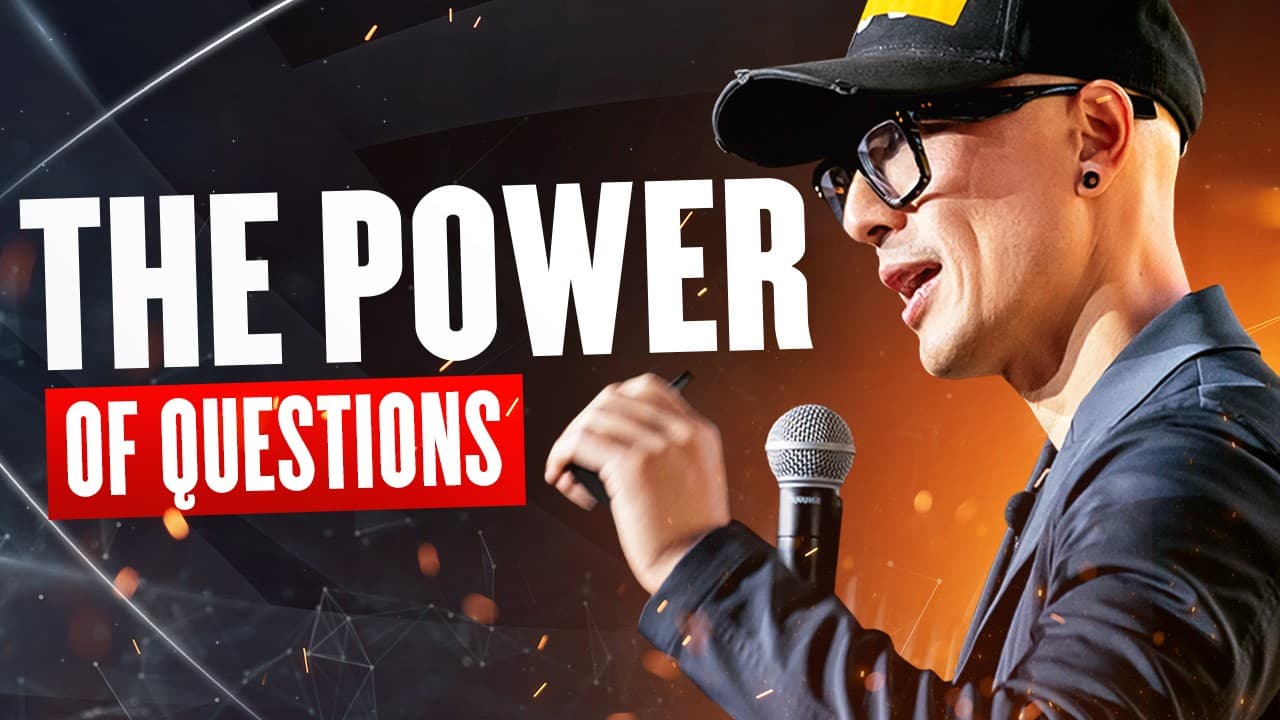
what's up New York we're here at the hot sauce conference 2023 I just gave a talk on the Lost Art of listening check it out I was invited to speak and I was asked to speak on the theme of empathy and customer centricity about how to build meaningful connections with people it got me to think about this a lot and I want to get a little meta with you... Read More
Key Insights
- Listening is a way to communicate professional experience because it reveals how someone approaches another person’s problem, not merely what appears in a portfolio. Awards, logos, and credentials may support credibility, but they do not automatically transfer the ability to command a higher price.
- Confidence is difficult to build when it is treated as something that must come only after gaining experience. This creates a catch-22 for developing professionals who believe they need confidence to appear authoritative but need authority and opportunities before they can accumulate experience.
- Questions are valuable because they promote learning, frame the eventual answer, and invite people to discuss their circumstances. Their usefulness depends on genuine curiosity and deliberate discovery, especially when a client’s situation is too specific for an immediate generic answer.
- Answers are still valuable when speed and directness matter. A person paying a coach or consultant may sometimes want a clear response instead of a long chain of consultations, particularly when time is valuable and repeated questioning begins to feel unnecessarily prolonged.
- The reflex to answer is shaped by education and social conditioning that reward the fastest correct response. People who fear giving a wrong answer may remain silent, while those who respond quickly receive recognition, reinforcing answer-first communication habits.
- Active listening requires pausing before responding rather than treating every question as a test of expertise. Staying curious for longer creates room to understand what the other person means, identify missing context, and avoid solving a problem that has not been properly defined.
- Coaching works partly through questions that help people understand their own situations and find answers suited to them. A coach cannot always provide a ready-made solution because each person brings different circumstances, assumptions, goals, and constraints to the conversation.
- Empathetic communication is grounded in pulling people into a dialogue rather than talking above them. Interactive conversation can build meaningful connections by making the other person an active participant, which supports customer centricity and more thoughtful client relationships.
- Related book: Nonviolent Communication
- Related book: The Coaching Habit
- Export your Kindle highlights to Glasp: How to Download Highlights and Notes from Kindle
Install to Summarize YouTube Videos and Get Transcripts
Explore YouTube Video Summarizer or Get YouTube Transcript Extractor
Questions & Answers
Q: How can I ask better questions in a business conversation?
Pause before giving advice and respond with a thoughtful question that explores the other person’s circumstances. The goal is to stay curious long enough to understand what problem they are actually trying to solve. Questions can frame the eventual answer, reveal missing context, and help the person think through an issue instead of receiving a generic recommendation too quickly.
Q: Why are questions often more valuable than immediate answers?
Questions can generate learning, frame possible answers, and encourage people to explain their experiences and assumptions. They are especially useful when a client or colleague has a unique situation that cannot be addressed responsibly with a standard response. By extending discovery, a good question reduces the risk of offering advice before the underlying problem is understood.
Q: Why do people automatically answer questions instead of asking follow-up questions?
People are often socialized and educated to treat questions as prompts requiring immediate answers. In school, the person who raises a hand fastest and answers correctly may receive praise or a high grade, while someone worried about being wrong may stay silent. This conditioning makes answering feel compulsory, even when another question would support better understanding.
Q: How does active listening help professionals communicate experience?
Active listening demonstrates how a professional investigates problems, notices context, and responds to another person’s needs. A portfolio, award, logo, or credential can signal past achievement, but it does not by itself show how someone will handle a live conversation. Careful questions and attentive responses make professional judgment visible during the interaction itself.
Q: How can better listening help someone charge higher prices?
Better listening can help a professional be perceived as thoughtful, experienced, and capable of understanding a client’s real problem. The talk challenges the idea that simply adopting a more accomplished person’s portfolio would create the same pricing power. Value is also communicated through confidence, deliberate discovery, and the ability to guide a useful client conversation.
Q: When should a coach or consultant give a direct answer?
A direct answer can be appropriate when the issue is sufficiently understood and the client needs speed or clarity. Questions should not become an excuse to stretch a simple matter across repeated consultations. The conversation presents both sides: discovery is valuable for unique situations, but clients may reasonably expect a concise answer when time is important.
Q: How do good coaching questions empower another person?
Good coaching questions create space for someone to examine the situation, clarify what matters, and develop an answer suited to their own circumstances. Instead of assuming that an adviser already understands everything, the questioning process makes the other person an active participant. This supports deeper understanding and avoids imposing a solution that may not fit.
Q: What is the connection between empathy and active listening?
Empathy becomes practical when a communicator listens closely enough to understand another person’s viewpoint and circumstances. Rather than delivering information from above, an empathetic communicator creates dialogue and pulls the other person into the exchange. This approach supports meaningful connections, customer centricity, stronger client relations, and communication that responds to the person rather than assumptions.
Summary & Key Takeaways
-
Chris Do challenges the belief that credentials, awards, experience, or a stronger portfolio alone enable someone to charge higher prices. Through a conversation about a former illustration student, he explores how professionals communicate authority and proposes that listening, confidence, and the quality of their questions shape how clients perceive their value.
-
The audience initially favors questions over answers because questions create learning, frame responses, and let people discuss themselves. Chris then exposes a contradiction: although many people claim questions are more valuable, they automatically answer when questioned. He attributes this reaction to educational and social systems that reward fast, correct answers.
-
The practical lesson is to resist giving immediate advice and remain curious longer. Asking another question can reveal the client’s distinctive circumstances, help the other person reason through the issue, and prevent premature solutions. Chris connects this approach to coaching, management, empathy, customer centricity, deliberate discovery, and meaningful professional relationships.
Read in Other Languages (beta)
Share This Summary 📚
Summarize YouTube Videos and Get Video Transcripts with 1-Click
Try YouTube Summary with ChatGPT & Claude or YouTube Transcript Generator
Explore More Summaries from The Futur 📚



Summarize YouTube Videos and Get Video Transcripts with 1-Click
Try YouTube Summary with ChatGPT & Claude or YouTube Transcript Generator