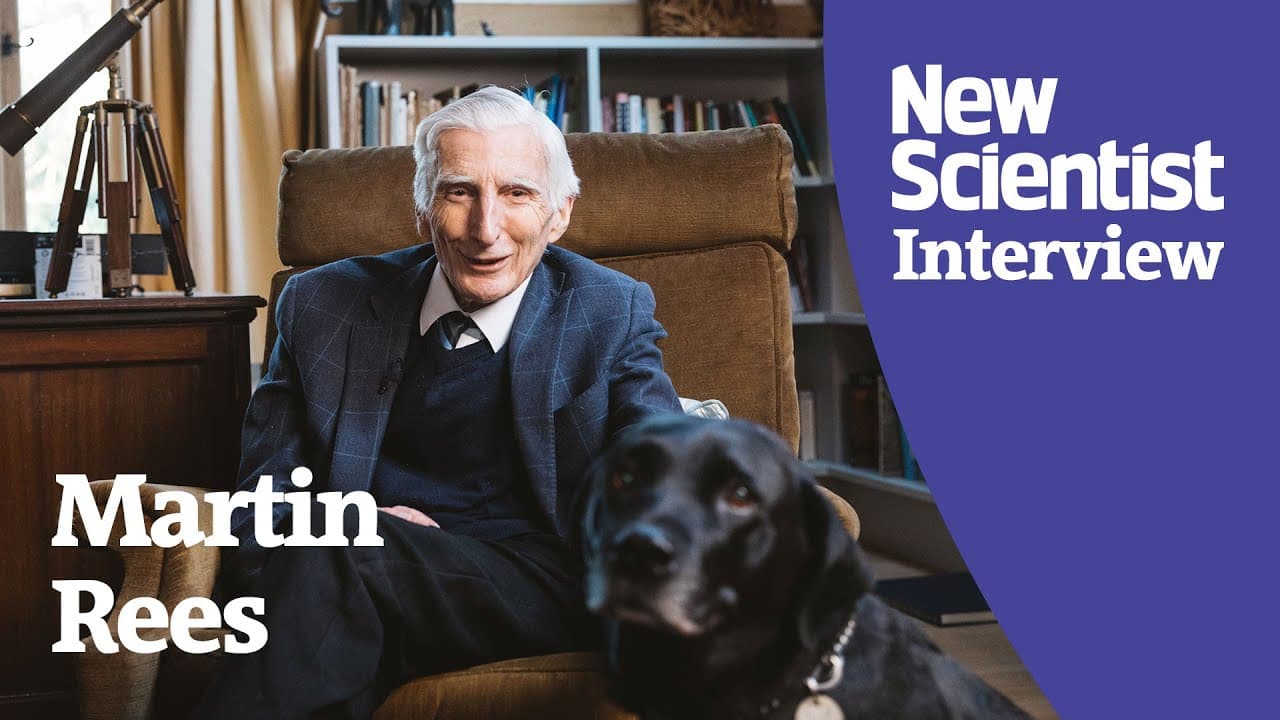
Martin Rees interview on the Big Bang, black holes and the billionaire space race
TL;DR
Exploring cosmological advancements and potential threats to civilization, with a focus on new discoveries and vast technological progress.
Transcript
this century is special it's the first when one species of human species has the power to determine the future of life on earth i think the chance of some serious global setback to civilization is indeed quite high when you started your research career as a cosmologist the existence of the cosmic microwave background the afterglow of the big bang u... Read More
Key Insights
- 💋 The transition from steady-state to the Big Bang theory marked a pivotal moment in cosmology, driven by the discovery of cosmic microwave background radiation in the 1960s.
- 🖤 The exploration of black holes and pulsars expanded the understanding of Einstein's relativity and gravitational forces in the universe.
- 🕶️ Unanswered cosmological questions on dark matter, dark energy, and universal expansion hint at future discoveries challenging contemporary scientific paradigms.
- 👾 Modern space exploration, epitomized by billionaires' space initiatives, offers opportunities for innovative, risk-taking approaches to space travel and colonization.
- 🌐 The dual challenges of future technological advancements and global threats necessitate careful consideration of ethical, regulatory, and environmental implications in scientific progress.
- 👾 Climate change and biodiversity loss demand urgent action, with potential space colonization not detracting from the immediate need for Earth-focused sustainability.
- 🌐 The optimistic pursuit of technological advancements must align with ethical considerations, environmental impact assessments, and equitable global access to benefit humanity.
- 🎙️ More videos with Martin Rees:
Install to Summarize YouTube Videos and Get Transcripts
Explore YouTube Video Summarizer or Get YouTube Transcript Extractor
Questions & Answers
Q: How has cosmology transformed since the 1960s?
The shift from a steady-state theory to the Big Bang theory, marked by the discovery of cosmic microwave background radiation, revolutionized cosmology, propelling advancements in understanding the universe's origins.
Q: What are the key questions that cosmology faces today?
Contemporary cosmology grapples with the expansion of the universe, the composition of dark matter, and the emergence of galactic structures crucial to understanding universal formation processes.
Q: What is the significance of dark matter and dark energy in cosmological research?
Dark matter and dark energy constitute over 95% of the universe, holding essential clues to its structure and evolution despite their elusive nature, posing profound challenges to current scientific understanding.
Q: What role does the James Webb Telescope play in space exploration?
The James Webb Telescope aims to illuminate the universe's early galaxy formation and potentially detect extraterrestrial life, pushing the boundaries of astronomical discovery.
Summary & Key Takeaways
-
Cosmology in the 1960s: Transition from a steady-state universe to the Big Bang theory marked by the discovery of cosmic microwave background radiation.
-
Advancements in Relativity: Growing focus on black holes and pulsars, expanding Einstein's theories in cosmological research.
-
Unanswered Questions: From dark matter mysteries to the expansion of the universe, new realms of cosmological inquiry are opening up.
Read in Other Languages (beta)
Share This Summary 📚
Summarize YouTube Videos and Get Video Transcripts with 1-Click
Try YouTube Summary with ChatGPT & Claude or YouTube Transcript Generator
Explore More Summaries from New Scientist 📚

Summarize YouTube Videos and Get Video Transcripts with 1-Click
Try YouTube Summary with ChatGPT & Claude or YouTube Transcript Generator