How to Get AI Automation Clients Without a CRM
TL;DR
Focus on repeating client acquisition activities instead of building a CRM before reaching $10,000 per month. Use a simple task list, automated email follow-ups, consistent daily applications, and short personalized Loom demonstrations that prove you understand each prospect’s requested automation. Increase outreach gradually while gathering feedback, rather than committing immediately to a large campaign.
Transcript
So, I spent a lot of time in my comments and DMs, and I've noticed a bunch of the same questions over and over again. Today, what I want to do is grab the most commonly asked ones, the ones that I feel are interfering with most people's ability to start a successful AI automation business. I get asked these over on my daily updates channel. What I'... Read More
Key Insights
- A CRM is unnecessary for many AI automation businesses below $10,000 per month because their primary bottleneck is consistent execution, not lead organization. A simple task list can handle daily actions while the founder focuses time on outreach, follow-ups, sales practice, and delivery.
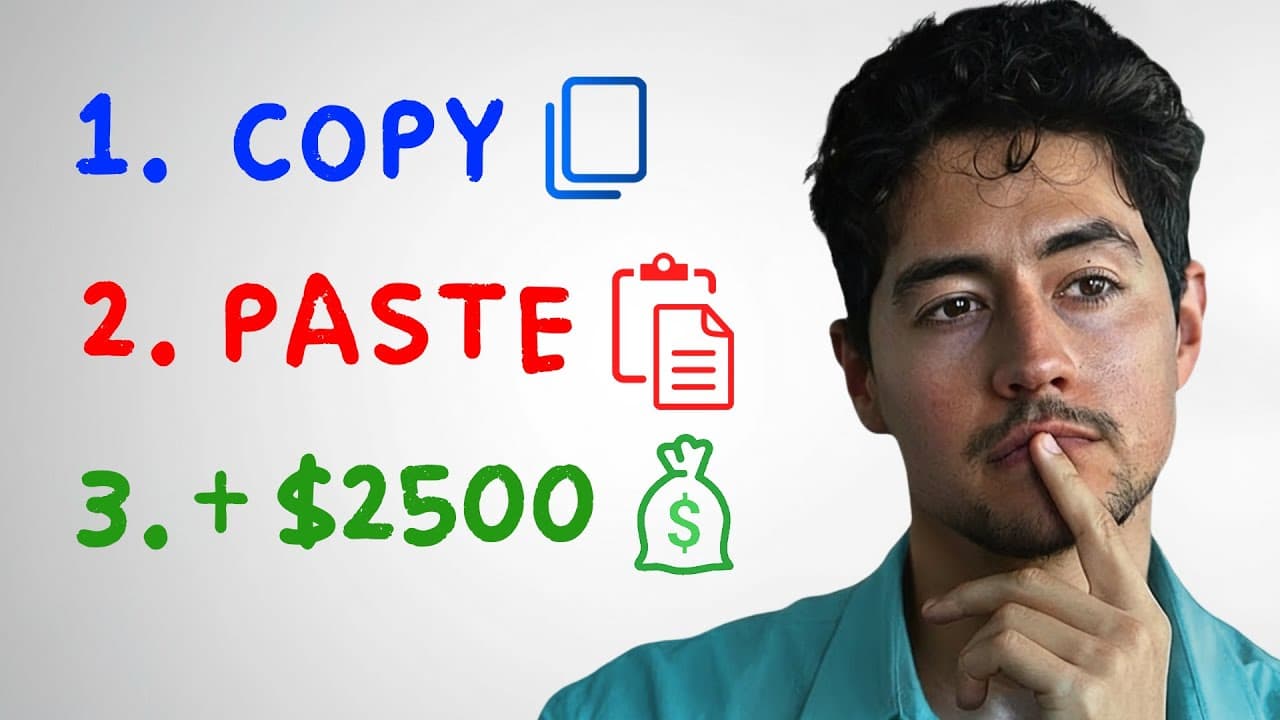
- Beginner growth is driven by repeating a small set of productive activities. The transcript describes total beginners following a list of three actions repeatedly, with some reaching $10,000 per month and continuing toward $15,000, $20,000, or $25,000 per month.
- Follow-up management can remain lightweight when a beginner has roughly one sales call per day. Prospects can be placed under a Gmail label, reviewed daily, and contacted manually, while lower-effort follow-ups continue through automated Instantly sequences until recipients respond.
- Early closing probability is likely to be poor because a beginner has not completed enough sales repetitions. The recommended system is therefore a personal routine that creates more opportunities to practice, rather than a complicated business system designed to optimize limited sales data.
- Personal systems can make consistent prospecting easier by protecting time and reducing friction. Adjustments to a desk, bedroom, home responsibilities, relationships, or children’s arrangements may help sustain concrete habits such as 10 daily Upwork applications or 30 minutes of cold email management.
- Cold email capacity must account for every sequence step, not only first-touch messages. With five accounts sending 30 emails daily, follow-up steps consume part of the 150-email capacity, reducing the average volume of new first-step messages to about 75 per day in a two-step sequence.
- Cold outreach should be increased gradually while a beginner gathers feedback. The suggested starting point is around 270 emails per day, approximately double the smaller proposed campaign, because the sender still needs to learn what works before committing much more heavily.
- A personalized Loom application should prove relevance through a short demonstration. The suggested format is a two or three-minute recording that introduces the applicant, connects prior automation experience to the job, and walks through part of a mock workflow without completing the entire project for free.
Install to Summarize YouTube Videos and Get Transcripts
Explore YouTube Video Summarizer or Get YouTube Transcript Extractor
Questions & Answers
Q: Do beginners need a CRM for an AI automation business?
Beginners generally do not need a CRM before reaching $10,000 per month, according to the strategy presented. Their main constraint is usually insufficient execution rather than poor organization. A simple task list can track immediate work, while a Gmail label can hold prospects requiring follow-up. Automated Instantly sequences can continue contacting leads until someone responds, keeping the process manageable without extensive setup.
Q: How should beginners improve their sales closing rate?
Beginners should improve their closing rate by completing more sales repetitions rather than spending their first month designing complicated systems. Their initial conversion rate will probably be poor because they lack experience. More applications, conversations, and follow-ups create opportunities to practice. The most useful systems are personal routines and environmental changes that make those activities easier to perform consistently every day.
Q: What daily outreach routine can help an automation business grow?
A practical routine is to complete 10 Upwork applications each day or spend 30 minutes daily managing cold email. The exact activity matters less than making execution repeatable. The speaker recommends changing personal circumstances, such as the desk location, home setup, relationship arrangements, or children’s situation, when those adjustments provide more reliable time for outreach and sales practice.
Q: How can prospects be tracked without using a CRM?
Prospects can be tracked with a task list and a dedicated Gmail label for follow-ups. Each day, the founder opens that label, reviews the people who have not completed the sales process, and sends the appropriate messages. This lightweight system is presented as sufficient when a beginner is handling approximately one call per day, especially when automated email sequences manage routine follow-up steps.
Q: Why do follow-up emails reduce new cold email volume?
Every message in a sequence uses part of the daily sending capacity. Five warmed accounts sending 30 emails each provide capacity for 150 daily messages. On the first day, all 150 might be first-step emails. Once the second step begins, capacity may split into 75 first-step and 75 second-step emails, leaving only about 75 new contacts per day.
Q: How many cold emails should a beginner send?
The speaker would send more than the proposed 5,000 monthly messages and suggests around 270 emails per day as a starting point. This recommendation accounts for sequence follow-ups consuming daily capacity. However, the campaign should still be increased gradually because a beginner does not yet know what works and should gather feedback before committing to a much larger outreach operation.
Q: How should a Loom video be structured for an Upwork proposal?
A Loom proposal should begin with a brief introduction and a direct reference to the prospect’s automation request. The applicant should explain relevant experience, establish credibility, and show a simple mock workflow based on the posted requirements. For the example involving Airtable and ZeroBounce, the recording would demonstrate the intended logic and possible validation step while clearly noting that the mock workflow is not operational.
Q: How much of a prospect’s automation should be demonstrated for free?
A proposal video should demonstrate enough of the automation to prove understanding without completing the entire project. The suggested approach is to build a quick mock-up, explain the first steps and logic, then stop after covering roughly part of the workflow. The finished Loom should remain focused at about two or three minutes and connect the demonstration directly to the prospect’s posted requirements.
Summary & Key Takeaways
-
A beginner AI automation business does not need a sophisticated CRM before reaching $10,000 per month. The recommended approach is a basic task list, a Gmail follow-up label, and automated sequences. At this stage, consistent execution matters more than elaborate organization because the expected number of daily sales calls remains manageable.
-
Early closing rates may be poor because beginners have limited sales experience. The practical response is to increase repetitions and create personal routines that protect time for outreach. Examples include completing 10 Upwork applications daily or spending 30 minutes managing cold email, supported by changes to the workspace, home, and schedule.
-
Personalized Loom videos can strengthen Upwork applications by connecting relevant experience directly to a prospect’s requirements. A useful recording introduces the applicant, establishes credibility, and demonstrates part of the requested workflow with a simple mock-up. The goal is a focused two or three-minute explanation, not a complete unpaid implementation.
Read in Other Languages (beta)
Share This Summary 📚
Summarize YouTube Videos and Get Video Transcripts with 1-Click
Try YouTube Summary with ChatGPT & Claude or YouTube Transcript Generator
Explore More Summaries from Nick Saraev 📚


Summarize YouTube Videos and Get Video Transcripts with 1-Click
Try YouTube Summary with ChatGPT & Claude or YouTube Transcript Generator