How to Produce YouTube Videos Much Faster
TL;DR
Start each educational YouTube video by defining its title, thumbnail concept, and opening hook before writing or filming. Save additional time by outsourcing editing when its cost is lower than the value of your time, and replace word-for-word scripts with bullet points when you know the subject well enough to speak naturally.
Transcript
for the first 3 years of my YouTube channel I was a full-time medical student and then working full-time as a doctor here in the UK you got to like wake up at 6:30 got to drive an hour to work got to be at work from like 8:00 till 5:30 p.m. and hope that you don't have to stay behind late you drive an hour back home from work it takes a bit longer ... Read More
Key Insights
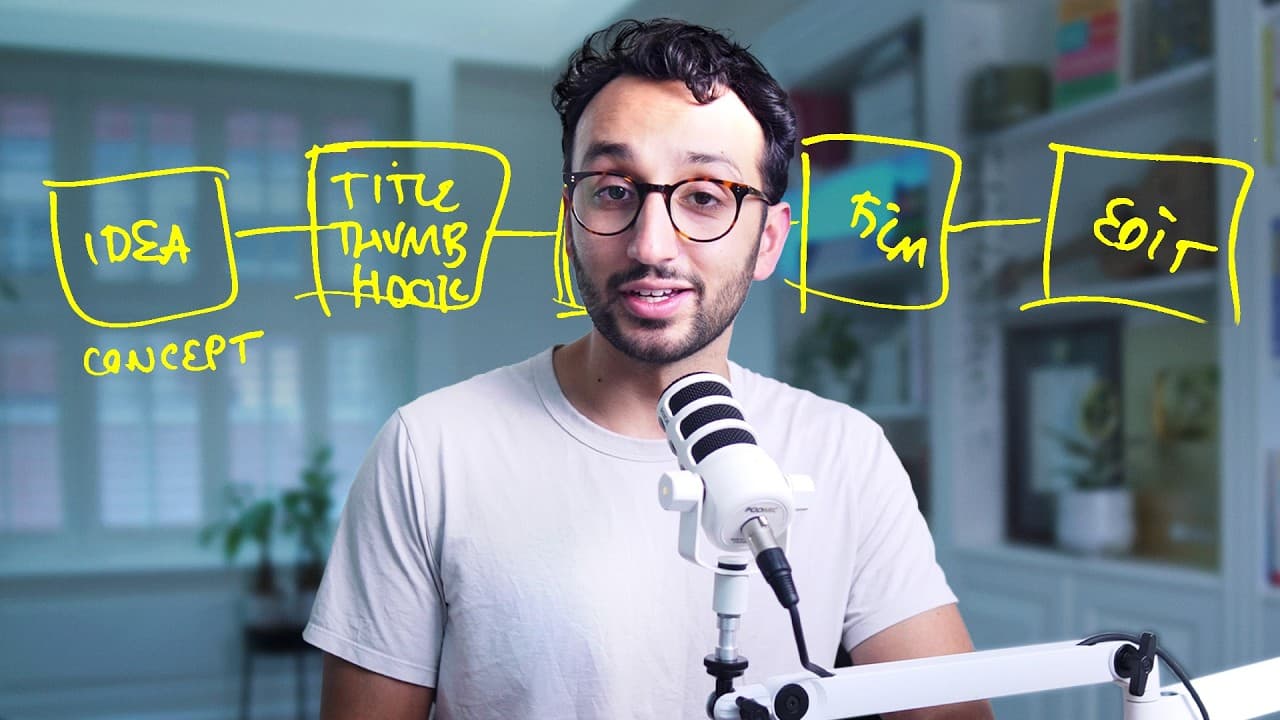
- The production process begins with idea generation, followed by the title, thumbnail, hook, writing, filming, editing, publishing, and analytics. Mapping these stages makes it easier to identify where time is being consumed and which tasks can be simplified or delegated.
- The title, thumbnail concept, and hook should be decided before writing the video. Ali defines the hook as the first 30 seconds and argues that these three elements should be clear well before scripting or filming begins.
- Video editing was Ali's largest production bottleneck, consuming about 10 hours each week. After editing his own work for two years, he outsourced the task following advice from a business coach and recovered a substantial amount of production time.
- The value of outsourcing depends on comparing the cost of an editor with the value of the creator's time. Ali illustrates this with his doctor income of about $15 per hour and the possibility of hiring an editor for $10 per hour.
- Recovered editing time can be used for higher-priority activities, including generating ideas, filming new material, spending time with family, or reducing stress. The channel does not necessarily need to earn money before outsourcing becomes worthwhile, because personal time also has value.
- Editing is usually a task that another person can perform for a channel. Ali makes an exception for creators who genuinely love editing, while still encouraging them to consider whether it is the highest-value use of their limited time.
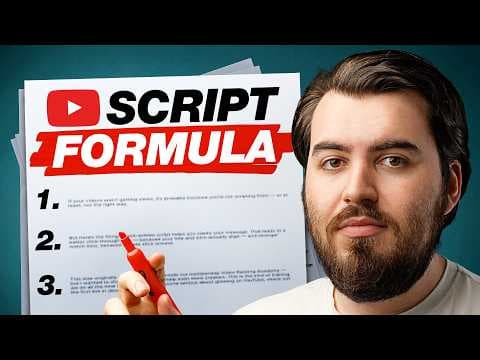
- Word-for-word scripting can require far more time than outlining an educational video with bullet points. Ali says some of his scripts took about 12 hours, making that approach difficult to sustain while he also had a demanding day job.
- Bullet-point outlines work best when creators know their subject well enough to explain it without a complete script. Ali found that this approach made him more confident and comfortable on camera while avoiding teleprompter problems and reducing preparation time.
Install to Summarize YouTube Videos and Get Transcripts
Explore YouTube Video Summarizer or Get YouTube Transcript Extractor
Questions & Answers
Q: How can educational creators make YouTube videos faster?
Educational creators can accelerate production by defining the idea, title, thumbnail concept, and first 30-second hook before writing. They can then prepare concise bullet points instead of a word-for-word script, film the explanation, and outsource editing when practical. This removes two major bottlenecks identified by Ali: lengthy scripting and spending about 10 hours each week editing.
Q: Why should the title, thumbnail, and hook come before writing?
The title, thumbnail, and hook establish the video's promise and opening direction before production begins. Ali recommends having a clear title, a strong thumbnail concept, and a planned first 30 seconds before writing anything. The thumbnail does not need to be finished in Canva or Photoshop at that stage, but its central concept should already be understood.
Q: What are the stages of Ali Abdaal's video creation process?
The process begins with idea generation and then moves into the title, thumbnail, and hook. After those elements are established, the creator writes or outlines the content, films it, edits it, publishes it, and reviews analytics. Mapping the full workflow helps reveal which stages require excessive time and which responsibilities could be simplified or assigned to someone else.
Q: When should a YouTube creator outsource video editing?
A creator should consider outsourcing when editing consumes substantial time, causes stress, or prevents consistent production. Ali strongly recommends delegation unless editing is genuinely the creator's favorite part of the work. He outsourced after two years of editing his own videos because the task was taking about 10 hours per week and had become a major bottleneck.
Q: How should creators calculate whether outsourcing is worthwhile?
Creators should compare an editor's cost with the monetary and personal value of their own time. Ali describes earning about $15 per hour as a doctor and potentially paying an editor $10 per hour, creating an advantage while freeing his schedule. The calculation can also include the value of generating ideas, filming, seeing family, or reducing stress.
Q: Should creators outsource editing before their channel makes money?
A channel does not necessarily need to earn money before its creator considers outsourcing. Ali says he should have delegated editing even before his channel generated income because his time already had value through his medical work. Creators can also assess whether recovered hours would be better spent on content ideas, filming, family responsibilities, children, or other personally valuable activities.
Q: Why can word-for-word YouTube scripts slow production?
Word-for-word scripts require extensive writing and can make consistent publishing difficult for busy educational creators. Ali reports that writing one script could take him about 12 hours. Reading the finished text from a teleprompter also caused him to stumble, so the time invested in detailed scripting did not necessarily produce a more comfortable or confident presentation.
Q: When should an educational creator use bullet points instead of a script?
Bullet points are appropriate when the creator understands the subject well enough to explain it without reading every sentence. Ali recommends this approach for educational creators who are struggling to publish consistently. Speaking from an outline reduces preparation time, can improve confidence and comfort on camera, and avoids the teleprompter difficulties he experienced with complete scripts.
Summary & Key Takeaways
-
Ali Abdaal organizes video production into idea generation, title, thumbnail and hook development, writing, filming, editing, publishing, and analytics. His central recommendation is to settle the packaging and first 30 seconds before writing, because these decisions clarify the video's promise and guide everything that follows in the production process.
-
Editing consumed about 10 hours of Ali's week before he outsourced it after two years of editing his own videos. He recommends comparing an editor's rate with the value of your time, including what those recovered hours could provide through more ideas, additional filming, family time, or reduced stress.
-
Word-for-word scripting can become another major production bottleneck for educational creators. Ali recommends speaking from bullet points when the creator has enough expertise in the subject. For him, this eliminated scripts that could take about 12 hours, reduced difficulty with a teleprompter, and made consistent publishing alongside a day job more practical.
Read in Other Languages (beta)
Share This Summary 📚
Summarize YouTube Videos and Get Video Transcripts with 1-Click
Try YouTube Summary with ChatGPT & Claude or YouTube Transcript Generator
Explore More Summaries from Think Media 📚

Summarize YouTube Videos and Get Video Transcripts with 1-Click
Try YouTube Summary with ChatGPT & Claude or YouTube Transcript Generator