How to Scale an E-Commerce Brand to $10 Million
TL;DR
To scale an e-commerce brand toward $10 million, match priorities to its revenue stage, understand true gross profit, and manage Marketing Efficiency Ratio across every advertising channel. Early brands need one product and one profitable acquisition channel, while later stages require flywheel optimization, people, processes, and diversification. Read on for the specific metrics, tools, hiring priorities, and costly mistakes discussed.
Transcript
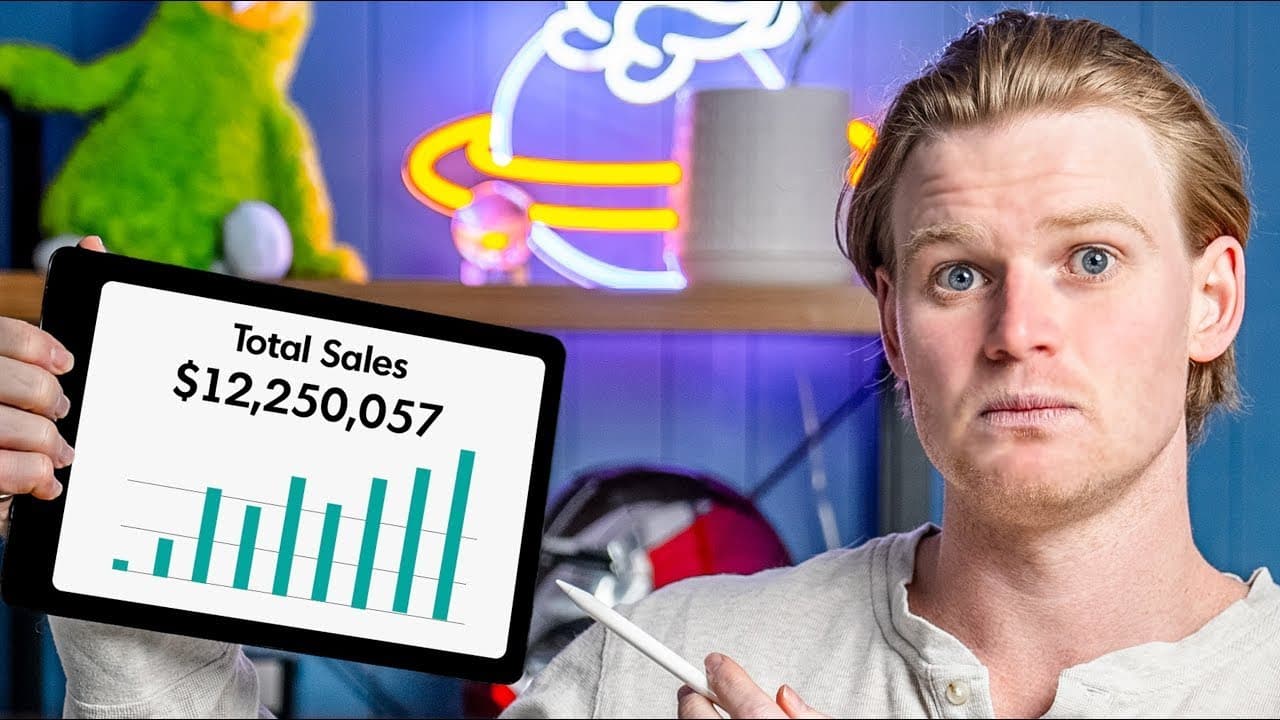
- Today, we're gonna go through 10 things to take your brand to $10 million. Some of these are absolute non-negotiables that if you are not currently doing them, you probably should. We're gonna go through some of my failures. We're gonna go through people you need to hire. Tools you need to install. Reporting that you need in place to make sure th... Read More
Key Insights
- Business stage is the foundation for setting priorities. From zero to $1 million in annualized revenue, the main task is finding one product and one marketing channel that consistently acquire profitable customers while the founder develops stronger product and marketing skills.
- The $1 million to $5 million stage is focused on optimizing the original growth flywheel. Relevant improvements can include producing better Facebook creatives, reducing product costs, improving product quality, managing cash flow, and hiring contractors or agencies to remove work from the founder’s plate.
- Growth beyond $5 million depends increasingly on people and processes. The brand should hire people who generate a measurable return, optimize existing operations, and evaluate channel, product, market, and regional diversification before competitors reduce the available opportunity.
- True profitability requires every material cost to be included. Sales taxes, GST, VAT, import duties, couriers, inbound freight, and product costs can substantially change reported profit, even when top-line sales and advertising-platform results appear strong.
- Marketing Efficiency Ratio is revenue divided by advertising costs. It acts as a consolidated indicator of advertising efficiency across channels and can reveal deteriorating profitability when individual platforms report attractive returns or customer acquisition costs that overstate their actual contribution.
- Post-purchase surveys are a useful check on advertising attribution. For the presenter’s brand, customer responses about where they discovered the business indicated that Snapchat and Pinterest were over-reporting performance, supporting the warning already provided by the worsening overall Marketing Efficiency Ratio.
- Gross margin is calculated as revenue minus cost of goods, divided by revenue when expressed as a percentage. Monitoring it daily can expose discount-code leaks quickly, while supplier and freight negotiations can lower costs as growing order volumes increase the brand’s buying power.
- Inventory and revenue forecasting should begin after the first profitable sales. Forecasts should use Shopify sales, Marketing Efficiency Ratio, growth opportunities, and creative potential because running out of inventory immediately restricts sales and can cause substantial missed revenue.
Install to Summarize YouTube Videos and Get Transcripts
Explore YouTube Video Summarizer or Get YouTube Transcript Extractor
Questions & Answers
Q: How do you scale an e-commerce brand to $10 million?
Start by identifying the brand’s revenue stage and setting priorities accordingly. Find one profitable product and marketing channel first, then optimize that flywheel before investing more heavily in people, processes, and diversification.
Q: What should an e-commerce business prioritize from zero to $1 million in annualized revenue?
The main goal is to find one product and one marketing channel that generate profitable customers. If the business cannot reach that point, the presenter recommends returning to the drawing board and refining both product and marketing skills.
Q: What should an e-commerce brand focus on from $1 million to $5 million?
The brand should optimize the flywheel that generated its first $1 million. This may include improving Facebook creatives, reducing the cost of goods, improving product quality, managing cash flow, and hiring contractors or agencies.
Q: What becomes important in the third stage of e-commerce growth?
The third stage focuses on people, processes, and optimizing existing operations. Brands can hire people who deliver a return on investment and consider channel, product, market, and regional diversification.
Q: Which hidden costs can distort an e-commerce brand’s profit calculations?
The presenter specifically identifies sales taxes and import duties as costs that may be missed. The brand discussed reached $1 million in sales in a month but failed to understand its true gross profit because important costs were not incorporated correctly.
Q: What is Marketing Efficiency Ratio in e-commerce?
Marketing Efficiency Ratio, or MER, is revenue divided by advertising costs. It provides a consolidated measure of advertising efficiency and can serve as a north star when a brand operates multiple advertising channels.
Q: Why can advertising-platform performance reports be misleading?
Pinterest, Snapchat, and Facebook each reported attractive in-platform results for one of the presenter’s brands, but the overall MER continued to worsen. That discrepancy signaled that the channels needed to be pulled back despite their individual reports.
Q: What tool does the presenter recommend for tracking e-commerce metrics?
The presenter recommends Triple Whale for keeping metrics organized and tracking reports, including MER. The team uses it for brands doing under $5 million in revenue, and the presenter says it contains 95% of the metrics and reports discussed.
Summary & Key Takeaways
-
Number: The framework covers 10 things intended to help take an e-commerce brand to $10 million.
-
Step 1: From zero to $1 million in annualized revenue, find one product and one marketing channel that produce profitable customers.
-
Step 2: From $1 million to $5 million, optimize the original flywheel through better creatives, product costs, quality, cash flow, and delegation.
-
Step 3: In the third stage, strengthen people and processes, then evaluate channel, product, market, and regional diversification.
-
Number: One brand reached $1 million in sales in a month without correctly understanding its true gross profit.
-
Number: The presenter says sales taxes can remove approximately 10% from top-line revenue.
-
Definition: Marketing Efficiency Ratio is revenue divided by advertising costs and measures overall advertising efficiency.
-
Compare: Pinterest, Snapchat, and Facebook reported strong individual results while the brand’s consolidated Marketing Efficiency Ratio worsened.
-
Tool: Triple Whale consolidates metrics and tracks Marketing Efficiency Ratio for brands doing under $5 million in revenue.
-
Number: Triple Whale contains 95% of the metrics and reports discussed by the presenter.
Read in Other Languages (beta)
Share This Summary 📚
Summarize YouTube Videos and Get Video Transcripts with 1-Click
Try YouTube Summary with ChatGPT & Claude or YouTube Transcript Generator
Explore More Summaries from Davie Fogarty 📚




Summarize YouTube Videos and Get Video Transcripts with 1-Click
Try YouTube Summary with ChatGPT & Claude or YouTube Transcript Generator