How to Trust Your Creative Instincts Like James Cameron
TL;DR
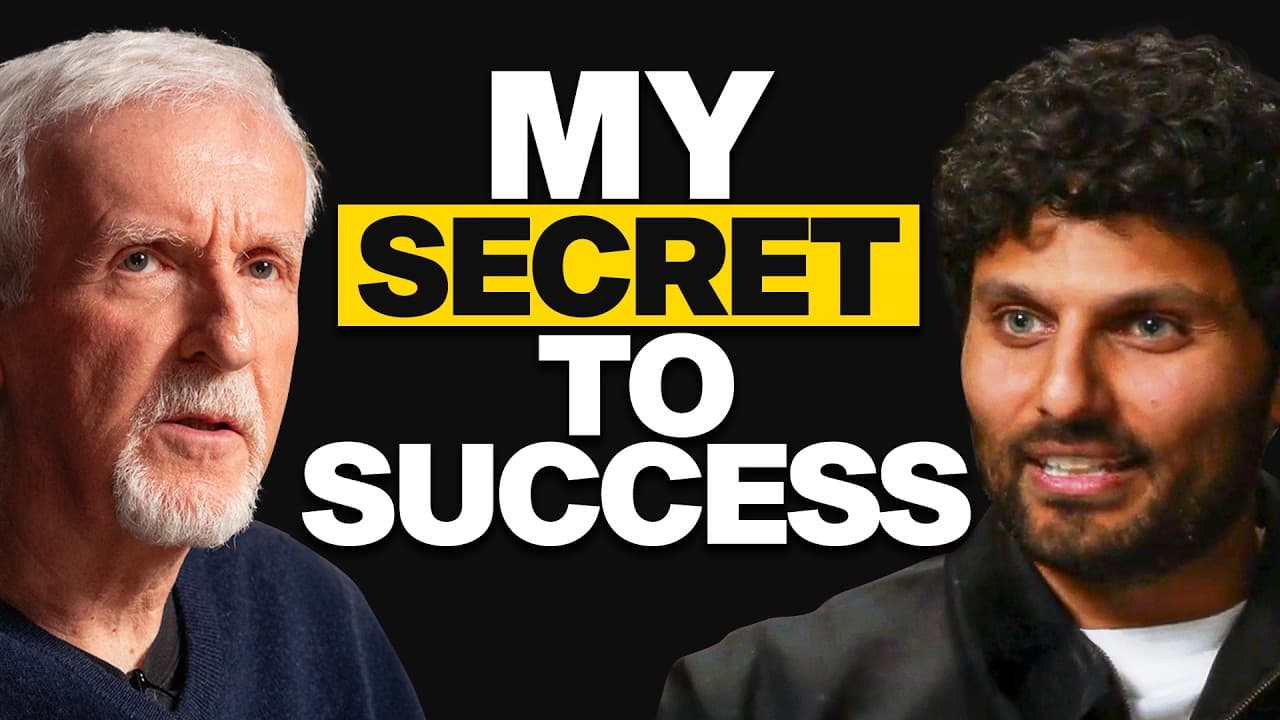
James Cameron shows that following your inner imagination without formal film training can lead to major breakthroughs. He details early inspirations, the decision to quit a stable job, and turning failures into fuel while emphasizing empathy and leadership to build creative teams.
Transcript
[music] [music] Do you remember the first character or world that you ever imagined, even if it wasn't for a movie or a film or a idea, but just a world that you lived in when you were younger. >> Well, I was totally enamored as a kid with anything fantastic or science fiction, anything I saw on television that was fantasy and science fiction. But ... Read More
Key Insights
- Cameron is fueled by childhood wonder and a love for science fiction and fantasy, which seeded his lifelong creative process.
- The key to his trajectory was turning a traditional job into a platform for pursuing art, signaling the importance of uncompromised pursuit of creative goals.
- Creative work thrives in solitude and in social collaboration, and Cameron credits both the quiet imagination and the ability to organize others for his success.
- Constraints and limits are not barriers but catalysts that unlock new ideas and methods in storytelling and production.
- Failure is reframed as fuel, with early career setbacks serving as valuable learning experiences that informed later projects.
- Empathy is central to leadership in Cameron’s view, enabling him to build teams that feel like a family and sustain long, ambitious productions.
- Dreams and memory play a role in Cameron’s process, where dreams provide imagery and narrative fragments that are later organized into coherent stories.
- Luck is acknowledged as part of success, but sustained effort, curiosity, and willingness to take bold steps are highlighted as essential driving factors.
- More videos from this channel:
- More from this channel: Jay Shetty Podcast
Install to Summarize YouTube Videos and Get Transcripts
Explore YouTube Video Summarizer or Get YouTube Transcript Extractor
Questions & Answers
Q: How did James Cameron first get inspired to create his own world as a child
James Cameron recalls being fascinated by Ray Harryhausen and imagining his own stories after seeing mysterious island. He drew a comic style world where animals were castaways, using his imagination to define colors, characters, and settings. This early inspiration established a habit of world building and storytelling that lasted throughout his career.
Q: What role did formal education play in Cameron’s career path
Cameron did not attend film school and regards his formal training as minimal. He learned primarily through self guided exploration, working various blue collar jobs, and continuing to draw and tell stories in his spare time. This background underscores his belief that passion and persistence can substitute for traditional education.
Q: How did Cameron transition from a truck driver to a filmmaker
Cameron describes quitting his job without fanfare to pursue filmmaking after recognizing a persistent urge to tell stories. He leveraged drive in the absence of formal training, relied on drive in drive in movie theaters as his informal school, and committed to the path despite uncertainty.
Q: What does Cameron say about failure in the early stages of his career
He discusses being fired early and turning that setback into motivation to push for The Terminator. The narrative frames failure as a learning opportunity and a stepping stone that sharpened his resolve to pursue ambitious projects with clear conviction.
Q: How does Cameron describe balancing solitude and leadership
Cameron notes that creative work can be solitary but also requires strong social and organizational skills to motivate teams. He values both the inner imaginative work and the external process of building, guiding, and sustaining collaborative efforts across long term projects.
Q: What does Cameron say about the role of dreams and memory in creativity
Dreams are described as a source of imagery and fragments of narrative that feed his imagination. Memory is viewed as storytelling rather than a literal record, shaping how he reconstructs experiences into cohesive ideas for films and artwork.
Q: Why does Cameron believe luck matters, and what else is important
He acknowledges luck as part of success but emphasizes that consistent curiosity, risk taking, and the willingness to make bold moves are essential. Without persistent effort and a strong sense of purpose, luck alone is unlikely to sustain a career.
Q: How does Cameron view the concept of purpose in storytelling
The discussion frames purpose as honoring meaningful storytelling rather than chasing money or fame. He stresses responsibility to audiences and to the craft, suggesting that storytelling should emerge from a genuine calling and be supported by relationships, teamwork, and disciplined creativity.
Summary & Key Takeaways
-
Cameron describes being inspired as a child by Ray Harryhausen and imagining his own world, which sparked a lifelong habit of drawing and storytelling. This origin story shows how early exposure to fantasy can seed a future career in film.
-
He explains that he did not attend film school and instead learned through experience, drive, and working blue collar jobs while pursuing art in his off hours, revealing a path forged by self guided learning.
-
Cameron emphasizes mentorship, team culture, and balancing solitary creative work with collaborative leadership, arguing that sustaining imagination requires both inner focus and the ability to coordinate and motivate others over long projects.
Read in Other Languages (beta)
Share This Summary 📚
Summarize YouTube Videos and Get Video Transcripts with 1-Click
Try YouTube Summary with ChatGPT & Claude or YouTube Transcript Generator
Explore More Summaries from Jay Shetty Podcast 📚






Summarize YouTube Videos and Get Video Transcripts with 1-Click
Try YouTube Summary with ChatGPT & Claude or YouTube Transcript Generator