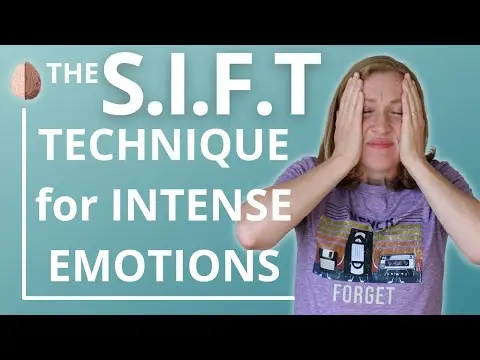
How to Process Emotions: Act, Accept, or Let Go

TL;DR
Identify the emotion, slow it down, and decide how to respond. Use acceptance and deliberate action to align with your values, reduce reactivity, and move toward a more intentional life. Emotions are signals that can motivate useful changes when we choose actions that reflect what matters most.
Transcript
Welcome to the last chapter in this course. By this point you've learned over 30 skills that you can use to process through your emotions. But remember, the goal of this course isn't just to feel better; it's also to get better at feeling - to get good at having emotions, working through them, and making choices that lead to a rich and fulfilli... Read More
Key Insights
- X is identifying the emotion first, which creates awareness that reduces impulsive reactions and provides a foundation for choice.
- The key to meaningful change is slowing down the emotional impulse so actions can be guided by values rather than urges.
- The root of emotion movement comes from the word E motion, indicating that emotions are meant to move us toward action and growth.
- Adaptive action requires choosing between acting, accepting, or avoiding in alignment with what you value most.
- Acceptance does not mean give up; it means choosing non action when it best serves long term goals and inner peace.
- Reframing goals with the Serenity principles helps separate influenceable factors from what cannot be changed.
- Small, consistent actions build integrity over time and reduce energy spent on reactive patterns.
- Progress is a process of extending recovery time while decreasing relapse frequency and severity.
Install to Summarize YouTube Videos and Get Transcripts
Explore YouTube Video Summarizer or Get YouTube Transcript Extractor
Questions & Answers
Q: A real search query question about the video (e.g. 'How to...', 'What is...', 'Why does...', 'When should...'). Question 1
Identifying an emotion is the first step in emotional processing, because labeling the feeling reduces ambiguity and provides a clear signal for what to do next. Once named, you can slow the response, examine what it is telling you, and decide whether to act, accept, or avoid based on your values. This creates a purposeful pathway to manage emotional energy and move toward meaningful goals.
Q: Question 2
The process of processing emotions emphasizes not just feeling better, but getting better at feeling and acting in line with your values. By choosing responses consciously, you reduce automatic reactivity and create a life that reflects your deepest principles, even when emotions are intense or uncomfortable.
Q: Question 3
Active acceptance is recommended in certain situations where non action is the best course. The idea is to willingly accept that the best path may be no action at all, especially when trying to change things beyond your control or when past-focused rumination dominates attention.
Q: Question 4
The Serenity Prayer is used as a guideline to differentiate what you can influence from what you cannot. It helps shift energy away from attempting to control others and toward changing your own responses, thus increasing empowerment and reducing futile struggle.
Q: Question 5
Taking small steps helps maintain momentum toward a valued life. Even when immediate solutions are not visible, keeping an open stance for future possibility prevents giving up and supports gradual progress in alignment with personal values.
Q: Question 6
The course frames emotions as tools that can either motivate action or distort perception. The aim is to honor emotions while guiding them through deliberate, value-based actions, thereby preserving integrity and reducing the influence of impulsive drives.
Q: Question 7
The distinction between reactive and intentional living is central. When actions stem from external circumstances or internal impulses rather than values, people become reactive; cultivating intentional actions strengthens character and preserves a life aligned with deeply held aims.
Q: Question 8
A long term benefit described is that intentional actions become habitual over time, requiring less energy while maintaining consistency. As these actions flow more naturally, decisions remain grounded in values, producing a more peaceful and purposeful life even under emotional pressure.
Summary & Key Takeaways
-
Summary point 1: The video teaches a structured approach to processing emotions by identifying the emotion, slowing down its momentum, and accepting it as a signal rather than a rule. This creates space for purposeful action aligned with personal values.
-
Summary point 2: It emphasizes the distinction between acting from emotion versus acting with intention, highlighting that integrity arises when actions reflect deeply held values even in the presence of uncomfortable feelings.
-
Summary point 3: The course advocates active acceptance in certain situations, where non action is the best course, and stresses that progress comes from small steps, not all at once, reducing relapse risk and increasing consistency.
Read in Other Languages (beta)
Share This Summary 📚
Summarize YouTube Videos and Get Video Transcripts with 1-Click
Try YouTube Summary with ChatGPT & Claude or YouTube Transcript Generator
Explore More Summaries from Therapy in a Nutshell 📚

Summarize YouTube Videos and Get Video Transcripts with 1-Click
Try YouTube Summary with ChatGPT & Claude or YouTube Transcript Generator