Products
Features
YouTube Video Summarizer
Summarize YouTube videos
Web & PDF Highlighter
Highlight web pages & PDFs
Chat with PDF
Ask any PDF questions with AI
Ask AI Clone
Chat with your highlights & memories
Audio Transcriber
Transcribe audio files to text
Glasp Reader
Read and highlight articles
Kindle Highlight Export
Export your Kindle highlights
Idea Hatch
Hatch ideas from your highlights
Integrations
Obsidian Plugin
Notion Integration
Pocket Integration
Instapaper Integration
Medium Integration
Readwise Integration
Snipd Integration
Hypothesis Integration
Apps & Extensions
Chrome Extension
Safari Extension
Edge Add-ons
Firefox Add-ons
iOS App
Android App
Discover
Discover
Ideas
Discover new ideas and insights
Articles
Curated articles and insights
Books
Book recommendations by great minds
Posts
Essays and notes from readers
Quotes
Inspiring quotes collection
Videos
Curated videos and summaries
Explore Glasp
Glasp Story
How we grew from 0 to 3 million users
Glasp Newsletter
Weekly insights and updates
Glasp Talk
Interview series with great minds
Glasp Blog
Latest news and articles
Glasp Use Cases
Learn how others use Glasp
Build & Support
Glasp API
Access Glasp's API for developers
MCP Connector
Connect Glasp to Claude & ChatGPT
Community
Glasp Reddit Community
Students
Student discount and benefits
FAQs
Frequently Asked Questions
AboutPricing
DashboardLog inSign up

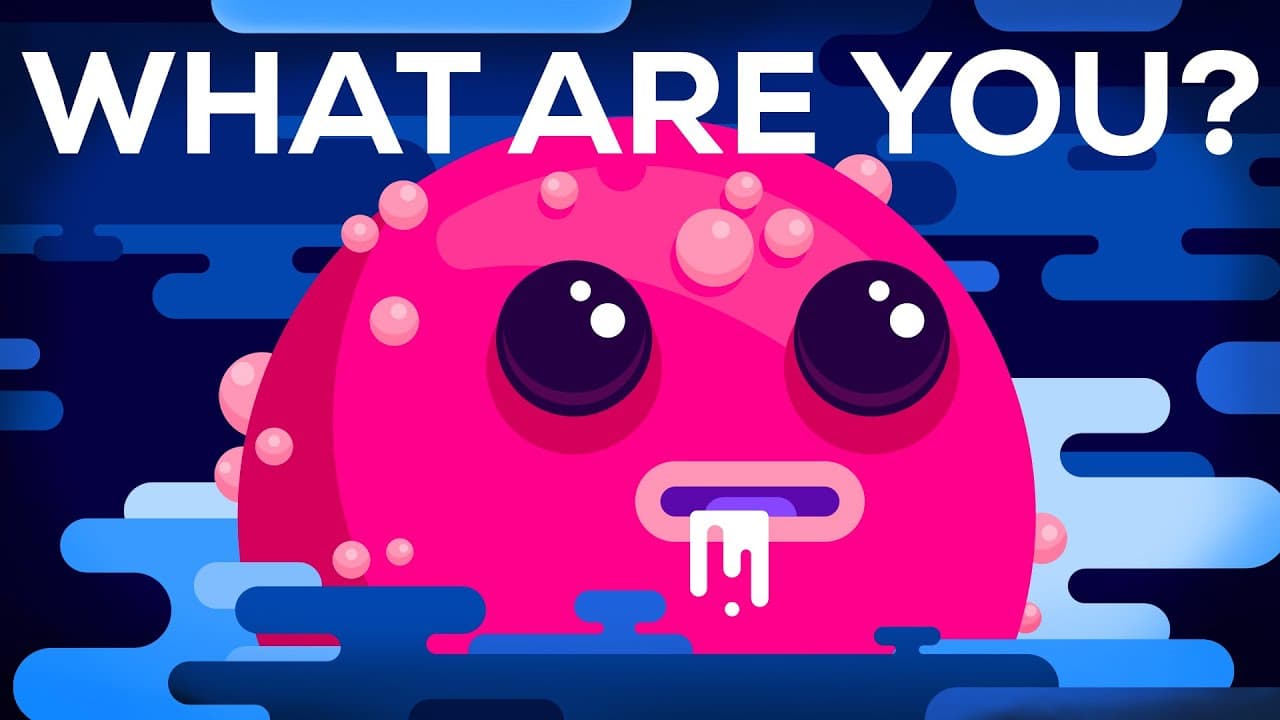
What Defines You: Are You Just Your Cells?
15.3M views
•
May 31, 2016
by
Kurzgesagt – In a Nutshell
YouTube video player
What Defines You: Are You Just Your Cells?

TL;DR

You are not just your body; your identity is a dynamic pattern made up of trillions of constantly changing cells. As cells die and regenerate, the concept of a static self becomes questionable. Furthermore, contributions from immortal cells, like those from Henrietta Lacks, and our evolving DNA complicate the notion of individual identity.

Transcript

Are you your body? Well, kind of, right? But is there a line where this stops being true? How much of yourself can you remove, before you stop being you? And does the question even make sense? Your physical existence is cells, trillions of them, at least ten times more than there are stars in the milky way. A cell is a living being, a machine make ... Read More

Key Insights

  • ❓ Trillions of cells in our bodies operate individually but collectively sustain our existence.
  • ♋ Cancer cells challenge the unity of our bodies, prioritizing their survival over ours.
  • ❓ Henrietta Lacks' immortal cells showcase the impact individual cells can have on scientific progress.
  • 🤳 DNA, with its mutable nature, contributes to our identity and sense of self.
  • ❓ Mitochondria, once bacteria, are integral to our cells and showcase our evolutionary history.
  • 🤳 The concept of self is fluid and constantly changing, challenging traditional notions of identity.
  • 💀 Our brains, capable of division while in the skull, further complicate the understanding of self.

Install to Summarize YouTube Videos and Get Transcripts

Explore YouTube Video Summarizer or Get YouTube Transcript Extractor

Questions & Answers

Q: Can we consider ourselves separate from our cells?

While cells make up our bodies, they act individually, raising philosophical questions about the nature of self and identity.

Q: How do cancer cells challenge the unity of our bodies?

Cancer cells, driven by their own survival, disrupt the biological social contract and question what it means to be a cohesive entity.

Q: How did Henrietta Lacks' cells revolutionize medical research?

Henrietta's immortal cancer cells have been used for decades in research, highlighting the impact of individual cells on a larger scale.

Q: How does our DNA contribute to our sense of self?

Our DNA, constantly evolving through mutations and influences, plays a role in defining us but also blurs the lines of individuality.

Summary & Key Takeaways

  • Trillions of cells make up our bodies, each functioning individually but working together for our existence.

  • Cells can be extracted and survive independently, raising questions about the boundaries of self.

  • Constant cell turnover means we are always changing, challenging the concept of a static self.


Read in Other Languages (beta)

English

Share This Summary 📚

Summarize YouTube Videos and Get Video Transcripts with 1-Click

Download browser extensions on:

Try YouTube Summary with ChatGPT & Claude or YouTube Transcript Generator

Explore More Summaries from Kurzgesagt – In a Nutshell 📚
The Largest Star in the Universe – Size Comparison thumbnail
The Largest Star in the Universe – Size Comparison
Kurzgesagt – In a Nutshell
What if We Nuke a City? thumbnail
What if We Nuke a City?
Kurzgesagt – In a Nutshell
What Is the History and Future of Time? thumbnail
What Is the History and Future of Time?
Kurzgesagt – In a Nutshell
Can You Upload Your Mind & Live Forever? thumbnail
Can You Upload Your Mind & Live Forever?
Kurzgesagt – In a Nutshell
What Is the History and Future of Time on Earth? thumbnail
What Is the History and Future of Time on Earth?
Kurzgesagt – In a Nutshell
Why Beautiful Things Make us Happy – Beauty Explained thumbnail
Why Beautiful Things Make us Happy – Beauty Explained
Kurzgesagt – In a Nutshell

Summarize YouTube Videos and Get Video Transcripts with 1-Click

Download browser extensions on:

Try YouTube Summary with ChatGPT & Claude or YouTube Transcript Generator

Apps & Extensions

  • Chrome Extension
  • Safari Extension
  • Edge Add-ons
  • Firefox Add-ons
  • iOS App
  • Android App

Key Features

  • YouTube Video Summarizer
  • Web & PDF Summarizer
  • Web & PDF Highlighter
  • Chat with PDF
  • Ask AI Clone
  • Audio Transcriber
  • Glasp Reader
  • Kindle Highlight Export
  • Idea Hatch

Integrations

  • Obsidian Plugin
  • Notion Integration
  • Pocket Integration
  • Instapaper Integration
  • Medium Integration
  • Readwise Integration
  • Snipd Integration
  • Hypothesis Integration

More Features

  • APIs
  • MCP Connector
  • Blog & Post
  • Embed Links
  • Image Highlight
  • Personality Test
  • Quote Shots

Company

  • About us
  • Our Story
  • Blog
  • Community
  • FAQs
  • Job Board
  • Newsletter
  • Pricing
Terms

•

Privacy

•

Guidelines

© 2026 Glasp Inc. All rights reserved.