What Is nano-vLLM and How Does It Rival vLLM?
TL;DR
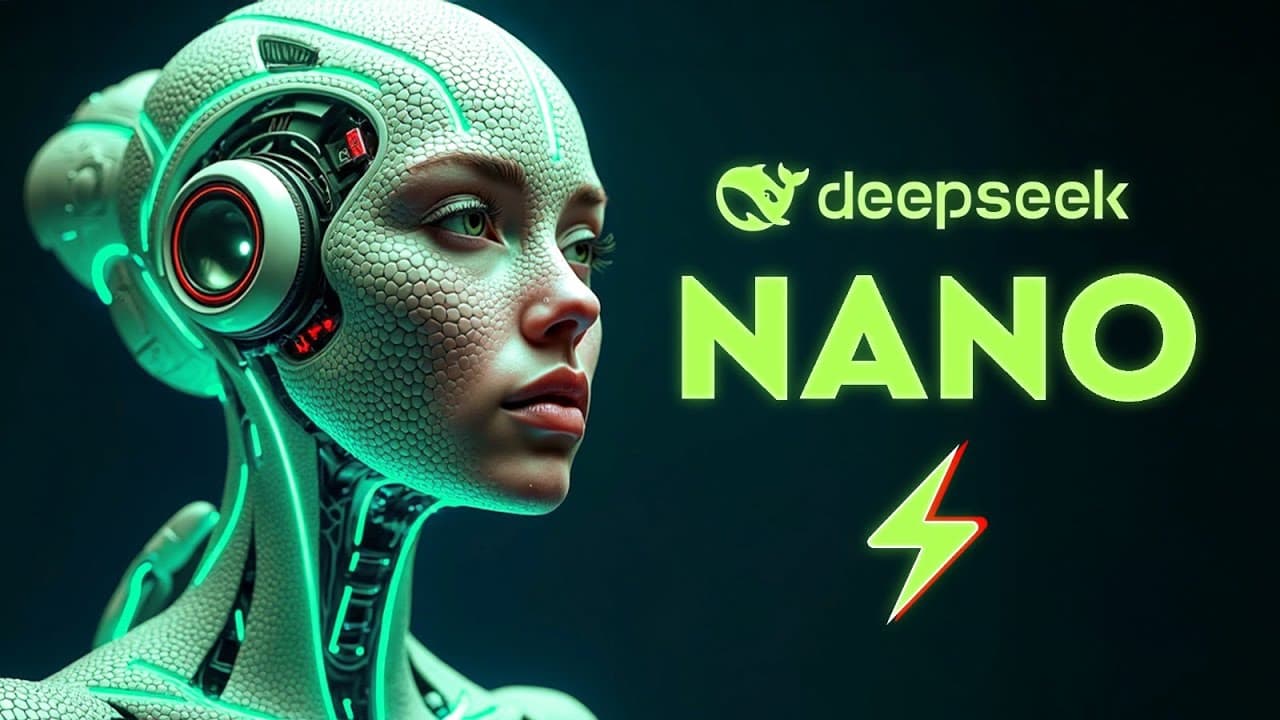
nano-vLLM is a lightweight open-source AI inference engine written in a small amount of plain Python by a DeepSeek employee in their spare time. It runs powerful language models at full speed on a single machine for offline, single-user work, matching heavyweight engines like vLLM while staying clean and readable enough to actually learn from.
Transcript
a Deep Seek employee just dropped a brand new open- source project that's shaking up the AI world nano VLLM it's fast it's clean and it's written in just 1,200 lines of Python no bloated frameworks no blackbox complexity just raw stripped down performance that runs powerful AI models at full speed even on your own machine built entirely in their sp... Read More
Key Insights
- nano-vLLM is an open-source inference engine written in a compact amount of plain, modern Python with clear comments, built by a DeepSeek employee as a personal spare-time project rather than an official DeepSeek product.
- The engine solves the problem of speed in language models, where typed text is split into numbered tokens, passed through many layers of math, and used to predict the next word without leaving the graphics card idle.
- Readability is the core advantage: unlike vLLM's sprawling codebase that jumps across many files and lower-level languages, nano-vLLM lets you follow each step from input prompt to final output like a guided tour of a model's brain.
- In offline single-user benchmarks on a laptop graphics card with limited memory, nano-vLLM generated the same amount of text slightly faster than vLLM while using minimal GPU memory, doing more with less.
- Prefix caching drives much of the speed: when prompts share the same opening, nano-vLLM stores the internal values computed the first time and reuses them instead of recomputing from scratch.
- Tensor parallelism splits the model's layers across several graphics cards so each card carries part of the workload, while torch.compile bundles small operations so the GPU runs them in one shot instead of many tiny bursts.
- CUDA graphs act like pre-recorded instructions the graphics card can replay without extra chatter from the CPU, and an 'enforce eager' setting lets the program run step by step for easy testing and debugging before optimization is switched on.
- nano-vLLM trades away features for simplicity: it does not serve many users at once, does not stream answers word by word, and does not yet support mixture-of-experts models, making it ideal for learning, research, and small tools rather than production traffic.
Install to Summarize YouTube Videos and Get Transcripts
Explore YouTube Video Summarizer or Get YouTube Transcript Extractor
Questions & Answers
Q: What is nano-vLLM?
nano-vLLM is a lightweight, open-source AI inference engine written in a compact amount of plain, modern Python by a DeepSeek employee in their spare time. It runs powerful large language models at full speed, even on a personal machine, and rivals production engines like vLLM while staying clean, readable, and stripped down. Rather than a bloated framework, it walks through each step of running a model, so people can learn how language models actually work instead of just using them as a black box.
Q: How does nano-vLLM differ from vLLM?
vLLM is a powerful but sprawling codebase where following one feature means jumping through many files that call other files written in lower-level languages, which makes it hard to read. nano-vLLM writes every component in clear, commented Python arranged so you can follow the path from input prompt to final output without getting lost. vLLM remains the battle-tested tool for large production systems with many users and real-time traffic, while nano-vLLM targets learning, experimenting, and smaller offline tools.
Q: How does nano-vLLM achieve high speed with so little code?
A handful of tidy but powerful ideas do the heavy lifting. Prefix caching stores the internal values from a repeated sentence opening and reuses them instead of recomputing. Tensor parallelism splits the model's layers across several graphics cards so each carries part of the load. torch.compile bundles small operations so the GPU runs them in one shot, and captured CUDA graphs act like pre-recorded instructions the card can replay without extra CPU chatter. Each trick is well known in big systems but rarely this readable.
Q: What is nano-vLLM good for, and what are its limits?
nano-vLLM is built for offline, single-user jobs where you already have a chunk of text to process, such as research experiments, data labeling, or hobby projects. It is not built to handle many users at once, will not stream answers word by word like ChatGPT, and skips advanced tricks that squeeze huge models onto tiny devices. It also does not yet support more complex models like mixture-of-experts. The trade-off is speed, clarity, and ease of understanding without the noise.
Q: Is nano-vLLM an official DeepSeek product?
No. When the release landed on the local LLaMA subreddit, the top comment quickly pointed out that this is strictly a personal project, not an official DeepSeek product. That distinction matters because companies usually need extensive testing, legal checks, and customer commitments before blessing anything as official. A personal repository can move faster, try risky ideas, and let others learn from its rough edges, which is part of why many people in the thread cheered its hobbyist spirit.
Q: How does nano-vLLM process a prompt step by step?
When you give it a sentence, nano-vLLM breaks it down into tokens, which are essentially numbers the model can understand, like translating your words into the model's language. It then runs those numbers through a streamlined setup that loads the model, keeps track of what has already been said, and figures out what should come next. Depending on your settings, it can add a bit of randomness or filter out weird responses. All of this happens through small, focused, easy-to-follow files.
Q: How do you install and start using nano-vLLM?
Installing nano-vLLM is surprisingly simple: you paste one line into your terminal and the whole thing downloads. Once set up, you load your model folder, adjust a few settings such as how long the response should be or how creative it sounds, and run your prompts. It works almost exactly like vLLM, so if you are already using that engine, switching over takes just a couple of small changes. This close compatibility lowers the barrier for existing users to try it.
Q: Why are developers and educators excited about nano-vLLM?
Developers on Reddit were excited to open the files and see exactly what each piece was doing without digging through hundreds of extra lines, and that simplicity opens the door for people who have ideas but get overwhelmed by giant codebases. Educators see it as a perfect classroom starting point, since students can read the code, understand what is happening, and add new features themselves. Because it covers handling inputs, storing memory, and generating text, those lessons carry over to bigger real-world frameworks.
Summary & Key Takeaways
-
A DeepSeek employee released nano-vLLM, an open-source AI inference engine written in a compact amount of plain Python during their spare time. It rivals production engines like vLLM in speed while exposing how they work step by step, making it a learning tool as much as a working engine.
-
The engine is built for offline, single-user jobs such as research experiments, data labeling, and hobby projects rather than busy public chatbots. In laptop benchmarks it generated the same amount of text slightly faster than vLLM using minimal GPU memory, proving small clean code can compete.
-
Its speed comes from a handful of well-known ideas laid out clearly: prefix caching, tensor parallelism across graphics cards, torch.compile operation bundling, and captured CUDA graphs. It skips advanced features and multi-user serving, but its readable design invites developers and educators to tinker, extend, and teach from it.
Read in Other Languages (beta)
Share This Summary 📚
Summarize YouTube Videos and Get Video Transcripts with 1-Click
Try YouTube Summary with ChatGPT & Claude or YouTube Transcript Generator
Explore More Summaries from AI Revolution 📚


Summarize YouTube Videos and Get Video Transcripts with 1-Click
Try YouTube Summary with ChatGPT & Claude or YouTube Transcript Generator