Venus is the Strangest Planet
TL;DR
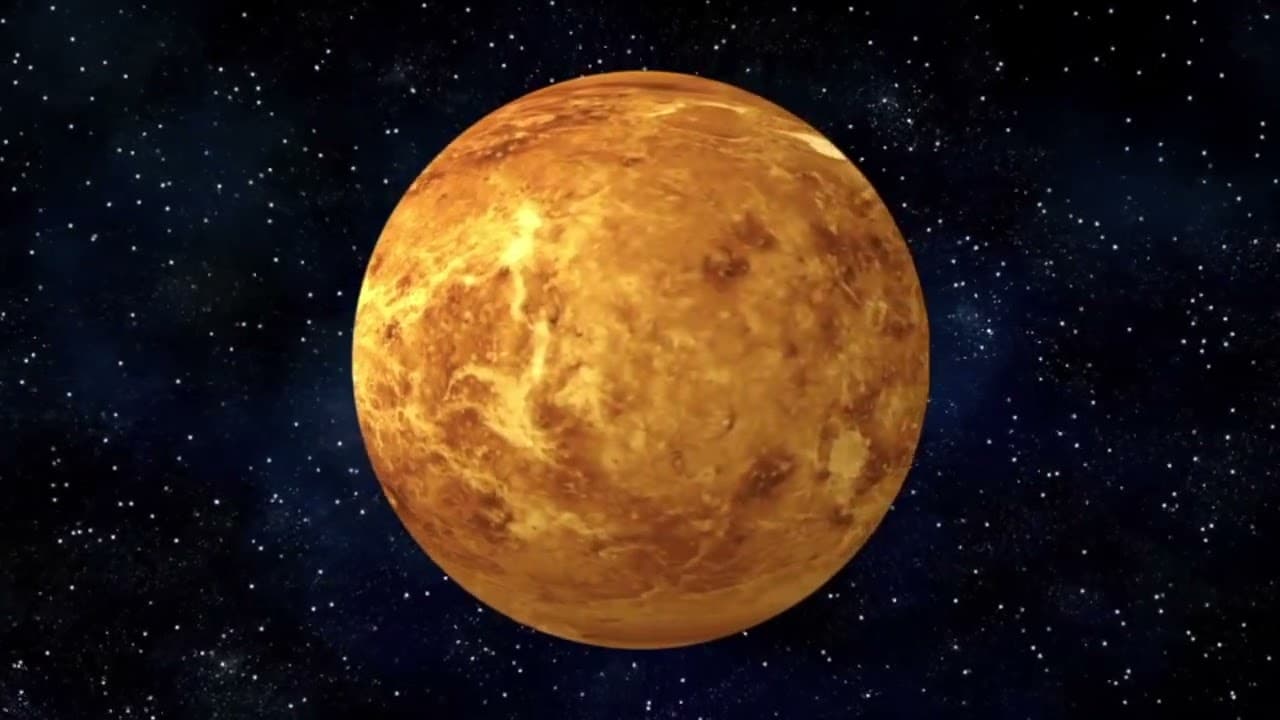
Venus is a fascinating and mysterious planet, with a dense atmosphere, a slow and backwards rotation, and potential indications of microbial life in its upper atmosphere.
Transcript
For a planet just about the size of Earth, Venus couldn’t be more different. One of the original planets known to the ancients, Venus is a common and very bright sight in the night sky, and in fact is the third brightest object in the sky. In fact, if you know exactly where to look, it can even be seen in full daylight. The history of observation o... Read More
Key Insights
- 🎁 Venus has been a subject of observation and study for centuries and continues to present intriguing mysteries.
- ✋ The dense atmosphere of Venus creates extreme conditions, including high pressure and temperature.
- 🛟 Observations have revealed potential indications of microbial life in Venus's upper atmosphere, including dark streaks and particles of unknown composition.
- 🧑🔬 Venus's unique characteristics, such as slow and backwards rotation, make it a subject of continued interest for scientists.
- 🫢 The detection of phosphine gas at Venus, although controversial, has raised the possibility of independent microbial life on the planet.
- 🛟 Exploring Venus further could provide valuable insights into the origins and potential for life beyond Earth.
- 💬 Opportunities for future exploration include floating habitats and balloons to colonize Venus's atmosphere, which presents a more habitable environment compared to the surface.
Install to Summarize YouTube Videos and Get Transcripts
Explore YouTube Video Summarizer or Get YouTube Transcript Extractor
Questions & Answers
Q: Why did early cultures believe Venus was two objects?
Due to Venus's movement and its disappearance when in close proximity to the sun, some cultures mistakenly concluded that it was two separate objects, a morning and an evening star.
Q: What have spectroscopic observations revealed about Venus?
Spectroscopic observations have shown that Venus's rotation is slow, and ultraviolet observations have revealed a dense yellow atmosphere and a cloud deck.
Q: Has there been any successful exploration of Venus?
The Soviet Union's Mariner 2 mission in 1962 marked the beginning of modern data collection on Venus. Subsequent missions have provided valuable insights into the planet's unique characteristics.
Q: Is there a possibility of microbial life on Venus?
There is a possibility of microbial life on Venus. It could have originated through panspermia or through the conditions in Venus's upper atmosphere resembling those on early Earth.
Summary & Key Takeaways
-
Venus, despite being similar in size to Earth, has a vastly different atmosphere and surface. Its dense atmosphere creates extreme pressure and temperature conditions.
-
The history of observing Venus dates back centuries, with early cultures believing it was two separate objects. However, modern scientific study has revealed its true nature.
-
Recent observations have raised intriguing possibilities of microbial life in the upper atmosphere of Venus, which has led to renewed interest in exploring the planet further.
Read in Other Languages (beta)
Share This Summary 📚
Summarize YouTube Videos and Get Video Transcripts with 1-Click
Try YouTube Summary with ChatGPT & Claude or YouTube Transcript Generator
Explore More Summaries from John Michael Godier 📚
Summarize YouTube Videos and Get Video Transcripts with 1-Click
Try YouTube Summary with ChatGPT & Claude or YouTube Transcript Generator