What Is a Space Elevator and How Would It Work?
TL;DR
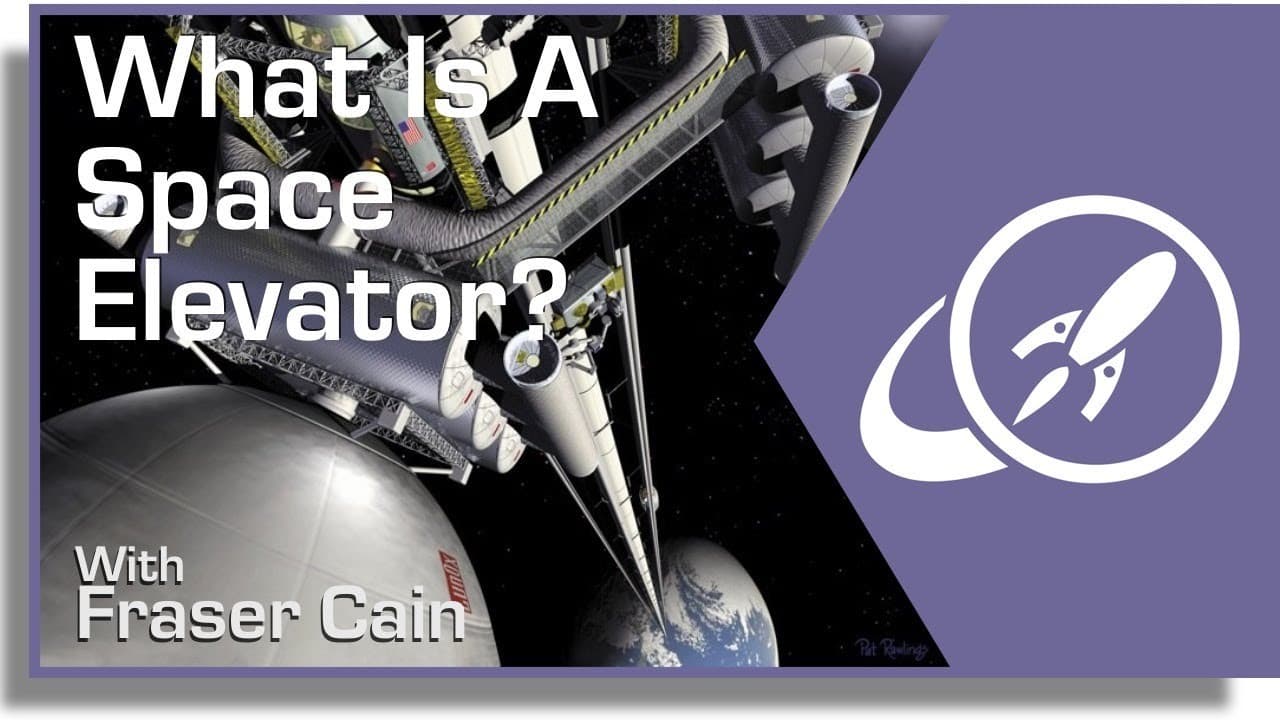
A space elevator is a proposed structure that offers a cost-effective alternative to rockets for reaching space by using a cable extended beyond geostationary orbit. This innovative approach could reduce the cost of sending payloads to orbit from $25,000 per kilogram to about $200, although it faces significant engineering challenges related to compressive and tensile forces.
Transcript
- What is a Space Elevator? I'm Fraser Cain, the publisher of Universe Today. Almost every part of a rocket is destroyed during the launch and re-entry into the Earth's atmosphere. This makes spaceflight really expensive. Rocket delivery of even a single kilogram into orbit costs tens of thousands of dollars. But what if we could just place our p... Read More
Key Insights
- 👾 Space elevators present a cost-effective alternative to traditional rocket launches, potentially reducing the cost of sending payloads to space significantly.
- 👾 The concept of space elevators has been around since 1895, first proposed by Russian rocket scientist Konstantin Tsiolkovsky.
- 🏗️ Constructing a space elevator on Earth is challenging due to the immense forces involved, but other locations like the Moon or Mars could offer more feasible options for building one.
- 👾 Advanced materials like carbon nanotubes have made the concept of space elevators more plausible by providing the necessary strength to withstand the forces involved.
- 👾 If successfully built, space elevators could revolutionize space exploration by providing a more economical and efficient means of reaching space.
Install to Summarize YouTube Videos and Get Transcripts
Explore YouTube Video Summarizer or Get YouTube Transcript Extractor
Questions & Answers
Q: What is the concept of a space elevator?
A space elevator is a proposed structure that aims to lift spacecraft into orbit without the need for expensive rockets by utilizing a tower or cable.
Q: What are the major challenges of building a space elevator?
The major challenges include the immense compressive or tensile forces the structure would need to withstand, as well as the need for advanced materials like carbon nanotubes.
Q: How could a space elevator be constructed?
One proposal involves moving an asteroid into geostationary orbit to serve as a counterbalance, with a cable being manufactured and extended towards the Earth for spacecraft to travel along.
Q: What are the potential risks associated with a space elevator?
Risks include the possibility of the cable breaking, leading to portions falling to Earth, and the exposure of humans to damaging radiation from the Earth's Van Allen belts during travel.
Summary & Key Takeaways
-
Space elevators offer a cost-efficient alternative to traditional rocket launches by utilizing a tower or cable to lift spacecraft directly into orbit.
-
The idea faces challenges due to the immense compressive or tensile forces the structure would need to withstand.
-
Advanced materials like carbon nanotubes make space elevators more feasible, potentially revolutionizing space travel.
Read in Other Languages (beta)
Share This Summary 📚
Summarize YouTube Videos and Get Video Transcripts with 1-Click
Try YouTube Summary with ChatGPT & Claude or YouTube Transcript Generator
Explore More Summaries from Fraser Cain 📚




Summarize YouTube Videos and Get Video Transcripts with 1-Click
Try YouTube Summary with ChatGPT & Claude or YouTube Transcript Generator