What's On The Far Side Of The Moon?
TL;DR
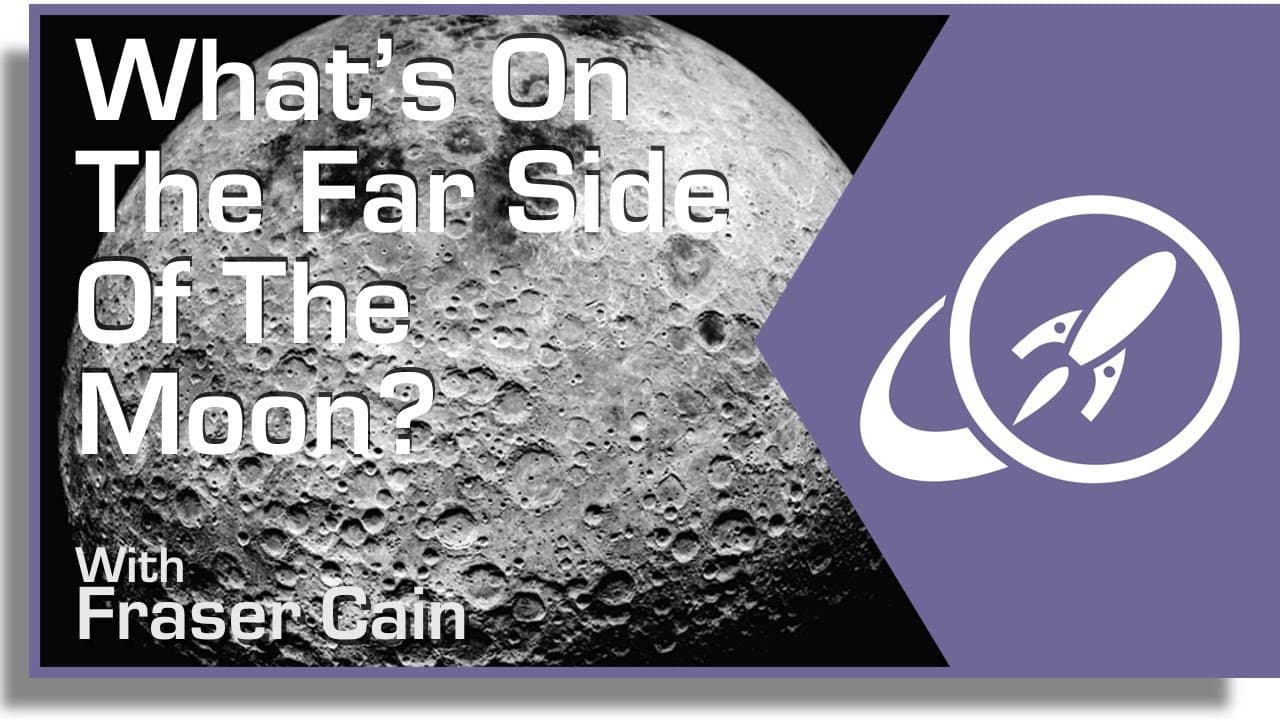
The Moon’s far side is a heavily cratered hemisphere that looks dramatically different from the near side’s large ancient lava flows, or maria. Soviet Luna 3 first imaged it in 1959, returning 18 usable pictures, while Apollo 8’s crew first saw it directly in 1968. Its polar craters may contain ice, and its protection from Earth’s radio transmissions could support a sensitive observatory. Read on to discover why this hidden hemisphere is so distinctive.
Transcript
You probably know we only see one side of the Moon from the Earth. But for the majority of human history, we had no idea what the far side looked like. Billions of years ago, our Moon was formed when a Mars-sized object smashed into the Earth, spinning out a ring of debris. This debris collected into the Moon we know today. It started out rotating ... Read More
Key Insights
- 🫵 The Moon's rotation became locked with Earth's, hiding the far side from view throughout most of human history.
- 🧑🌾 The Soviet Luna 3 probe and Apollo 8's crew were among the first to capture images of the far side.
- 🧑🌾 The far side of the Moon has a significantly different appearance from the near side, with crater impacts covering most of its surface.
- 🧑🌾 The possibility of a second, smaller moon crashing into the far side could explain the differences between the two hemispheres.
- 🥶 The Moon's far side may hold reserves of ice in craters at the poles, which could be valuable for future space colonies.
- 🧘 The term "dark side of the Moon" is misleading, as half of the Moon is always in darkness depending on its position in orbit.
- 📻 The far side of the Moon provides a natural shield from Earth's radio transmissions, making it an ideal location for a radio observatory.
Install to Summarize YouTube Videos and Get Transcripts
Explore YouTube Video Summarizer or Get YouTube Transcript Extractor
Questions & Answers
Q: What is on the far side of the Moon?
The far side is almost entirely covered in impact craters, unlike the near side, which has huge regions of ancient lava flows called maria. It also has permanently shadowed polar craters that may contain ice and is naturally shielded from Earth’s radio transmissions.
Q: Why can’t we see the far side of the Moon from Earth?
Earth’s gravity gradually slowed the Moon’s rotation until it became locked with Earth’s. As a result, the same hemisphere faces Earth while the other half remains hidden from our view.
Q: When was the far side of the Moon first photographed?
The Soviet Luna 3 probe became the first spacecraft to image the far side in 1959. It returned 18 usable images to scientists.
Q: Who were the first humans to see the far side of the Moon?
The crew of Apollo 8 were the first humans to see the far side with their own eyes. They observed it during a flyover in 1968.
Q: Why does the far side of the Moon look different from the near side?
The near side contains huge regions of ancient lava flows called maria, while impact craters cover almost all of the far side. Planetary geologists are uncertain why, but one possibility is that a second, smaller moon crashed into the far side billions of years ago and covered its darker maria regions.
Q: Is the far side permanently dark?
No, there is no permanent dark side of the Moon. Except during an occasional lunar eclipse, half of the Moon is illuminated and half is in darkness, with the lit half changing as the Moon orbits Earth.
Q: Could there be ice on the far side of the Moon?
Some craters at the Moon’s north and south poles are deep enough that sunlight never reaches their floors. These eternally dark locations may hold ice that future space colonies could use for water, air, and rocket fuel.
Q: Why could the far side host a radio observatory?
The far side is naturally shielded from radio transmissions coming from Earth. That protection makes it an ideal location for a sensitive radio observatory.
Summary & Key Takeaways
-
The Moon was formed when a Mars-sized object collided with Earth, creating debris that eventually became the Moon. Its rotation gradually locked with Earth's, hiding one half from view.
-
The far side of the Moon remained a mystery until the space age, with the Soviet Luna 3 probe in 1959 and Apollo 8's crew in 1968 being some of the first to capture images of it.
-
The near side of the Moon has lava flows, while the far side is mainly covered in craters, possibly due to a smaller moon crashing into it billions of years ago.
Read in Other Languages (beta)
Share This Summary 📚
Summarize YouTube Videos and Get Video Transcripts with 1-Click
Try YouTube Summary with ChatGPT & Claude or YouTube Transcript Generator
Explore More Summaries from Fraser Cain 📚


Summarize YouTube Videos and Get Video Transcripts with 1-Click
Try YouTube Summary with ChatGPT & Claude or YouTube Transcript Generator