Why Do Ruthless People Typically Gain Power?
TL;DR
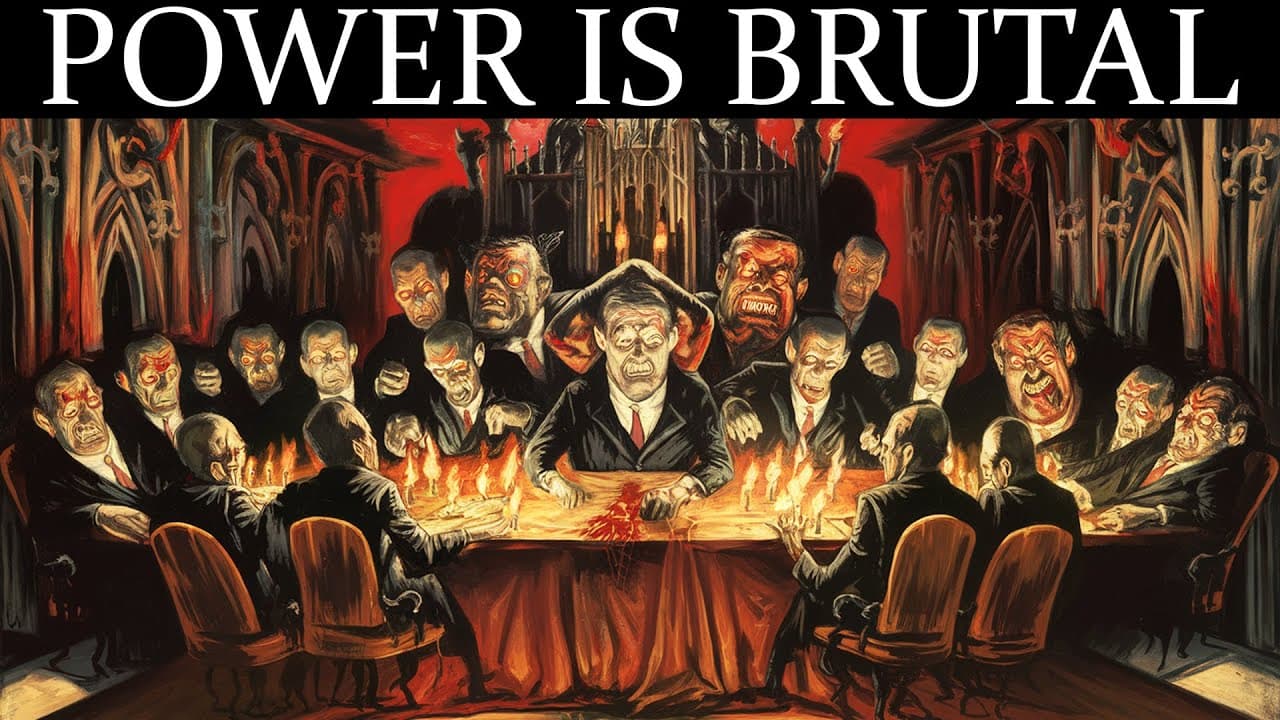
Ruthless individuals often dominate because traditional morality serves as a tool to control the weak, allowing those who embrace their 'will to power' to seize opportunities. Examples from history and modern corporations show that success frequently comes not from merit but from strategic manipulation and fearlessness to impose one's will. Balancing ambition with wisdom is crucial to maintaining power without succumbing to downfall.
Transcript
imagine a world where those who follow the rules work hard and play fair are rewarded with success recognition and power seems fair right but now look around you who is really on top the most ethical or the most ruthless those who adhere to morality or those who manipulate the rules to their advantage the brutal truth is that Society sells an illus... Read More
Key Insights
- Society perpetuates an illusion that success is based on merit, but in reality, power is often seized by the ruthless.
- Nietzsche's philosophy suggests that traditional morality is a tool for control, keeping the weak in line while the powerful manipulate the system.
- The concept of 'will to power' underscores the idea that life is driven by the impulse to dominate and impose one's will.
- Historical figures who shaped the world, like Julius Caesar and Napoleon, often rejected societal norms to assert their power.
- In the corporate world, companies that dominate markets often do so through aggressive and strategic manipulation rather than ethical practices.
- The downfall of powerful figures often stems from their inability to balance strength with wisdom, leading to arrogance and eventual defeat.
- Power requires strategic intelligence and emotional control; those who react impulsively often sabotage their own success.
- True mastery of power involves understanding when to be ruthless and when to employ diplomacy, ensuring long-term dominance.
Install to Summarize YouTube Videos and Get Transcripts
Explore YouTube Video Summarizer or Get YouTube Transcript Extractor
Questions & Answers
Q: What is the main argument of the video?
The main argument of the video is that power is not earned through ethical behavior or merit, but rather seized by those who are ruthless and strategic. It challenges the societal belief that success comes from following the rules and being good, suggesting instead that the world rewards those who manipulate and impose their will.
Q: How does Nietzsche's philosophy relate to the video?
Nietzsche's philosophy is central to the video's argument, as it posits that traditional morality is a mechanism of control designed to keep the weak in line. The video uses Nietzsche's concept of the 'will to power' to illustrate that life is driven by the desire to dominate and assert one's will, rather than by justice or ethical behavior.
Q: What examples are used to illustrate the video's points?
The video uses historical figures like Julius Caesar and Napoleon, as well as modern corporate giants like Amazon and Apple, to illustrate its points. These examples demonstrate how successful individuals and companies often reject societal norms and employ aggressive strategies to assert their dominance, highlighting the ruthless nature of power.
Q: What is the 'will to power' according to Nietzsche?
According to Nietzsche, the 'will to power' is the fundamental driving force of life, encompassing the desire to dominate, expand, and impose one's will on the world. The video suggests that this impulse is often repressed by societal norms, but those who embrace it can shape reality to their advantage, becoming successful and powerful.
Q: How does the video view traditional morality?
The video views traditional morality as a tool of control, a 'slave morality' that glorifies submission and obedience while demonizing ambition and power. It suggests that this morality benefits those already in power by keeping the masses docile and preventing rebellion, thereby maintaining the status quo.
Q: What lesson does the video draw from the downfall of powerful figures?
The video draws the lesson that unchecked ambition and a lack of balance between strength and wisdom can lead to the downfall of powerful figures. It cites examples like Julius Caesar and Napoleon, whose inability to recognize limits and control their ambitions ultimately led to their defeat, despite their initial successes.
Q: What does the video suggest about the corporate world?
The video suggests that in the corporate world, companies that dominate markets often do so through aggressive strategies and manipulation, rather than ethical practices. It argues that this is not a flaw in the system, but rather its essence, designed to reward those who understand and exploit the rules of power.
Q: What is the video's stance on balancing power and morality?
The video advocates for a balanced approach to power, emphasizing the importance of strategic intelligence and emotional control. It warns against the dangers of becoming consumed by ambition and suggests that true mastery of power involves knowing when to be ruthless and when to employ diplomacy, ensuring long-term dominance.
Summary & Key Takeaways
-
The video challenges the notion that success is achieved through merit, arguing instead that power is seized by the ruthless. It explores Nietzsche's philosophy, which views traditional morality as a tool for control, keeping the weak in check while the powerful manipulate the system to their advantage.
-
Historical and contemporary examples illustrate how the most successful individuals and companies often reject societal norms, employing aggressive strategies to assert their dominance. The video suggests that this is not a flaw in the system but rather its essence, designed to reward those who understand and exploit the rules of power.
-
The video warns against the dangers of unchecked ambition, using examples like Julius Caesar and Napoleon to demonstrate how the same traits that lead to power can also cause downfall. It advocates for a balanced approach to power, combining strategic intelligence with emotional control to maintain long-term success.
Read in Other Languages (beta)
Share This Summary 📚
Summarize YouTube Videos and Get Video Transcripts with 1-Click
Try YouTube Summary with ChatGPT & Claude or YouTube Transcript Generator
Explore More Summaries from Psyphoria 📚





Summarize YouTube Videos and Get Video Transcripts with 1-Click
Try YouTube Summary with ChatGPT & Claude or YouTube Transcript Generator