How to Adapt Careers for an AI-Driven Future
TL;DR
AI is rapidly transforming the job market, with automation taking over traditional roles like coding. The key to thriving lies in focusing on distribution, customer insights, and developing managerial skills for AI tools. As content creation and AI management become pivotal, individuals must adapt by experimenting and aligning with true market needs.
Transcript
there's a mistake young people make it's assuming that the people who know the most about the future are the tutorial makers especially the ones who create tutorials on how to land interviews how to get a job how to learn the skill just to crack the job the advice the tips the ways to think it's all wrong you follow them because you somewhat unders... Read More
Key Insights
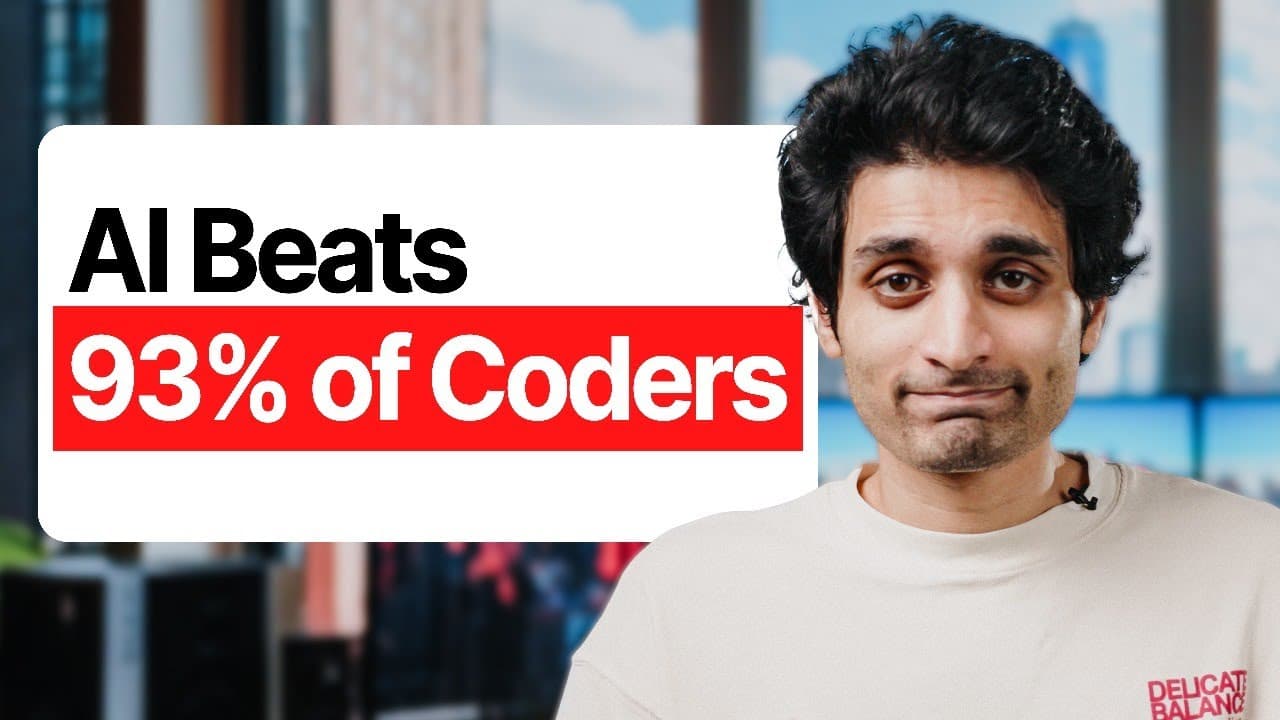
- AI is outperforming traditional roles, especially in coding, with models now surpassing 93% of programmers.
- The job market is shifting from skill-based to outcome-based, emphasizing results over processes.
- Content creators and those with distribution channels are poised to benefit significantly in the AI era.
- AI management roles are emerging, where individuals oversee AI tools rather than performing tasks manually.
- Experimentation and independent thinking are crucial for adapting to new market demands and opportunities.
- Traditional job roles are becoming obsolete, requiring a shift in focus towards customer needs and insights.
- AI advancements necessitate a focus on outcomes, with a growing importance on generating revenue and user engagement.
- The future of work demands a blend of technology use and human insights to meet real market demands.
Install to Summarize YouTube Videos and Get Transcripts
Explore YouTube Video Summarizer or Get YouTube Transcript Extractor
Questions & Answers
Q: How is AI affecting traditional coding jobs?
AI is significantly impacting traditional coding jobs by automating many tasks that were once manual. With AI models now outperforming 93% of programmers, the need for manual coding is decreasing. This shift requires individuals to focus more on managing AI tools and understanding customer needs rather than just writing code.
Q: What skills are becoming more important in an AI-driven job market?
In an AI-driven job market, skills related to distribution, customer insights, and AI management are becoming increasingly important. As traditional roles evolve, the ability to leverage AI tools to achieve outcomes and engage users is crucial. Developing managerial skills to oversee AI operations is also key.
Q: Why are content creators poised to benefit in the AI era?
Content creators are poised to benefit in the AI era because they have the ability to leverage distribution channels to reach large audiences. As AI tools automate content production, creators who can effectively engage and understand their audience will thrive. The demand for authentic and relatable content remains high.
Q: What is the significance of outcome-based work in the current job market?
Outcome-based work is significant in the current job market as it shifts the focus from processes to results. With AI automating many tasks, the emphasis is on achieving tangible outcomes, such as user engagement and revenue generation. This requires a deep understanding of customer needs and the ability to deliver effective solutions.
Q: How can individuals adapt to changes in the job market due to AI?
Individuals can adapt to changes in the job market by experimenting with new technologies and aligning their skills with market needs. Developing managerial skills to oversee AI operations and focusing on customer insights are crucial. Embracing independent thinking and being open to change will help individuals thrive in an AI-driven future.
Q: What role does independent thinking play in navigating the AI-driven job market?
Independent thinking is crucial in navigating the AI-driven job market as it allows individuals to experiment and find unique solutions to emerging challenges. By not relying solely on traditional paths and listening to the masses, individuals can identify new opportunities and adapt their skills to meet evolving market demands.
Q: Why is understanding customer needs important in an AI-driven future?
Understanding customer needs is important in an AI-driven future because it ensures that the solutions provided by AI tools are relevant and effective. By focusing on what customers truly want, individuals can leverage AI to deliver products and services that meet real market demands, leading to success and growth.
Q: How are AI management roles changing the landscape of work?
AI management roles are changing the landscape of work by shifting the focus from manual tasks to overseeing AI operations. Individuals in these roles are responsible for managing AI tools to achieve desired outcomes. This requires a blend of technical knowledge and managerial skills to effectively leverage AI capabilities in various industries.
Summary & Key Takeaways
-
AI is reshaping the job market, making traditional roles like coding less relevant. The focus is shifting towards outcome-based work, where distribution and customer insights are key to success. Individuals must adapt by experimenting and aligning with market needs to thrive in this new landscape.
-
Content creators and AI managers are emerging as key players in an AI-driven future. As AI tools become more capable, the emphasis is on leveraging these tools to meet real market demands. Success lies in understanding customer needs and using AI to deliver effective solutions.
-
The video emphasizes the importance of independent thinking and experimentation in a rapidly changing job market. As traditional roles evolve, individuals must focus on outcomes and develop skills in AI management and content creation to remain competitive and relevant.
Read in Other Languages (beta)
Share This Summary 📚
Summarize YouTube Videos and Get Video Transcripts with 1-Click
Try YouTube Summary with ChatGPT & Claude or YouTube Transcript Generator
Explore More Summaries from Varun Mayya 📚



Summarize YouTube Videos and Get Video Transcripts with 1-Click
Try YouTube Summary with ChatGPT & Claude or YouTube Transcript Generator