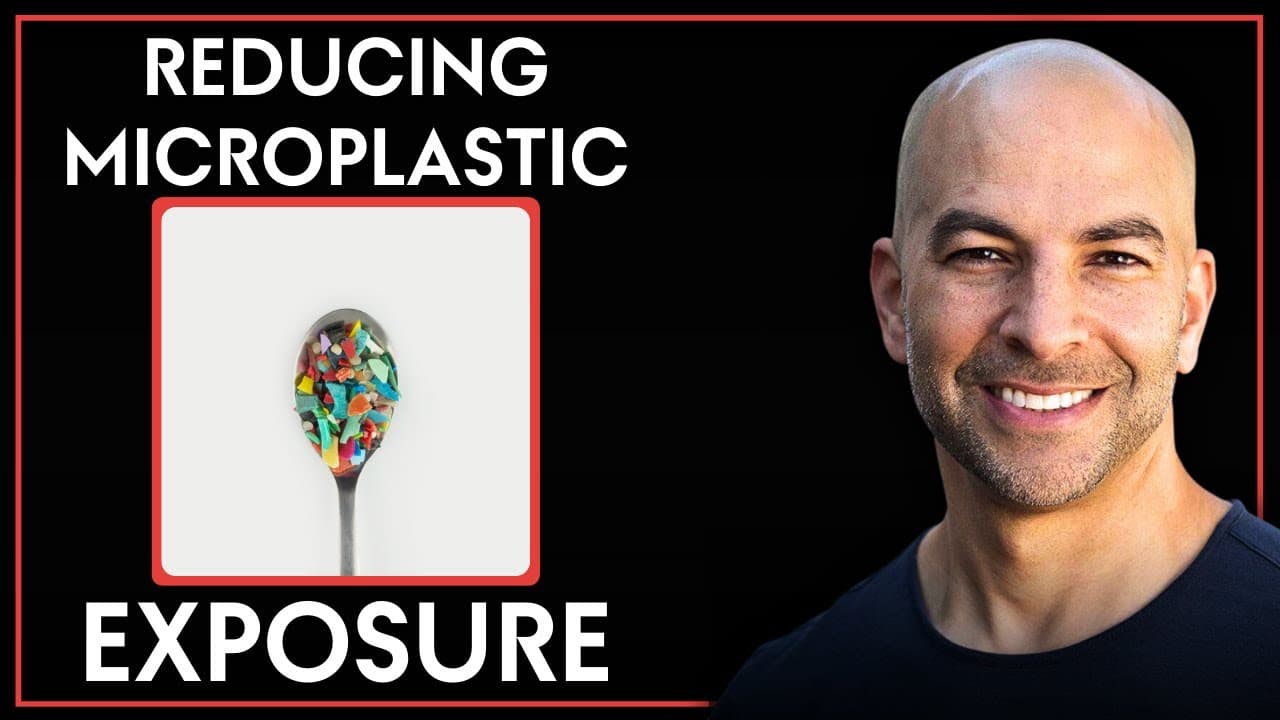
How to reduce microplastic exposure at home effectively
TL;DR
The speaker argues that complete mitigation is not possible, even with heavy effort and cost, so you should balance energy and money against the expected reduction. Start with low cost, high impact changes like using metal or glass options for coffee, water, and saunas, and consider later larger investments in air filtration. The framework helps decide what to pursue.
Transcript
hey so a little while ago we did an AMA and asked me anything on microplastics um and you know it was it was a long kind of complex uh discussion and at the end I kind of tried to create a framework um to help people make sense of this information and the framework was basically uh picturing a graph because of course me being who I am everything co... Read More
Key Insights
- Mitigation is never complete even with all effort and money, so people must decide how much to invest to gain proportionate benefit.
- Low hanging fruit include switching to metal or glass options for coffee, water, and sauna containers to reduce plastic contact with hot water.
- Avoid bringing plastic lids into the sauna with hot drinks to prevent exposure from heated plastics.
- Water filtration and reverse osmosis are used to ensure drinking water comes from cleaner sources.
- Air quality improvements depend on filtration levels, with HEPA and higher grade filters offering greater reduction potential.
- Residential HVAC systems may not handle very high filtration grades without upgrades, influencing overall strategy.
- Costly but impactful upgrades include specialized air filtration units and high-end coffee makers that minimize plastic contact with hot liquids.
- Upgrading to glass or metal containers and limiting plastic exposure before heating are cost-effective first steps.
Install to Summarize YouTube Videos and Get Transcripts
Explore YouTube Video Summarizer or Get YouTube Transcript Extractor
Questions & Answers
Q: How can I start reducing microplastic exposure with affordable changes?
Begin with low cost, high impact steps such as using a stainless steel coffee maker or glass containers where hot liquids are involved. Replacing plastic lids for sauna bottles with no lid reduces heat exposure to plastic. Consider upgrading plastic water bottles to stainless options and using water purification at the point of use. These changes provide meaningful mitigation without substantial ongoing costs.
Q: What is the main takeaway about mitigation effort versus results?
The main takeaway is that you will never achieve complete mitigation, regardless of effort or money spent. The framework presented shows how to balance energy and cost against the amount of mitigation you actually get. This helps individuals decide which improvements are worth pursuing given their circumstances.
Q: Why is air filtration discussed as a key step, and what limits exist?
Air filtration is a key step because it directly affects inhaled particles, but residential HVAC systems may not support very high filtration grades like MV 18. To reach higher filtration levels, additional air purification units may be needed, making it a larger fixed expense with ongoing filter costs.
Q: What are the personal changes recommended for the sauna and why?
For the sauna, the recommendation is to stop bringing the plastic lid into the sauna because heated plastic can increase exposure. Switching to a glass water bottle without the lid in the sauna reduces contact with hot plastic, which is a straightforward, low cost adjustment that lowers exposure.
Q: What role do coffee maker materials play in exposure, and what is suggested?
Coffee maker materials play a role because plastic components can contact hot water. The suggested approach is to use a stainless steel coffee maker with a glass carafe where hot water touches metal rather than plastic. This reduces contact with plastic and lowers potential microplastic exposure from daily coffee preparation.
Q: How does reverse osmosis fit into the strategy for drinking water?
Reverse osmosis is used by the speaker to ensure drinking water comes from cleaner sources. The system is applied at accessible spigots rather than throughout the entire house, indicating a targeted approach to reduce microplastic exposure without a full home water treatment remodel.
Q: What is the suggested order of implementing the changes based on cost and impact?
Start with low cost, high impact items like upgrading to glass or metal containers and selecting plastic free coffee and water solutions. If budget allows, pursue higher impact investments such as advanced air filtration units and waterfalling to higher grade filters, followed by selective whole house improvements if necessary.
Q: What caveat does the speaker give about the evidence linking microplastics to health issues?
The speaker notes that the evidence linking plastics to all health issues is not overwhelming, but advocates the precautionary principle. This means taking reasonable steps to minimize exposure where possible while acknowledging that not all risk can be eliminated, and decisions should be proportionate to potential benefit.
Summary & Key Takeaways
-
This summary explains the practical framework to limit microplastic exposure, emphasizing that no solution yields complete mitigation but that certain changes provide meaningful reductions for a reasonable cost. It covers coffee maker choices, water bottle materials, sauna practices, food containers, and air filtration considerations.
-
The discussion highlights a cost versus mitigation curve, showing how different interventions offer varying returns. It notes that residential HVAC filters may limit the achievable filtration, suggesting adding units to improve airflow and enable higher grade filters.
-
It closes with a note on precaution, acknowledging some influence of microplastics while recommending reasonable steps to reduce exposure based on available evidence and listener input from the AMA discussion.
Read in Other Languages (beta)
Share This Summary 📚
Summarize YouTube Videos and Get Video Transcripts with 1-Click
Try YouTube Summary with ChatGPT & Claude or YouTube Transcript Generator
Explore More Summaries from Peter Attia MD 📚


Summarize YouTube Videos and Get Video Transcripts with 1-Click
Try YouTube Summary with ChatGPT & Claude or YouTube Transcript Generator