How to Build 4 Practical Projects With Claude
TL;DR
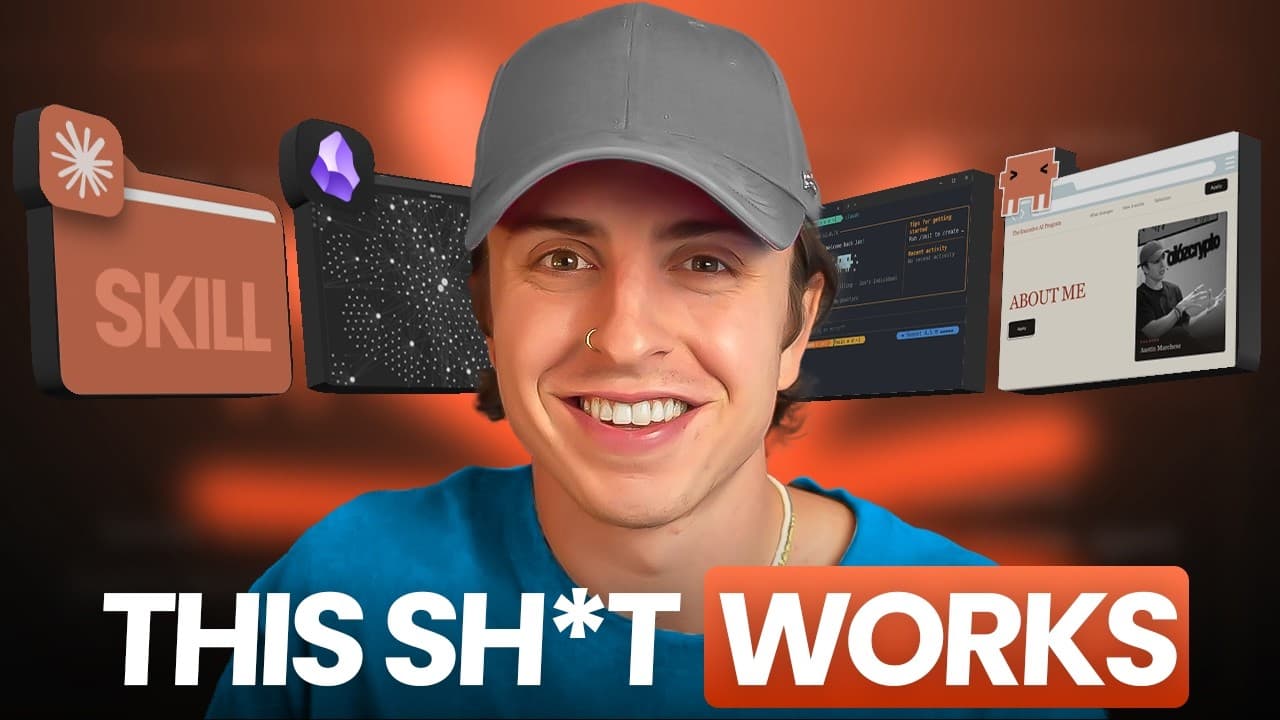
Build useful Claude projects around work you already do: an AI board of advisers, a personal command center, an AI-optimized website, and an internal operating system. Start each project by clarifying the goal, let Claude interview you for context, plan before building, create a minimum viable version, and improve it through repeated use instead of waiting for perfection.
Transcript
Project number one is your own board of adviserss. This project will let you build your own board of adviserss by cloning professional experts so you can make decisions with confidence. So step one here is let Claude interview you. Run this prompt so Claude can get to know your goals and where you want to go with your career. The key phrase here is... Read More
Key Insights
- An AI board of advisers is created by combining personal context with expert source material. Claude first interviews you about your career and goals, then uses those answers to suggest relevant board members rather than making unsupported assumptions about what you need.
- Publicly available expert content is useful for creating board-member profiles. The recommended approach favors people such as YouTube creators whose bodies of work are accessible, allowing Claude to ingest selected links and base its responses on the material supplied to the project.
- A custom skill is a reusable prompt that can automate a multi-step process. The proposed “ask the board” skill directs Claude to consult every included board member, collect their analyses, and return a combined response to a question entered after the skill command.
- A niche command center is most valuable when it solves a problem you already have. Building for yourself removes audience and marketing pressure, avoids hypothetical use cases, and forces you to map the workflow behind work you genuinely care about improving.
- Planning is recommended before Claude Code builds a complex application. An interview-style planning prompt can establish required features and technical guardrails, helping the resulting minimum viable product reflect your actual needs instead of copying the assumptions contained in a generic template.
- An effective personal tool can begin as an imperfect minimum viable product. The suggested cycle is to build it, start using it, send errors back to Claude through text or screenshots, and request additional features only when regular use reveals a concrete requirement.
- An AI-optimized public profile serves both human visitors and AI systems. The personal website should communicate a deliberate impression to people while also providing information that recruiters, buyers, teammates, or others may encounter when asking AI about its owner.
- An “ask AI about me” block gives website visitors links to AI providers with a preloaded prompt. The proposed footer feature is intended to make it easier for visitors to open an AI chat and request information about the person represented by the website.
Install to Summarize YouTube Videos and Get Transcripts
Explore YouTube Video Summarizer or Get YouTube Transcript Extractor
Questions & Answers
Q: How do you build an AI board of advisers with Claude?
Begin by asking Claude to interview you about your goals and where you want your career to go over the next 1, 5, and 10 years. Then ask it to recommend suitable board members, preferably people with substantial public material. Collect relevant content links, have Claude ingest them, and create an “ask the board” skill that consults every member when answering a question.
Q: Why should Claude interview you before starting a project?
The phrase “interview me” tells Claude to obtain context directly from you instead of guessing or relying on assumptions. For the board project, the interview clarifies your goals and career direction. For the command center, a similar interview identifies the features you actually require and incorporates technical guardrails before Claude begins building the application.
Q: Who should be included on a Claude board of advisers?
Board members should reflect what you want to accomplish in the next 1, 5, and 10 years. The recommended bias is toward professionals with plenty of publicly available information, including YouTube creators whose full bodies of work are accessible. You can start with two people, as demonstrated in the project, and add as many members as you want.
Q: What is a custom Claude skill and how does it help?
A custom skill is described as a reusable prompt that can be updated and used to run a multi-step process automatically. In the board project, a skill called “ask the board” instructs Claude to loop through every board member instead of consulting only one. A user can invoke it, add a question, and receive a response based on the members’ combined analyses.
Q: How do you choose a niche command center to build?
Choose a tool that supports work you are already doing rather than solving a hypothetical problem. Claude can review previous chats and generate possible concepts if you are unsure. The examples include a personal finance tracker for income and expenses and a YouTube planning dashboard. The main criterion is that the tool should provide value to you immediately.
Q: Why should you plan before building with Claude Code?
Planning helps define what Claude should build before it starts implementing a complex application. The suggested planning prompt interviews you about your needs while applying technical guardrails. After reviewing and improving the resulting plan, you can let Claude build the minimum viable product. This process keeps the feature set aligned with your workflow instead of a generic online template.
Q: How should you improve a Claude Code application after building it?
Start using the minimum viable product as soon as it provides value, without waiting for a perfect release. When an error appears, paste its text into Claude or submit a screenshot. When usage reveals a missing capability, request that specific feature, such as adding credit card transactions to a finance tracker. Repeating this cycle gradually makes the personal tool more useful.
Q: How do you create an AI-optimized personal website with Claude Code?
First decide what visitors should think or feel after viewing the page, then reverse engineer its structure and styling around that goal. Collect inspiration from creators, brands, or curated website collections. Give Claude the goal and references, ask it to scaffold a Node.js proof of concept, and let it interview you for the copy. Finally, generate AI-oriented elements, including an “ask AI about me” block.
Summary & Key Takeaways
-
The first project creates an AI board of advisers. Claude interviews you about your goals, recommends experts with accessible public content, ingests their material, and turns the process into an “ask the board” skill. You can then submit one question and receive analysis informed by every selected board member.
-
The second project is a niche command center for work you already perform. After selecting a practical problem, Claude interviews you about requirements and produces a plan with technical guardrails. You build a minimum viable product, use it immediately, submit errors to Claude, and add capabilities whenever genuine needs appear.
-
The third project is a personal website designed for human visitors and AI discovery. You define the impression it should create, gather design inspiration, and ask Claude Code to scaffold a Node.js application. Claude can also generate AI-oriented elements, including an “ask AI about me” block linking to AI providers.
Read in Other Languages (beta)
Share This Summary 📚
Summarize YouTube Videos and Get Video Transcripts with 1-Click
Try YouTube Summary with ChatGPT & Claude or YouTube Transcript Generator
Explore More Summaries from Austin Marchese 📚



Summarize YouTube Videos and Get Video Transcripts with 1-Click
Try YouTube Summary with ChatGPT & Claude or YouTube Transcript Generator