A Massive Star Just Disappeared. No Supernova, Just Straight to Black Hole
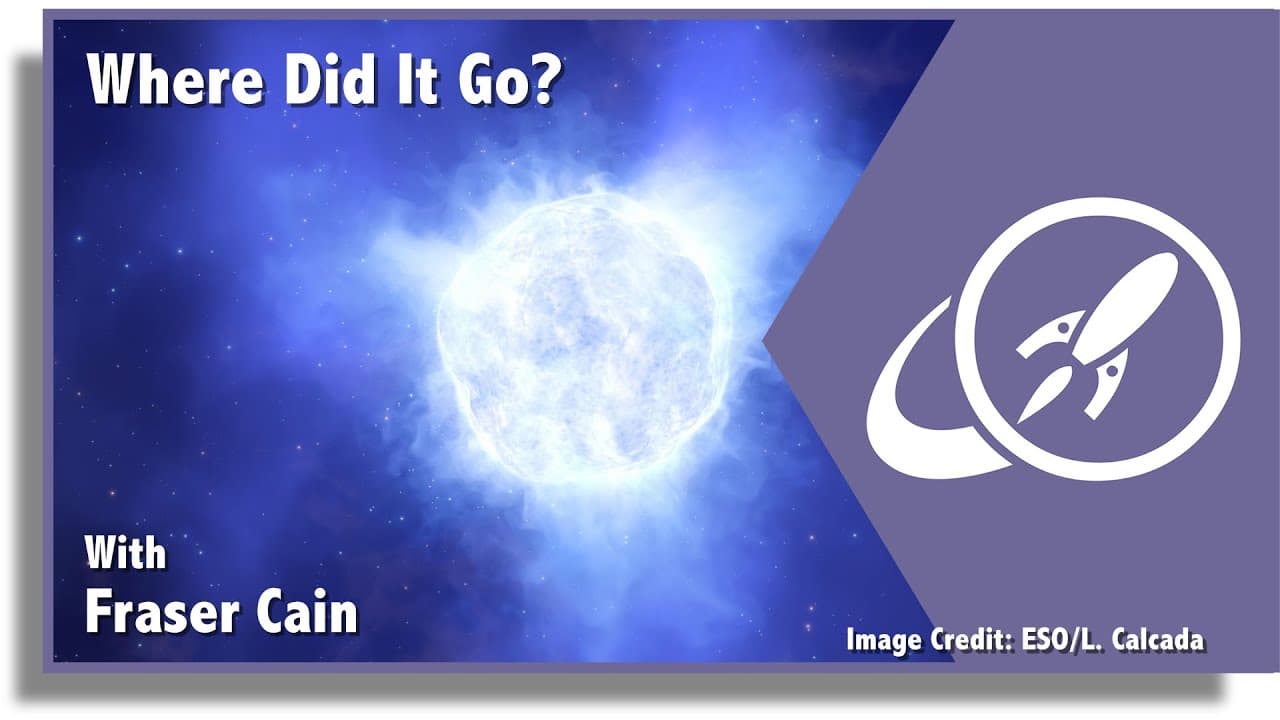
TL;DR
Massive stars disappearing without supernova explosion, possibly collapsing into black holes directly.
Transcript
When the largest stars die, it’s usually pretty obvious. Supernovae are visible from billions of light-years away. But recently astronomers watched a massive star just disappear. No explosion, nothing, it just… vanished? Of course, it could have been dust. It’s always dust. But one intriguing possibility is that the star just imploded directly into... Read More
Key Insights
- 🤩 Massive stars typically end in supernovae that release enormous energy and material into space.
- 🤩 The disappearance of massive stars like the one in the Kinman Dwarf Galaxy challenges existing supernova theories.
- 🖤 Observing these events can help astronomers unravel mysteries surrounding black hole formation and galaxy evolution.
- 🤩 Technologies like advanced telescopes are crucial for studying cosmic phenomena like star disappearances.
- ✴️ Direct collapse of massive stars into black holes could contribute to the growth of supermassive black holes in galaxies.
- 👶 Further investigations into these vanishings may offer new perspectives on cosmic phenomena.
- 🤩 The disappearance of stars without supernovae can help address gaps in astronomical knowledge about stellar lifecycles.
Install to Summarize YouTube Videos and Get Transcripts
Explore YouTube Video Summarizer or Get YouTube Transcript Extractor
Questions & Answers
Q: Why do most massive stars end in supernova explosions?
Most massive stars end in supernovae due to the fusion process in their cores, eventually leading to iron fusion that triggers a collapse and subsequent explosion.
Q: What implications does the disappearance of massive stars without supernovae have on black hole formation?
The direct collapse of massive stars into black holes could contribute to the formation of supermassive black holes, bypassing the more traditional supernova remnant pathway.
Q: How are astronomers investigating the disappearances of massive stars like the one in the Kinman Dwarf Galaxy?
Astronomers are using advanced telescopes like the European Southern Observatory's instruments and planning to utilize upcoming technologies like the Extremely Large Telescope for further observations.
Q: What can the disappearance of massive stars teach us about the evolution of galaxies?
Understanding why some massive stars vanish without supernovae can provide insights into the dynamics of star formation, stellar evolution, and the mechanisms behind black hole growth in galaxies.
Summary & Key Takeaways
-
Massive stars typically end in supernovae explosions, but some stars, like one in Kinman Dwarf Galaxy, vanish without a trace, potentially imploding into black holes.
-
Astronomers discovered a luminous blue variable star in the Kinman Dwarf Galaxy, expecting it to explode as a supernova, but it mysteriously disappeared.
-
The disappearance of massive stars without supernova explosions challenges existing theories and could offer insights into the formation of supermassive black holes.
Read in Other Languages (beta)
Share This Summary 📚
Summarize YouTube Videos and Get Video Transcripts with 1-Click
Try YouTube Summary with ChatGPT & Claude or YouTube Transcript Generator
Explore More Summaries from Fraser Cain 📚




Summarize YouTube Videos and Get Video Transcripts with 1-Click
Try YouTube Summary with ChatGPT & Claude or YouTube Transcript Generator