How to Use Storytelling to Hold Attention
TL;DR
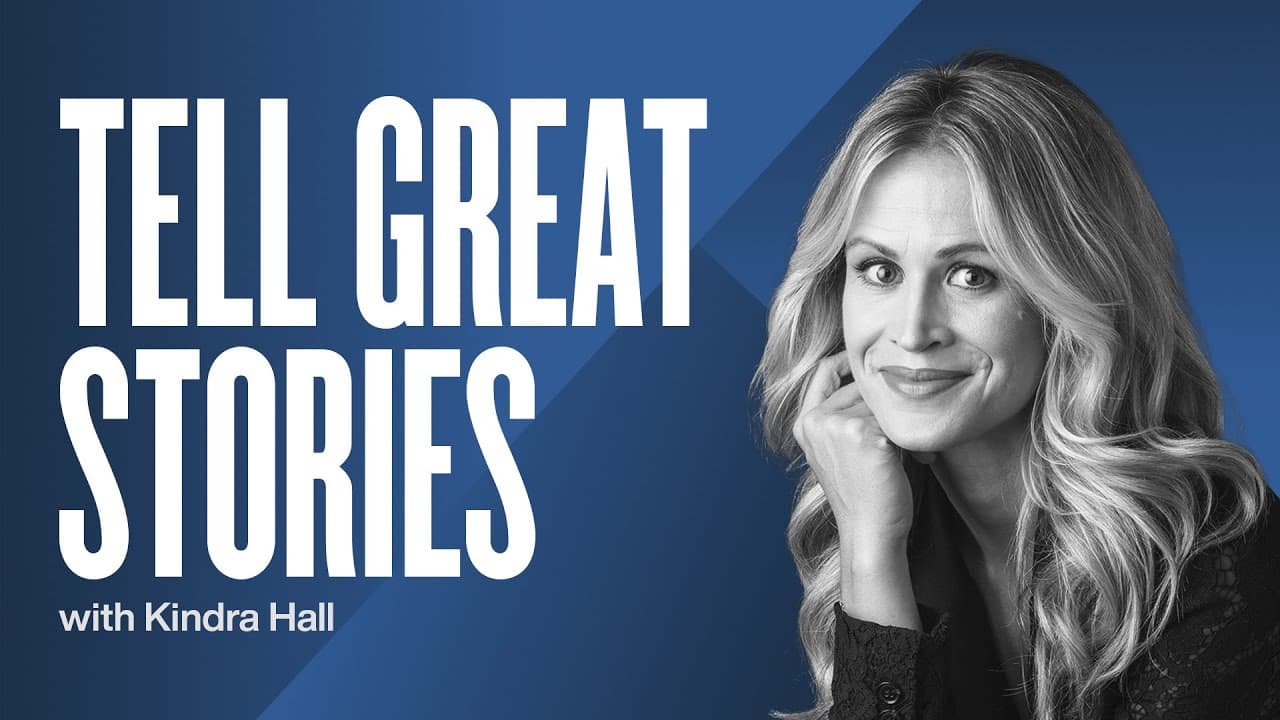
Stories help people earn attention, create connection, and make information meaningful, especially when an audience is distracted or time is limited. Keep the story instead of defaulting to facts and bullet points, because a relevant real-life narrative can clarify the point, demonstrate its application, and give listeners a reason to stay engaged.
Transcript
i've been tracking you down on social media for i feel like years now and i'm so glad i'm so happy that we're actually here today doing this conversation because i have gone through your first book i think so many times and i've been quoting it referencing it recommending it to people and then i see you going on this journey about writing your your... Read More
Key Insights
- Storytelling is a tool for gaining attention when chaos or distraction makes an audience difficult to reach. Hall recognized this at age eleven after abandoning an assigned reading and telling a story to an unruly classroom of younger students.
- A story is more than decorative material added around factual information. Hall’s gravity paper earned praise because its roller-coaster narrative connected an abstract scientific topic to a recognizable real-life experience, making the information feel applied rather than merely presented.
- Relevant sensory details make an experience easier for listeners to picture. Hall described the roller-coaster restraints, the climb, the first descent, and the sensation in her stomach, then connected that physical experience directly to the paper’s subject of gravity.
- Storytelling can support communication across personal, educational, and organizational settings. Hall tested stories with her family, used them in school, studied their role in organizations, and later applied the same interest through marketing, sales, research, writing, and keynote speaking.
- Information-heavy communication can lose an audience even when the presenter’s intentions are good. People often emphasize facts, figures, and teaching points because they want to do justice to the subject, but removing stories can also remove the material that sustains attention.
- Time pressure encourages presenters to cut stories before cutting instructional content. When Hall’s keynote was reduced from forty-five minutes to eighteen minutes, she removed every narrative and discovered that only slides containing bullet points remained.
- Focused creative work requires an environment suited to the individual creator. Hall learned that she writes best with a full, uninterrupted runway, so she spent six weeks avoiding conference calls, podcasts, and other responsibilities while concentrating on her follow-up book.
- Storytelling expertise can grow through both practice and structured study. Hall began telling stories in childhood, continued testing their effects, made storytelling in organizations the subject of her master’s thesis, and built a career around reminding people why stories matter.
Install to Summarize YouTube Videos and Get Transcripts
Explore YouTube Video Summarizer or Get YouTube Transcript Extractor
Questions & Answers
Q: How can storytelling help hold an audience’s attention?
Storytelling can give people a reason to focus when the surrounding environment is chaotic or distracting. Hall first recognized this at age eleven, when a classroom of younger students was bouncing off the walls near the end of the school year. Instead of reading the assigned children’s book, she told a story and realized that narrative could help her voice be heard amid the noise.
Q: Why should presenters keep stories in short presentations?
Presenters should keep stories because shortening a presentation to facts and bullet points can remove the audience’s main source of connection. Hall encountered this while preparing a keynote that was reduced from forty-five minutes to eighteen minutes. She initially cut every story to preserve the lessons, but the remaining deck consisted only of bullet-point slides, exposing what had been lost.
Q: How can a story make factual information more meaningful?
A story can connect factual information to an experience the audience recognizes. In a physics paper about gravity, Hall described riding a roller coaster, including the restraint, ascent, descent, and feeling in her stomach. She linked that experience to gravity, and her teacher praised the paper for applying information to real life rather than treating the narrative as irrelevant filler.
Q: Why do business communicators rely too heavily on facts and figures?
Business communicators often rely on facts and figures because they want audiences to understand the information they were asked to deliver. Under pressure to get to the point, they may view stories as optional and remove them first. Hall argues through her examples that this well-intentioned choice can cause listeners to disengage, even when the remaining material is accurate and important.
Q: What did Kindra Hall learn from her high school gravity paper?
Hall learned that a story could improve a factual assignment instead of weakening it. Needing another page for her physics paper, she added a roller-coaster narrative and worried that the teacher would see it as fluff. The paper received her first A, and the teacher specifically praised its application of information to real-life stories, reinforcing her belief in narrative communication.
Q: How does Kindra Hall create the focus needed to write?
Hall creates focus by reserving a complete stretch of time for writing and removing competing responsibilities. While working on her follow-up book, she spent six weeks focused on that task. She had no conference calls or podcasts, and her husband and children understood that she needed to be left alone. She says partial availability produces no focus for her.
Q: How did Kindra Hall develop her storytelling expertise?
Hall developed her expertise through repeated practice, experimentation, academic study, and professional application. She began with a classroom story at age eleven, continued testing stories in school and family situations, studied storytelling in college, and wrote a master’s thesis about its role in organizations. Her later work in marketing, sales, writing, research, and keynote speaking extended that foundation.
Q: When should a speaker use a real-life story?
A speaker should use a real-life story when it helps the audience understand why information matters or how it appears in experience. Hall’s roller-coaster example turned gravity from an abstract paper topic into a physical event the reader could imagine. Her broader point is that stories remain important when communicating science, business ideas, presentations, or lessons, particularly when attention and connection matter.
Summary & Key Takeaways
-
Kindra Hall discovered the practical power of storytelling at age eleven, when she faced a chaotic classroom of younger students and chose to tell a story instead of reading the assigned book. Their response gave her a lasting insight: when surrounding noise makes it difficult to be heard, a story can capture attention.
-
As a high school senior, Hall added a detailed roller-coaster story to a physics paper about gravity. She expected the narrative to be dismissed as filler, but the teacher awarded her first A and praised the connection between information and real life. The experience showed that stories can strengthen factual communication.
-
Business communicators often remove stories when presentations must be shortened because facts and teaching points seem more essential. Hall made this mistake while reducing a keynote from forty-five minutes to eighteen minutes. After cutting every story, she was left with bullet-point slides, revealing how time pressure can strip away audience connection.
Read in Other Languages (beta)
Share This Summary 📚
Summarize YouTube Videos and Get Video Transcripts with 1-Click
Try YouTube Summary with ChatGPT & Claude or YouTube Transcript Generator
Explore More Summaries from The Futur 📚

Summarize YouTube Videos and Get Video Transcripts with 1-Click
Try YouTube Summary with ChatGPT & Claude or YouTube Transcript Generator