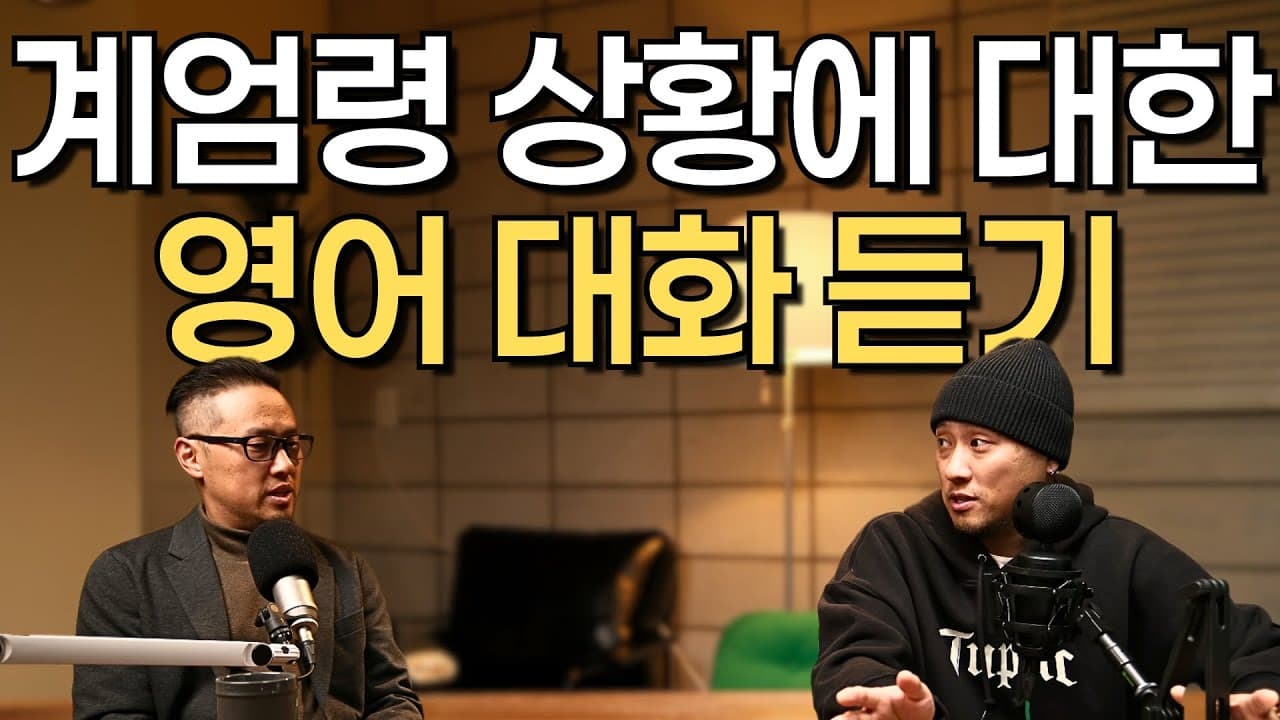
계엄령 사태에 대한 영어 대화 듣기 (한/영 자막)
TL;DR
President Yun’s martial law declaration, quickly revoked by South Korea’s National Assembly, triggered a political crisis and a power vacuum with no clear resolution. The Constitution allows presidential replacement only through resignation, impeachment, or a new election, while opposition leaders are seeking Yun’s removal. The turmoil is also intensifying strikes, economic strain, and security concerns involving North Korea. Read on to understand the possible outcomes.
Transcript
so imagine waking up one morning and you find out that your country's leader has well not vanished literally but politically sounds about right yes and that's kind of what's happening right now in South Korea and it's a wild situation wild is putting it mildly well yes so president Yun declared marshal law and well i... Read More
Key Insights
- President Yun's declaration of martial law in South Korea was quickly revoked, leading to a political crisis with no clear resolution in sight.
- The South Korean Constitution lacks provisions for replacing a president outside of resignation, impeachment, or election, creating a power vacuum.
- Martial law in South Korea has historical significance, evoking memories of authoritarian rule and military coups, adding tension to the current situation.
- Opposition leaders view the crisis as an opportunity to impeach President Yun, accusing him of being unfit to lead and advancing their political agenda.
- The crisis has real-world effects, with thousands of doctors on strike and labor unions threatening more strikes, exacerbating economic challenges.
- International implications are significant, as South Korea's instability could embolden North Korea and complicate regional security dynamics.
- Potential outcomes include President Yun holding onto power as a lame duck or being forced to resign, leading to a new election and further instability.
- The crisis highlights the fragility of political systems and the importance of clear rules, checks and balances, and public awareness to protect democracy.
Install to Summarize YouTube Videos and Get Transcripts
Explore YouTube Video Summarizer or Get YouTube Transcript Extractor
Questions & Answers
Q: What triggered South Korea’s political crisis?
President Yun declared martial law, but the National Assembly quickly revoked it. Yun then went silent while his own party leader suggested that he had been ousted, creating uncertainty over who was governing the country.
Q: Why did the martial law declaration create a power vacuum?
South Korea’s Constitution has no provision for replacing a president outside the established routes of resignation, impeachment, or a new election. Because Yun had not officially transferred power, the transcript describes deep uncertainty about who was legally in charge.
Q: Why is martial law especially sensitive in South Korea?
Martial law carries memories of decades of authoritarian rule, military coups, and the suppression of democratic rights. Yun’s decision therefore revived historical anxieties even though the National Assembly revoked the declaration quickly.
Q: What do South Korea’s opposition leaders want to achieve?
Opposition leaders want to remove President Yun from office through impeachment, arguing that his actions show he is unfit to lead. They present his removal as necessary for stability while also using the crisis to advance their political agenda.
Q: How has the crisis affected daily life and the economy?
Thousands of doctors are on strike over healthcare policy changes, and a labor union is threatening further strikes until Yun is impeached. These disruptions add to an already slowing economy and mounting debt while political paralysis prevents effective action.
Q: What are the security implications of South Korea’s instability?
South Korea is already facing North Korean nuclear threats and depends on its alliance with the United States. The transcript warns that weakness or even the appearance of instability could embolden North Korea and complicate regional security.
Q: What could happen if President Yun remains in office?
Yun could manage to hold on to power, but the transcript says he would likely become a lame-duck president. He would face constant opposition and struggle to govern or enact meaningful policies.
Q: What could happen if President Yun leaves office?
Yun could be forced to resign through party pressure or removed through impeachment. According to the existing page content, his departure would require a new presidential election within 60 days, potentially extending the instability.
Summary & Key Takeaways
-
South Korea is in turmoil after President Yun's declaration of martial law, which was quickly revoked, leaving a political power vacuum. The situation is exacerbated by historical associations with authoritarian rule and current economic challenges, as well as international implications involving North Korea.
-
Opposition leaders are seizing the opportunity to push for President Yun's impeachment, accusing him of being unfit to lead. The crisis has led to strikes by doctors and labor unions, further destabilizing the economy and raising concerns about regional security.
-
The potential outcomes include President Yun remaining in power as a weakened leader or being forced to resign, prompting a new election. The situation underscores the importance of political stability, clear governance rules, and public engagement in safeguarding democracy.
Read in Other Languages (beta)
Share This Summary 📚
Summarize YouTube Videos and Get Video Transcripts with 1-Click
Try YouTube Summary with ChatGPT & Claude or YouTube Transcript Generator
Explore More Summaries from 라이브 아카데미 📚




Summarize YouTube Videos and Get Video Transcripts with 1-Click
Try YouTube Summary with ChatGPT & Claude or YouTube Transcript Generator