How to Rescue a Dog Treat Business From Burnout
TL;DR
A struggling founder can regain control by delegating repetitive work, hiring experienced operators, outsourcing fulfillment to a third-party logistics provider, and focusing on revenue-generating decisions. For Marrowz, the proposed recovery plan combines operational support with a direct-to-consumer website and advertising, while a spoiled batch worth about $100,000 shows why manufacturing reliability must improve alongside sales.
Transcript
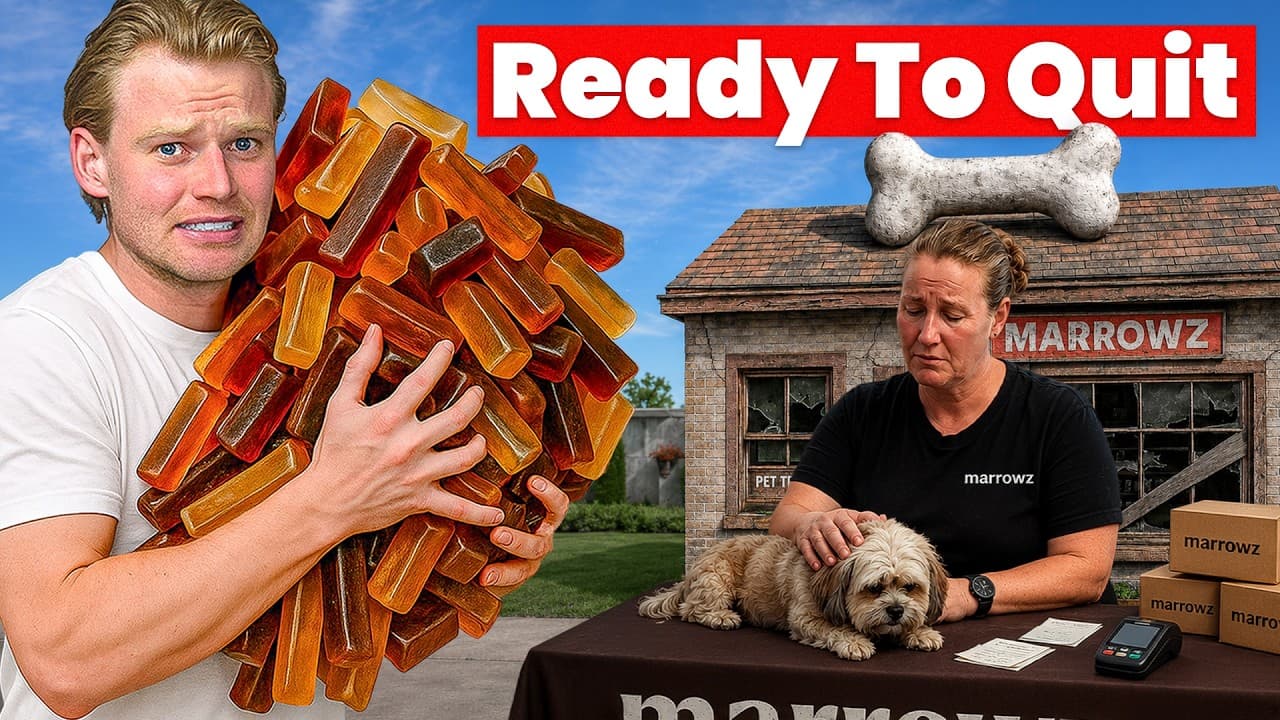
This dog treat can change the world, but the owner's ready to give up. Can't do it. She's given me 90 days to see if I can save her business. We've done about $200,000. That not unethical. We've just got to fix this. This is Brooke. She's created one of the healthiest dog treats to ever have existed. But there's a problem. She's at a critical junct... Read More
Key Insights
- Marrowz's main constraint is founder overload, not a lack of customer interest. Brooke handles production, order packing, and customer service while working seven days a week, leaving too little time for decisions that could strengthen and expand the business.
- Low-leverage work is repetitive work that another person can perform without the founder's specialized ability. Packing customer orders falls into this category, while product direction, revenue generation, and other decisions that depend on the founder are treated as high-leverage responsibilities.
- A third-party logistics provider can receive finished inventory, store it, and ship orders to customers. Moving fulfillment outside the founder's daily workload is intended to stop Brooke from packing orders after beginning production as early as 4:00 a.m.
- Experienced hires can shorten the path to better operations because they have already solved similar problems elsewhere. The proposed recruiting method is to identify people from comparable companies that are further ahead and contact them directly instead of relying only on active applicants.
- Wholesale produces large orders but reduces the brand's control over customer interactions and can limit profit. Direct-to-consumer e-commerce is presented as a complementary channel that lets Marrowz manage its website, advertising, brand experience, customer relationships, and commercial direction more directly.
- Marrowz's product contains no added sugar, salt, or preservatives, according to Brooke. She developed it after making treats for her own dog and observing what happened to marrow through a particular process, which became the foundation of the product and brand.
- Marrowz's social purpose is tied to disability employment as well as dog wellness. Brooke selected a disability organization as a manufacturing partner, developed close relationships with its workers, and said their contribution had enabled her company to grow.
- Manufacturing quality is essential to a successful sales strategy because demand cannot be fulfilled without usable inventory. Changed drying conditions spoiled about 20,000 chews, representing about one month's production and approximately $100,000 in value, even as customers were waiting for products.
Install to Summarize YouTube Videos and Get Transcripts
Explore YouTube Video Summarizer or Get YouTube Transcript Extractor
Questions & Answers
Q: How can an overwhelmed founder regain control of a growing business?
An overwhelmed founder can begin by separating repetitive duties from work that requires the founder's particular judgment or ability. In Brooke's case, order packing should move to a third-party logistics provider, while an experienced operations employee handles wholesale accounts. That would give her more time for revenue-generating decisions, product direction, and other responsibilities that cannot be delegated as easily.
Q: What was the three-step plan to improve the dog treat business?
The plan was to hire people who could remove work from Brooke's schedule, establish a third-party logistics arrangement for storing and shipping customer orders, and create a direct-to-consumer website supported by advertising. Together, these steps were intended to reduce founder overload, preserve the existing wholesale business, and give Marrowz more control over its customers, brand, and profits.
Q: Why should a founder outsource order fulfillment to a 3PL?
A third-party logistics provider allows a company to send finished products to an outside warehouse that ships individual orders to customers. For Marrowz, this would remove repetitive packing work from Brooke's schedule. Because she was already boiling marrow, answering customer service requests, and packing orders herself, outsourcing fulfillment would free time for higher-value business responsibilities.
Q: What is the difference between high-leverage and low-leverage work?
Low-leverage work consists of repeatable tasks that another person can complete without the founder's specialized experience, such as packing orders. High-leverage work includes activities that depend more directly on the founder and contribute to revenue or strategic progress. The turnaround therefore prioritizes removing repetitive fulfillment duties so Brooke can focus on decisions and work that have greater business impact.
Q: How should a small company recruit experienced employees?
The proposed approach is to search for candidates who have already performed the needed role at similar companies that are further ahead. Instead of hiring friends, relatives, or only people actively searching for work, the company can identify experienced candidates on LinkedIn and contact them directly. The aim is to hire someone capable of reproducing processes they have successfully handled before.
Q: Why can direct-to-consumer sales help a wholesale brand?
Direct-to-consumer sales give a brand more control over how customers discover, purchase, and experience its products. Wholesale can provide valuable large orders, but retailers mediate the customer relationship and may reduce the producer's profit. A company-owned website and advertising can complement wholesale by letting the business manage its brand presentation, customer information, purchasing journey, and commercial direction more directly.
Q: What caused the major inventory loss at Marrowz?
A batch representing about one month's supply spoiled after the drying conditions were changed. Brooke reported that approximately 20,000 chews had gone rotten and valued the loss at about $100,000. The problem was especially serious because customers wanted the product and online sales were expected to create additional demand, making dependable production and usable inventory critical to the turnaround.
Q: What makes the Marrowz business socially focused?
Marrowz combines its dog treat product with a commitment to disability employment. Brooke chose to work with a disability organization during manufacturing instead of focusing only on the cheapest production option. She developed personal relationships with the workers and credited them with helping the company grow. The product itself also contains no added sugar, salt, or preservatives, according to Brooke.
Summary & Key Takeaways
-
Marrowz had generated about $200,000, yet founder Brooke remained responsible for production, order packing, and customer service, sometimes beginning work at 4:00 a.m. Her workload created chronic stress and prevented her from concentrating on the strategic and revenue-generating work needed to move the dog treat company forward.
-
The turnaround plan had three priorities: hire experienced staff, transfer fulfillment to a third-party logistics provider, and build a direct-to-consumer sales channel. An operations employee would manage valuable wholesale accounts, while the new website and advertising would give Marrowz greater control over customer relationships, branding, and profit potential.
-
A manufacturing failure complicated the recovery when changed drying conditions caused about 20,000 chews, roughly one month's production, to spoil. The lost inventory was valued at about $100,000. Brooke planned to resume a reasonable amount of manufacturing at her own premises so current orders could continue being shipped.
Read in Other Languages (beta)
Share This Summary 📚
Summarize YouTube Videos and Get Video Transcripts with 1-Click
Try YouTube Summary with ChatGPT & Claude or YouTube Transcript Generator
Explore More Summaries from Davie Fogarty 📚

Summarize YouTube Videos and Get Video Transcripts with 1-Click
Try YouTube Summary with ChatGPT & Claude or YouTube Transcript Generator