Contract Law 26 II: What Did Carlile v Carbolic Smoke Ball Decide About Unilateral Contracts?
TL;DR
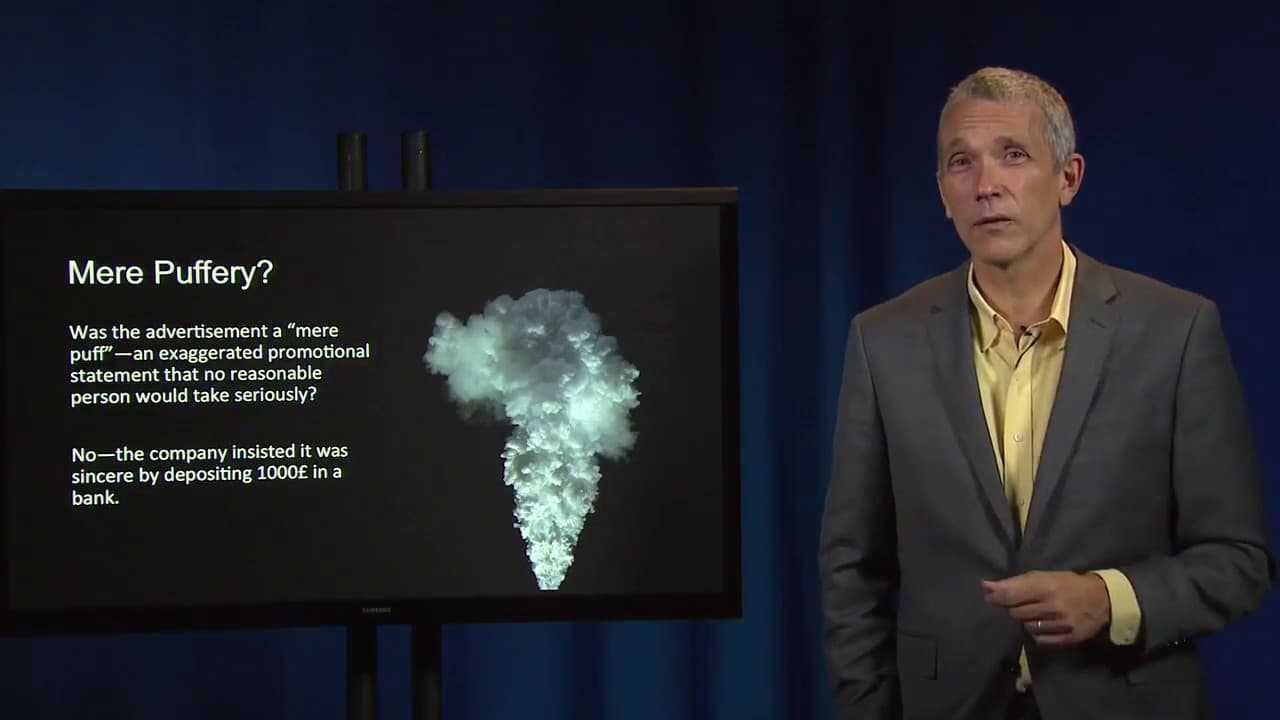
Carlile v Carbolic Smoke Ball held that the company’s public advertisement was a serious contractual offer that Carlile accepted through performance without prior notification. The 1893 court found consideration in the inconvenience of using the smoke ball three times daily for two weeks, and the company’s £1,000 bank deposit demonstrated sincerity. Read on to understand unilateral contracts, consideration, and acceptance by performance.
Transcript
today we're going to discuss an incredibly famous English case decided in 1893 called Carlyle versus carbolic smoke ball law students have been reading this case for generations to learn about unilateral contracts in that case the court considered an offer made through a public advertisement and contemplated whether accepting that offer by performa... Read More
Key Insights
- ❓ Valid contracts require consideration, which can include inconveniences and performances.
- 🧑🏭 In the Carlyle v. Carbolic Smoke Ball case, the court deemed the advertisement to be a serious offer based on various factors.
- 🔔 The court concluded that acceptance through performance was sufficient, waiving the notification requirement.
Install to Summarize YouTube Videos and Get Transcripts
Explore YouTube Video Summarizer or Get YouTube Transcript Extractor
Questions & Answers
Q: What did Carlile v Carbolic Smoke Ball decide?
The court decided that the company’s advertisement constituted a serious contractual offer and that Carlile accepted it by performing the stated conditions. The trial court found for Carlile, and the reviewing court affirmed.
Q: Why was the Carbolic Smoke Ball advertisement considered a serious offer?
The advertisement stated that the company had deposited £1,000 with the Alliance Bank to demonstrate its sincerity. The court therefore concluded that the advertisement was not mere puffery or hyperbole.
Q: What reward did the Carbolic Smoke Ball Company advertise?
The company offered 100 pound to anyone who contracted the increasing epidemic of influenza after using the carbolic smoke ball as directed. The required use was three times daily for two weeks.
Q: Was there consideration in Carlile v Carbolic Smoke Ball?
Yes. The court found that applying the smoke ball three times a day for two weeks created sufficient inconvenience at the company’s request, which counted as consideration.
Q: Did Carlile need to notify the company before accepting the offer?
No. The court held that performance was an adequate form of acceptance because the advertisement implied that acting on its proposal was sufficient, so prior notification was unnecessary.
Q: What is a unilateral contract?
A unilateral contract is formed when an offer invites acceptance through performance rather than through a return promise. The promisor exchanges a promise for the requested performance, which operates as acceptance.
Q: How does a unilateral contract differ from a bilateral contract?
A unilateral contract exchanges a promise for performance, such as paying Bob $20 if he mows Alice’s lawn before she returns. A bilateral contract exchanges one promise for another, such as Bob promising to mow in return for Alice’s promise to pay $20.
Q: What does section 54 of the Restatement say about acceptance by performance?
Section 54 states that when an offer invites acceptance by rendering a performance, notification is unnecessary to make acceptance effective unless the offeror requests it. This approach matches the court’s reasoning that the company had not required advance notification.
Summary & Key Takeaways
-
When: Carlile v Carbolic Smoke Ball was an English case decided in 1893.
-
Number: The advertisement offered 100 pound to a person who contracted influenza after using the smoke ball as directed.
-
Number: The required use was three times daily for two weeks.
-
Number: The company deposited £1,000 with the Alliance Bank to show its sincerity.
-
Number: Carlile used the smoke ball as directed for about four weeks before contracting the flu.
-
Definition: Consideration can include inconvenience sustained by one party at the request of another.
-
Definition: A unilateral contract invites acceptance by performance rather than by a return promise.
-
Compare: A bilateral contract exchanges a promise for a return promise.
-
Number: Section 54 says performance-based acceptance requires no notification unless the offeror requests it.
-
Number: Alice’s lawn example offers Bob $20 for completing the requested mowing performance.
Read in Other Languages (beta)
Share This Summary 📚
Summarize YouTube Videos and Get Video Transcripts with 1-Click
Try YouTube Summary with ChatGPT & Claude or YouTube Transcript Generator
Explore More Summaries from YaleCourses 📚



Summarize YouTube Videos and Get Video Transcripts with 1-Click
Try YouTube Summary with ChatGPT & Claude or YouTube Transcript Generator