How Can We Detect Alien Megastructures and Science Experiments?
TL;DR
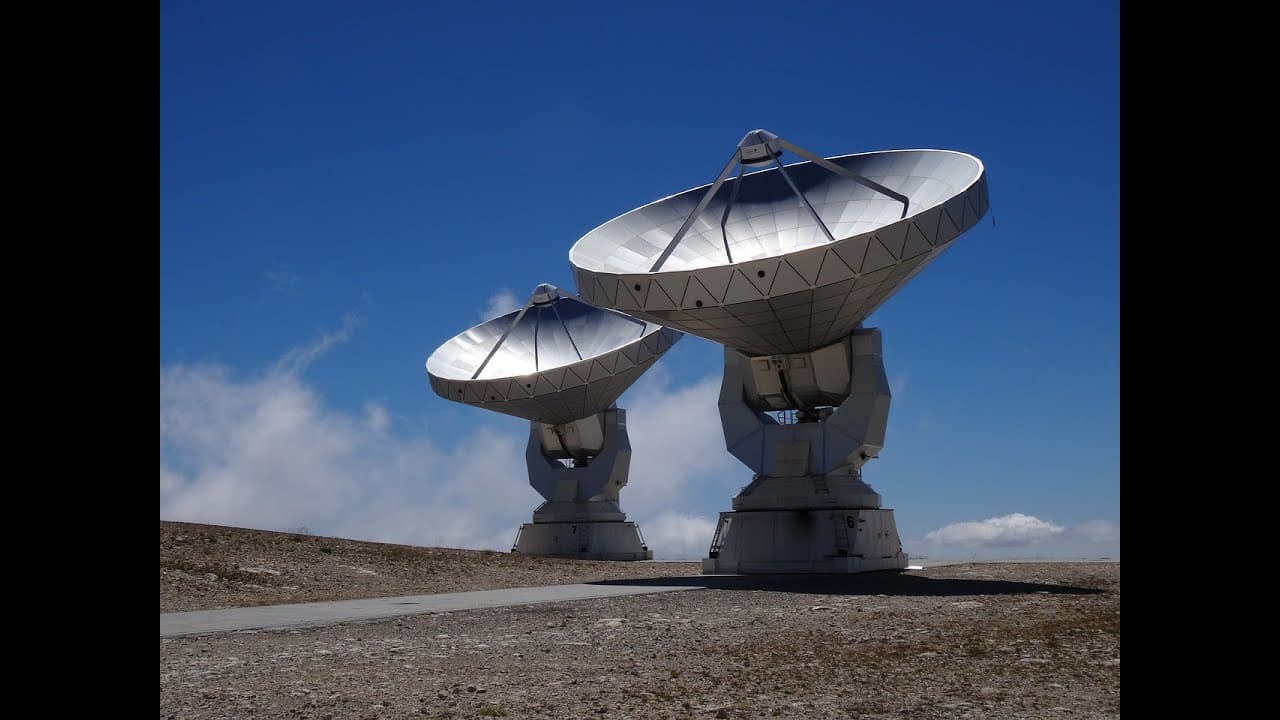
We can detect alien megastructures, such as gigantic telescopes and particle accelerators, through their distinct technosignatures in the electromagnetic spectrum. These advanced instruments might produce detectable signals like ultra-high energy neutrinos or exhibit transit patterns as they move in front of their host stars. By identifying these signs, we could gain insights into the scientific activities of extraterrestrial civilizations.
Transcript
Remembering back, my first flirtation with science was geology. As early as 1980 I was keenly aware that rocks were important, as my mother was a rock hound and we’d travel the western US ostensibly for vacation, but really to rock hunt and also to accompany my father who was a military contractor following where work led. I very keenly became awar... Read More
Key Insights
- 🫥 Humans' scientific instruments, such as telescopes and radio transmitters, are among the most visible things we have emitted to potential alien civilizations.
- 👽 Technosignatures related to science experiments, such as megastructure telescopes, gravitational lens receivers, and gigantic particle accelerators, could provide valuable insights into the activities of advanced alien civilizations.
- 👽 The transit method, radio/laser communications, and characteristic ultra-high energy neutrinos could potentially be used to detect and study these alien megastructures.
- 👽 The discovery of alien megastructures and their associated science experiments would greatly expand our understanding of physics and the universe.
- 🕵️ Technological advancement and the ability to detect and measure the electromagnetic spectrum are likely universal traits shared by advanced civilizations.
- 👨🔬 The search for technosignatures is not limited to radio signals but extends to various fields of science and technology.
Install to Summarize YouTube Videos and Get Transcripts
Explore YouTube Video Summarizer or Get YouTube Transcript Extractor
Questions & Answers
Q: How do humans detect ultraviolet light if we cannot see it directly?
Humans do not perceive ultraviolet light until we get a sunburn because our eyes are not sensitive to this part of the electromagnetic spectrum. However, we can detect and measure ultraviolet light using instruments and technology specifically designed for that purpose.
Q: What are some potential technosignatures that aliens might use for scientific exploration?
One potential technosignature is megastructure telescopes, which could be in the form of Dyson Swarms or Dyson Spheres. These structures can double as energy collectors and telescopes, allowing civilizations to study the universe at high resolutions. Another technosignature could be massive particle accelerators capable of producing ultra-high energy neutrinos.
Q: How could we potentially detect alien megastructure telescopes?
One method would be to observe the transit of these megastructures in front of their host stars. We could also look for radio or laser communications between the different units of the telescope array.
Q: What are the challenges of detecting nanotechnological cloud telescopes?
Nanotechnological cloud telescopes would be difficult to detect because they would likely appear as dust clouds. Advanced instrumentation would be needed to differentiate between natural dust clouds and technologically constructed telescopes.
Summary & Key Takeaways
-
The author reminisces about their early fascination with geology and science, which eventually led to an interest in telescopes and astronomy.
-
Humans perceive and see the visible light spectrum differently from other mammals and insects due to adaptations for survival and environmental circumstances.
-
Technological aliens with advanced science and knowledge would likely possess the ability to detect and measure the entire electromagnetic spectrum, including radio and ultraviolet waves.
Read in Other Languages (beta)
Share This Summary 📚
Summarize YouTube Videos and Get Video Transcripts with 1-Click
Try YouTube Summary with ChatGPT & Claude or YouTube Transcript Generator
Explore More Summaries from John Michael Godier 📚

Summarize YouTube Videos and Get Video Transcripts with 1-Click
Try YouTube Summary with ChatGPT & Claude or YouTube Transcript Generator