Can Other Galaxies Support Life Like the Milky Way?

TL;DR
While elliptical galaxies have the potential for higher habitability due to their long-lived stars and size, they also face risks from fast-moving interstellar objects that could threaten emerging life. In contrast, the Milky Way appears to provide a uniquely stable environment for life, suggesting that not all galaxies equally support the emergence of civilizations.
Transcript
We often talk about habitable zones in the context of types of stars, there are types of stars that so far as we know right now can host habitable zones where surface liquid water is possible and thus, again as far as we know, could see the abiogenesis of life as we know it on earth. We know stars like the sun can do it, because, well, it did and h... Read More
Key Insights
- 🤩 The habitability of a galaxy depends on the type of star it hosts and the presence of a habitable zone or alternative environments.
- 🎑 Ice shell moons with subsurface oceans could support life outside classical habitable zones.
- 🤩 Some types of stars, like giant stars, are less likely to host life due to their short lifespans and explosive ends.
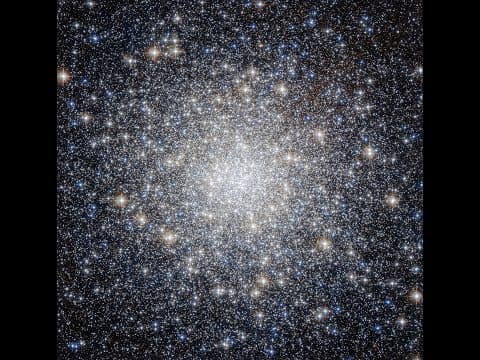
- 🤩 Galaxies closer to the core or with dense star clusters are less likely to support life due to intense radiation and frequent supernovae.
- 🤩 Elliptical galaxies may be the most favorable for life due to their size and aging long-lived stars, but the threat of interstellar objects, such as comets, may limit habitability in these galaxies.
- 🛟 Interstellar objects could pose a significant extinction threat to life and civilizations in certain galaxies.
- 🛟 The presence of interstellar objects may limit the occurrence of life in seemingly ideal galaxies, emphasizing the uniqueness of the habitable zone in the Milky Way.
- 😵💫 The mediocrity principle suggests that our location in a spiral galaxy may be typical for life in the universe, rather than atypical.
Install to Summarize YouTube Videos and Get Transcripts
Explore YouTube Video Summarizer or Get YouTube Transcript Extractor
Questions & Answers
Q: Are Type K and Type M stars better than the sun for the abiogenesis of life?
Type K and Type M stars, known as orange dwarfs, may actually be better than the sun for the development of life due to their suitability for habitable zones and the potential for surface liquid water.
Q: Can certain types of hypothetical life use ultraviolet light as an energy source?
It has been suggested that certain types of hypothetical life could use ultraviolet light as an energy source, although it remains uncertain if this is a viable energy source for life.
Q: Do ice shell moons with subsurface oceans offer an alternative to classical habitable zones?
Yes, ice shell moons with subsurface oceans provide an alternative to classical habitable zones and could potentially support life outside the traditional boundaries of habitable zones.
Q: Are galaxies outside the Milky Way less likely to host life?
The habitability of galaxies depends on various factors, but in general, galaxies outside the Milky Way may have different rules for supporting life. Elliptical galaxies have been proposed as the most favorable for life due to their size and population of aging stars.
Summary & Key Takeaways
-
There are habitable zones around different types of stars, including Type K and Type M dwarf stars, but Type F stars emit too much ultraviolet light for surface exoplanet life.
-
Ice shell moons with subsurface oceans offer an alternative to traditional habitable zones and could potentially support life.
-
The Milky Way has a galactic habitable zone, but areas too dense, such as the galactic core and large star clusters, are less likely to support life.
-
The age and type of galaxy, as well as the presence of interstellar objects, play a significant role in determining the habitability of a galaxy.
Read in Other Languages (beta)
Share This Summary 📚
Summarize YouTube Videos and Get Video Transcripts with 1-Click
Try YouTube Summary with ChatGPT & Claude or YouTube Transcript Generator
Explore More Summaries from John Michael Godier 📚

Summarize YouTube Videos and Get Video Transcripts with 1-Click
Try YouTube Summary with ChatGPT & Claude or YouTube Transcript Generator