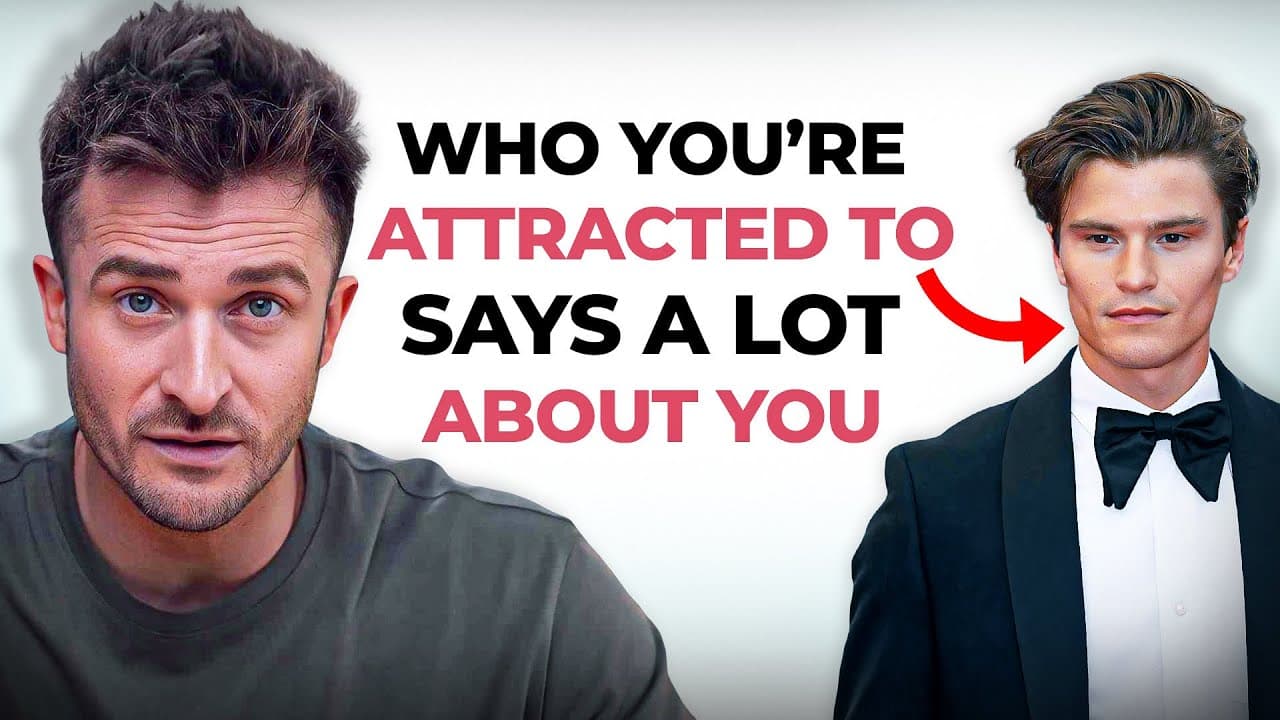
Why Do We Keep Chasing the Wrong Partners?
TL;DR
People often chase unsuitable partners because their nervous systems associate familiar relationship patterns with attraction, even when those patterns cause anxiety and misery. Breaking the cycle starts by identifying the crucial quality missing from a painful past relationship, such as loyalty, empathy, acceptance, or teamwork, and making that quality a nonnegotiable requirement for every future relationship.
Transcript
One of the things that I love about your work is that you really talk about the dynamics of a couple together. So, you're not supposed to be looking for check check check this in and a person, this in a person, this in a person. So, when you're saying, "Oh, my ex is this or if they were this in 5 years," really, it's about how are you two interacti... Read More
Key Insights
- Relationship compatibility is determined by how two people interact together, not simply by whether one partner satisfies a checklist of desirable traits. Someone can be attractive and impressive while still being unsuitable because the relationship does not provide the understanding and emotional responsiveness required by both people.
- A good person can still be the wrong partner when they lack the patience, empathy, sensitivity, or generosity needed to accommodate another person’s vulnerabilities. Their inability to understand struggles such as difficulty trusting does not necessarily make them bad, but it can make the pairing fundamentally incompatible.
- Many people oscillate between exciting relationships that produce misery and safe relationships that create boredom or doubt. This recurring cycle makes healthy love difficult to recognize because emotional intensity may feel attractive, while security may be mistakenly interpreted as evidence that something important is missing.
- Attraction patterns are shaped by nervous-system responses and models of love formed before people were making conscious relationship decisions. These learned instincts can cause the body to react strongly to unsuitable partners, leaving people feeling broken or irrational even though they are repeating familiar conditioning.
- Consciousness and intentionality provide a way out of unconscious relationship patterns. A person does not initially need confidence or certainty that change is possible, but they do need to decide that the kind of relationship that caused profound pain can never be repeated.
- The missing ingredient in a painful relationship reveals what must become nonnegotiable in the future. Possible examples include loyalty, teamwork, consideration, empathy, acceptance, attention to feelings, responsiveness to needs, and the emotional safety required to be vulnerable without constantly trying to impress a partner.
- Obsessing over keeping someone can conceal how unhappy the relationship actually feels. When most emotional capacity is devoted to preventing a breakup or securing the other person, anxiety and loss of self may be obvious to friends while remaining largely invisible to the person inside the relationship.
- Familiar behavior can persist without indicating a simple lack of self-worth. Like a captive dolphin repeating tricks associated with receiving food, people may recreate painful relationship dynamics because those behaviors are what they know and what their brains currently believe can produce connection.
Install to Summarize YouTube Videos and Get Transcripts
Explore YouTube Video Summarizer or Get YouTube Transcript Extractor
Questions & Answers
Q: Why do people keep chasing the wrong partners?
People keep chasing unsuitable partners because their nervous systems and models of love were shaped without conscious choice. Familiar dynamics can therefore register as attractive even when they create anxiety, insecurity, or misery. The brain repeats what it knows and may not yet believe that a healthier result is possible for that individual, even when healthier relationships appear possible for other people.
Q: How can someone tell if a partner is wrong for them?
A partner may be wrong for someone when the relationship consistently lacks a crucial quality required for happiness, such as loyalty, empathy, teamwork, acceptance, consideration, or sensitivity. The decisive issue is not whether the partner is a bad person. It is whether both people understand how to handle each other’s vulnerabilities and can respond to each other’s emotional needs.
Q: Why can a safe relationship feel boring?
A safe relationship can feel boring when someone has learned to associate attraction with emotional intensity, uncertainty, or painful efforts to secure another person. The transcript describes a cycle in which people move between exciting partners who make them miserable and safe partners who make them doubt their choice. Recognizing this pattern is part of learning to pursue a healthier kind of love.
Q: How do you begin changing unhealthy relationship patterns?
Changing an unhealthy pattern begins by making change necessary. A person must conclude that the specific kind of relationship that caused severe pain cannot be repeated. Confidence and complete belief in a better future are not required at this first stage. The essential decision is that returning to the same painful dynamic is no longer an acceptable option.
Q: What should you look for after a painful relationship?
Look for the quality whose absence made happiness impossible in the previous relationship. That quality might be loyalty, empathy, teamwork, consideration, acceptance, attention to feelings, or support for genuine vulnerability. Once identified, it should become the price of entry for future relationships, taking priority over physical attraction, excitement, status, or other impressive but insufficient characteristics.
Q: Why is it hard to notice unhappiness while clinging to someone?
It is hard to recognize unhappiness when most emotional bandwidth is consumed by trying to secure the relationship and prevent the other person from leaving. The urgent thought becomes, “I cannot lose this person,” while anxiety, unmet needs, and loss of self receive less attention. Friends may see the misery clearly even when the person in the relationship cannot.
Q: Does chasing unavailable people mean someone lacks self-worth?
Chasing unavailable or unsuitable people does not have to be understood only as a self-worth problem. The dolphin analogy shows how learned associations can drive repeated behavior: an animal trained to perform for food continues using the method it knows. Similarly, people may repeat painful relationship strategies because those strategies are familiar and seem connected to receiving love.
Q: How can someone identify their relationship nonnegotiables?
Review a relationship that was difficult to leave and ask what was missing that made it impossible to be happy while the relationship still existed. Focus on relational needs rather than a checklist of impressive traits. The answer may be empathy, loyalty, acceptance, teamwork, consideration, or emotional safety. That missing quality should become mandatory in every future partnership.
Summary & Key Takeaways
-
Relationship suitability depends on how two people function together, not merely whether one person possesses an attractive checklist of traits. A partner may be good yet wrong for someone if they lack the patience, empathy, sensitivity, or generosity needed to understand that person’s vulnerabilities and respond to their emotional needs.
-
Many people repeatedly alternate between exciting partners who make them miserable and safe partners who make them question the relationship. This cycle reflects instincts and models of love formed without conscious choice. Familiarity can therefore feel compelling even when it produces anxiety, insecurity, overthinking, and a persistent struggle to hold on.
-
Changing this pattern begins with deciding that a particularly painful kind of relationship can never be repeated. The next step is identifying what was missing despite the intense desire to keep that person. That missing ingredient must become the price of entry for future relationships, regardless of someone’s attractiveness or impressive qualities.
Read in Other Languages (beta)
Share This Summary 📚
Summarize YouTube Videos and Get Video Transcripts with 1-Click
Try YouTube Summary with ChatGPT & Claude or YouTube Transcript Generator
Explore More Summaries from Matthew Hussey 📚


Summarize YouTube Videos and Get Video Transcripts with 1-Click
Try YouTube Summary with ChatGPT & Claude or YouTube Transcript Generator