How Did WWII Change American Homefront?
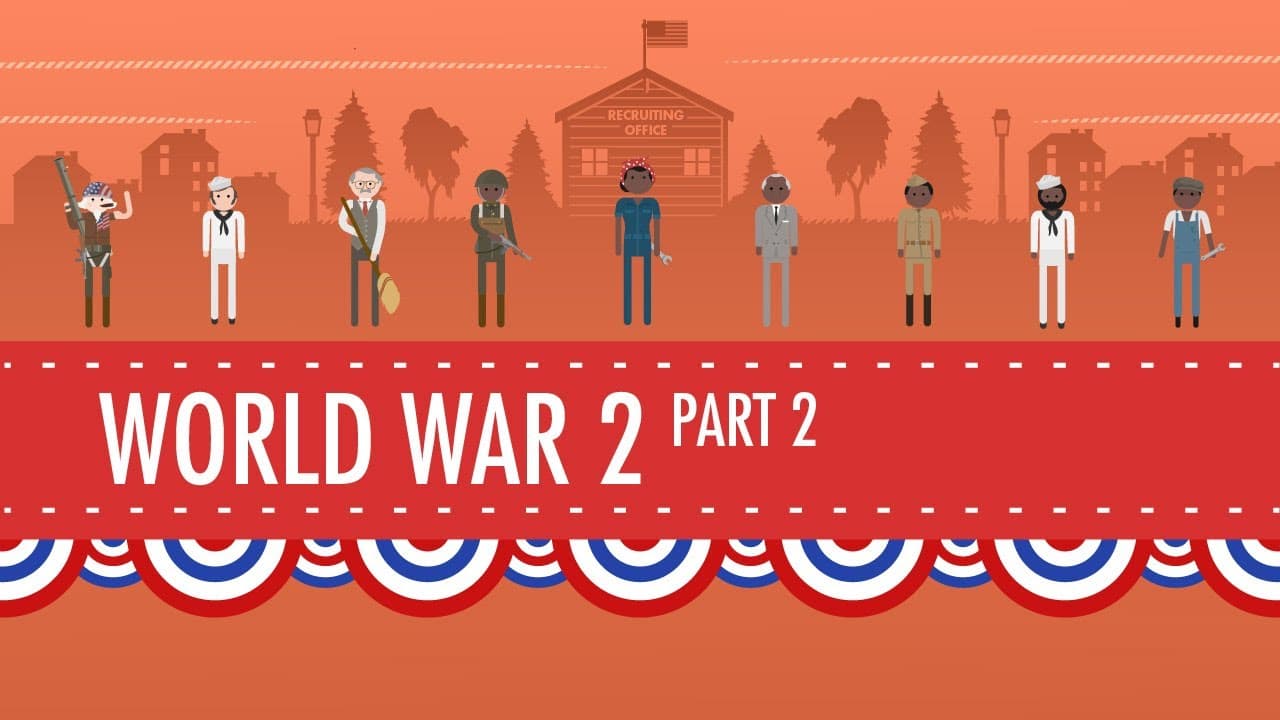
TL;DR
World War II significantly transformed the United States domestically, enhancing federal government power and reshaping the economy. The war effort led to increased industrial production and a surge in employment, including a notable rise in women's workforce participation. However, it also saw the internment of Japanese Americans and highlighted racial tensions, paving the way for the Civil Rights Movement.
Transcript
Episode 36: World War II (2) – the war at home Hi, I’m John Green, this is Crash Course U.S. History and today we’re going to discuss how World War II played out at home and also the meaning of the war. Mr. Green, Mr. Green, so is this going to be, like, one of the boring philosophical ones, then? Oh, Me From the Past, I remember when you were idea... Read More
Key Insights
- World War II strengthened the U.S. federal government, leading to unprecedented economic control.
- The war effort massively increased industrial production, boosting the economy and ending the Great Depression.
- Women's workforce participation rose significantly, with married women outnumbering single women in jobs.
- Japanese Americans faced internment, a major violation of civil liberties during the war.
- African Americans served in segregated units but began demanding civil rights and equal employment opportunities.
- The GI Bill of Rights helped returning soldiers with education and housing, spurring post-war prosperity.
- World War II shifted American ideals towards diversity and equality, though racial tensions persisted.
- The U.S. emerged as a global leader post-war, establishing economic dominance and forming the United Nations.
Install to Summarize YouTube Videos and Get Transcripts
Explore YouTube Video Summarizer or Get YouTube Transcript Extractor
Questions & Answers
Q: How did WWII affect the U.S. economy?
World War II significantly boosted the U.S. economy by increasing industrial production and employment. Government intervention led to the creation of agencies like the War Production Board, which controlled production and distribution. The war effort ended the Great Depression, with unemployment dropping dramatically as factories produced military supplies, and the GI Bill spurred post-war economic growth.
Q: What was the impact of WWII on women's roles in America?
World War II led to a significant increase in women's workforce participation. With many men serving in the military, women took on roles traditionally held by men, particularly in industrial jobs. By 1944, women made up one-third of the civilian labor force. However, after the war, many women were expected to return to traditional roles, although the experience paved the way for future gender equality movements.
Q: What were the consequences of Japanese American internment during WWII?
Japanese American internment during WWII was a severe violation of civil liberties. Executive Order 9066 led to the forced relocation and internment of over 110,000 Japanese Americans, two-thirds of whom were U.S. citizens. They were placed in camps with poor living conditions, and the internment caused long-term social and economic harm to the Japanese American community, highlighting racial discrimination in the U.S.
Q: How did WWII influence the Civil Rights Movement?
World War II acted as a catalyst for the Civil Rights Movement by highlighting racial inequalities. African Americans served in segregated units and faced discrimination in defense jobs, prompting leaders like A. Philip Randolph to demand equal rights. The war's rhetoric of fighting for freedom and democracy abroad contrasted with domestic racial injustices, inspiring African Americans to push for civil rights and equality.
Q: What was the GI Bill of Rights, and how did it impact post-war America?
The GI Bill of Rights, officially the Servicemen’s Readjustment Act, was enacted to assist returning WWII veterans. It provided benefits such as education funding and low-interest home loans, preventing unemployment and fostering economic growth. By 1946, over a million veterans were enrolled in college, and the bill contributed to the post-war housing boom, significantly shaping the American middle class.
Q: How did WWII change American views on race and diversity?
World War II prompted a shift in American views on race and diversity. The fight against Nazi racism highlighted the need for equality and tolerance. This period saw increased immigration from Mexico and efforts to debunk scientific racism. However, racial tensions persisted, as seen in race riots and the internment of Japanese Americans, indicating a complex and evolving view on race in America.
Q: What role did the U.S. play in establishing post-war international order?
Post-WWII, the U.S. played a pivotal role in establishing a new international order. The Bretton Woods Conference positioned the U.S. dollar as the primary international currency, and the U.S. helped form the United Nations to ensure global peace. As one of the five permanent members of the UN Security Council, the U.S. took a leading role in international diplomacy and economic stability, shaping the post-war world.
Q: How did WWII redefine American liberalism?
World War II redefined American liberalism by expanding government roles in economic and social policies. The war solidified New Deal ideals, emphasizing full employment, civil liberties, and economic security. FDR's Four Freedoms and the GI Bill reflected a commitment to welfare and equality. However, debates on government intervention and individual liberty persisted, laying groundwork for future political discourse.
Summary & Key Takeaways
-
World War II brought significant changes to the U.S., enhancing federal government control and reshaping the economy. The war effort boosted industrial production and employment, notably increasing women's participation in the workforce. However, the period also saw the internment of Japanese Americans and highlighted racial tensions, which contributed to the Civil Rights Movement.
-
The U.S. government intervened heavily in the economy during WWII, establishing agencies like the War Production Board. This intervention led to a surge in industrial output, helping to end the Great Depression. The GI Bill provided education and housing benefits to returning soldiers, contributing to post-war prosperity.
-
While WWII promoted ideals of diversity and equality, racial tensions persisted. African Americans demanded civil rights and equal employment, while Japanese Americans suffered internment. The U.S. emerged as a global leader, establishing economic dominance and forming the United Nations to ensure peace.
Read in Other Languages (beta)
Share This Summary 📚
Summarize YouTube Videos and Get Video Transcripts with 1-Click
Try YouTube Summary with ChatGPT & Claude or YouTube Transcript Generator
Explore More Summaries from CrashCourse 📚






Summarize YouTube Videos and Get Video Transcripts with 1-Click
Try YouTube Summary with ChatGPT & Claude or YouTube Transcript Generator