Tea, Taxes, and The American Revolution: Crash Course World History #28
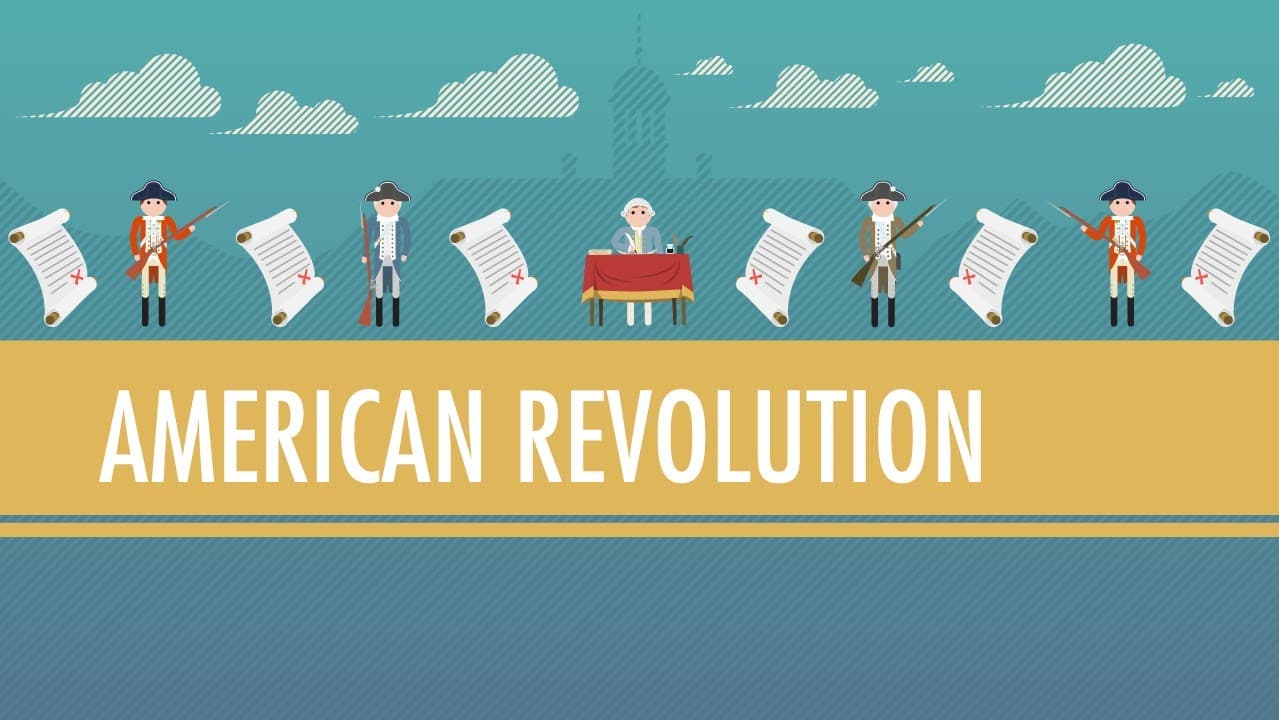
TL;DR
The American Revolution was driven by taxation and Enlightenment ideas.
Transcript
Hi, I'm John Green, this is Crash Course World History and today you aren't going to get a blow by blow chronology of the American Revolution, and you aren't going to get cool biographical details about Thomas Jefferson or George Washington. But you are going to get me not wearing any pants. Mr. Green, Mr. Green! Did you know that George Washington... Read More
Key Insights
- The American Revolution was not just a war but also a complex social and political transformation influenced by Enlightenment ideas.
- The Seven Years' War left Britain in debt, prompting taxes like the Stamp Act, which angered colonists due to lack of representation.
- Colonists protested British taxation through boycotts and the creation of Committees of Correspondence, which acted like a shadow government.
- The Boston Tea Party was a significant act of defiance, leading to harsher British crackdowns and escalating tensions.
- While the Revolution promoted ideals of liberty and equality, these were not fully realized, as many groups remained marginalized.
- The Enlightenment played a crucial role in shaping revolutionary ideas, emphasizing reason and challenging traditional authority.
- Despite the Revolution's promise of equality, it primarily benefited wealthy white men, maintaining existing power structures.
- The Revolution inspired future democratic movements, but its ideals were challenging to implement fully in practice.
Install to Summarize YouTube Videos and Get Transcripts
Explore YouTube Video Summarizer or Get YouTube Transcript Extractor
Questions & Answers
Q: What prompted the American colonies to rebel against British rule?
The American colonies rebelled against British rule primarily due to the imposition of taxes without representation, following the costly Seven Years' War. Acts like the Stamp Act and Townshend Acts angered colonists, who felt their rights as Englishmen were violated, leading to widespread protests and eventual war.
Q: How did the Enlightenment influence the American Revolution?
The Enlightenment influenced the American Revolution by introducing ideas of liberty, equality, and reason. Thinkers like John Locke emphasized natural rights, which resonated with colonists seeking independence from British tyranny. These ideas were reflected in revolutionary documents like the Declaration of Independence, shaping the new nation's democratic principles.
Q: What role did the Boston Tea Party play in the American Revolution?
The Boston Tea Party was a pivotal event in the American Revolution, symbolizing colonial resistance to British taxation. In 1773, colonists dumped British tea into Boston Harbor to protest the Tea Act, which favored British merchants. This act of defiance led to stricter British measures, escalating tensions and pushing towards war.
Q: How did the American Revolution impact social structures in the colonies?
The American Revolution led to some changes in social structures, such as the abolition of formal nobility and greater property rights for women. However, it largely maintained existing power dynamics, as wealthy white men continued to dominate. Despite revolutionary rhetoric, many groups, including slaves and non-landowning men, remained marginalized.
Q: Why is the American Revolution considered revolutionary despite its limitations?
The American Revolution is considered revolutionary because it replaced a monarchy with a republic, promoting Enlightenment ideals of self-governance and individual rights. It inspired future democratic movements globally. However, its limitations, such as maintaining existing power structures and failing to extend equality to all, highlight its complexities.
Q: What were the Committees of Correspondence, and what role did they play?
The Committees of Correspondence were colonial networks that coordinated resistance against British policies. They spread information, enforced boycotts, and acted as de facto governments, organizing protests and mobilizing support for independence. Their efforts helped unify the colonies and lay the groundwork for the Continental Congress and eventual revolution.
Q: How did the American Revolution address the issue of slavery?
The American Revolution did not adequately address the issue of slavery. While the rhetoric of equality was central, many revolutionaries, including Thomas Jefferson, owned slaves. Britain even promised freedom to slaves who fought for them, highlighting the contradiction. Slavery persisted, with significant change only occurring decades later through the Civil War.
Q: What were the long-term effects of the American Revolution on global politics?
The American Revolution had profound long-term effects on global politics by inspiring other nations to pursue democratic reforms and challenge monarchies. Its emphasis on individual rights and self-governance resonated worldwide, influencing revolutions in France and Latin America, and shaping modern political discourse on liberty and equality.
Summary & Key Takeaways
-
The American Revolution was sparked by British taxation policies following the expensive Seven Years' War, leading to colonial unrest and demands for representation. The colonists' protests, including the Boston Tea Party, escalated tensions, ultimately resulting in war and the Declaration of Independence.
-
Enlightenment ideas significantly influenced the Revolution, promoting concepts of liberty, equality, and self-governance. However, these ideals were not fully realized, as many groups, including women and slaves, remained marginalized despite the rhetoric of equality.
-
The Revolution's legacy includes the establishment of a government without a monarchy and the promotion of Enlightenment principles. However, the new society primarily benefited the existing elite, highlighting the complexities and contradictions of revolutionary change.
Read in Other Languages (beta)
Share This Summary 📚
Summarize YouTube Videos and Get Video Transcripts with 1-Click
Try YouTube Summary with ChatGPT & Claude or YouTube Transcript Generator
Explore More Summaries from CrashCourse 📚

Summarize YouTube Videos and Get Video Transcripts with 1-Click
Try YouTube Summary with ChatGPT & Claude or YouTube Transcript Generator