How Does MIT's Rider Device Collect Driving Data?
TL;DR
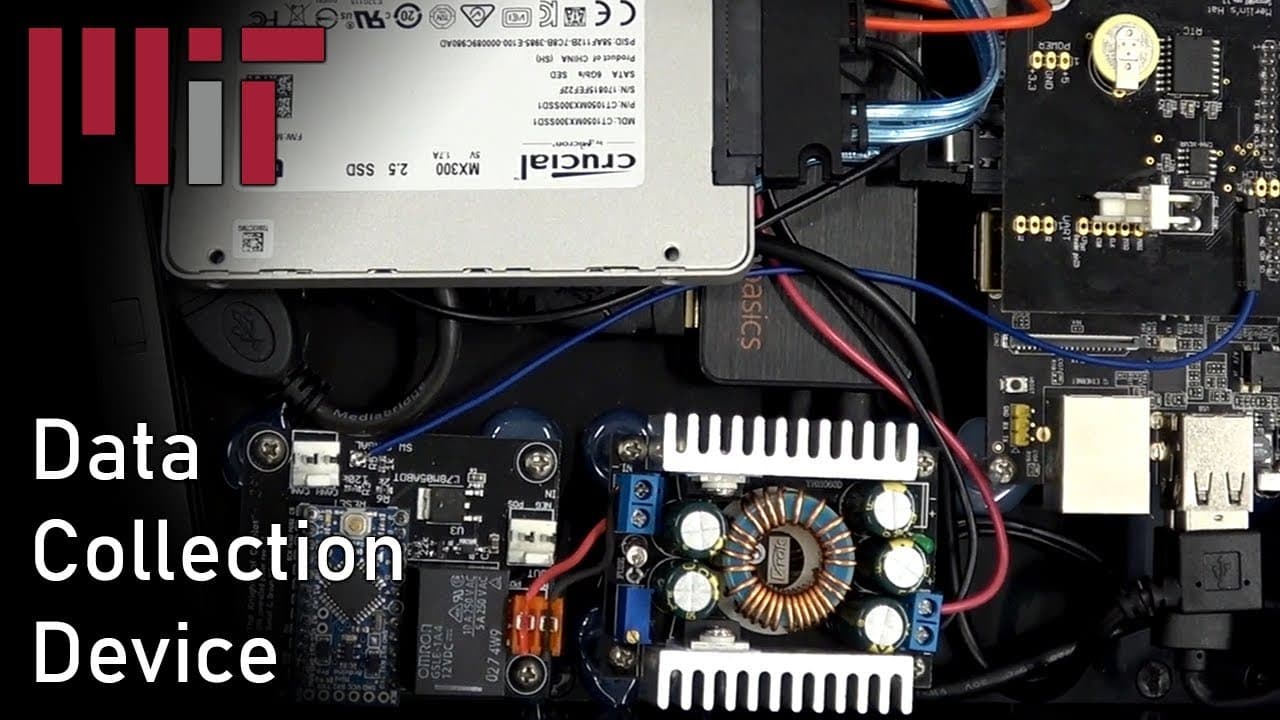
MIT's Rider device collects driving data using three cameras, GPS, and IMU sensors, ensuring synchronized and reliable data recording. It features onboard compression for efficient storage and automatically manages recording based on vehicle activity. This system is crucial for analyzing driver behavior and improving semi-autonomous driving technology.
Transcript
the MIT autonomous vehicle technology study is all about collecting large amounts of naturalistic driving data behind that data collection is this box right here that Dan is term writer a Dan is behind a lot of the hardware work we do embedded systems and Michael is behind a lot of the software the data pipeline as well as just offloading the data ... Read More
Key Insights
- 🚗 The MIT autonomous vehicle technology study focuses on collecting large amounts of naturalistic driving data, requiring a reliable hardware and software system.
- 📷 The system includes three cameras, IMU GPS, and raw canned messages from the vehicle, all of which need to be collected, synchronized, and post-processed.
- 🔋 The single board computer running a custom version of Linux integrates all the cameras, sensors, and offloads data onto the solid-state hard drive.
- 💾 Onboard compression is crucial to store the massive amount of data collected, including video streams, GPS, and IMU signals.
- 📹 Logitech c920 webcams were chosen for their onboard h.264 compression and customized with different lenses for a greater field of view.
- 🌡️ The cameras were tested for high-temperature environments and were found to withstand temperatures up to 127 degrees Celsius.
- 🔄 Ryder intelligently turns on and off recording based on can activity and can be triggered by specific can messages, ensuring data collection during relevant scenarios. ⏰ Synchronization of all sensor streams is a top priority, achieved using a highly accurate real-time clock for precise time-stamping and alignment of data.
- 💻 Data is offloaded locally by swapping hard drives, then remotely copied to a server for initial cleaning and synchronization, before being processed for analysis and annotation.
Install to Summarize YouTube Videos and Get Transcripts
Explore YouTube Video Summarizer or Get YouTube Transcript Extractor
Questions & Answers
Q: How does Rider ensure reliability and synchronization of the multiple sensor streams?
Rider uses a real-time clock with high accuracy to timestamp sensor data, allowing perfect synchronization of video frames, GPS signals, IMU data, and can messages from the vehicle. This ensures that all sensor streams are recorded perfectly and aligned together for analysis.
Q: What are some challenges and failures experienced with the data collection system?
The main issue encountered is camera cables becoming unplugged. When this happens, the system attempts to restart the subsystem multiple times, but if unsuccessful, it shuts off recording. This can lead to the loss of potential data. However, measures are taken to minimize this issue and ensure all video streams are recorded.
Q: How is data transferred from the Rider box to the computers for processing?
The data is not remotely offloaded. When a hard drive is swapped from the Rider box, it is connected locally to the computers, and a remote copy is made to a server containing all the data. The data is then checked for consistency, undergoes initial cleaning, and is synchronized for further processing.
Q: What improvements are planned for the Rider system?
One major improvement is transitioning to a Jetson TX2 single-board computer, which offers more compute power and the possibility of real-time processing. Additionally, the team is working on developing onboard algorithms that can selectively collect only the interesting parts of the data, optimizing data collection efforts.
Q: What is the goal of the MIT Autonomous Vehicle Technology Study?
The goal of the study is to collect rich sensor information, not just from the external environment, but also from the internal environment, focusing on understanding driver behavior and the interaction between human supervisors and autonomous systems. The collected data is used to improve the development of safe semi-autonomous and autonomous vehicles.
Summary & Key Takeaways
-
The MIT autonomous vehicle team has developed a data collection system called "Rider" that collects data from three cameras, IMU GPS, and raw canned messages from the vehicle, ensuring reliability and synchronization.
-
Rider is equipped with a single-board computer running a custom version of Linux, integrating all sensors and offloading data onto a solid-state hard drive onboard.
-
The system includes features like onboard compression, intelligent recording start/stop, and synchronization techniques to capture and analyze driver behavior and improve autonomous technology.
Read in Other Languages (beta)
Share This Summary 📚
Summarize YouTube Videos and Get Video Transcripts with 1-Click
Try YouTube Summary with ChatGPT & Claude or YouTube Transcript Generator
Explore More Summaries from Lex Fridman 📚






Summarize YouTube Videos and Get Video Transcripts with 1-Click
Try YouTube Summary with ChatGPT & Claude or YouTube Transcript Generator